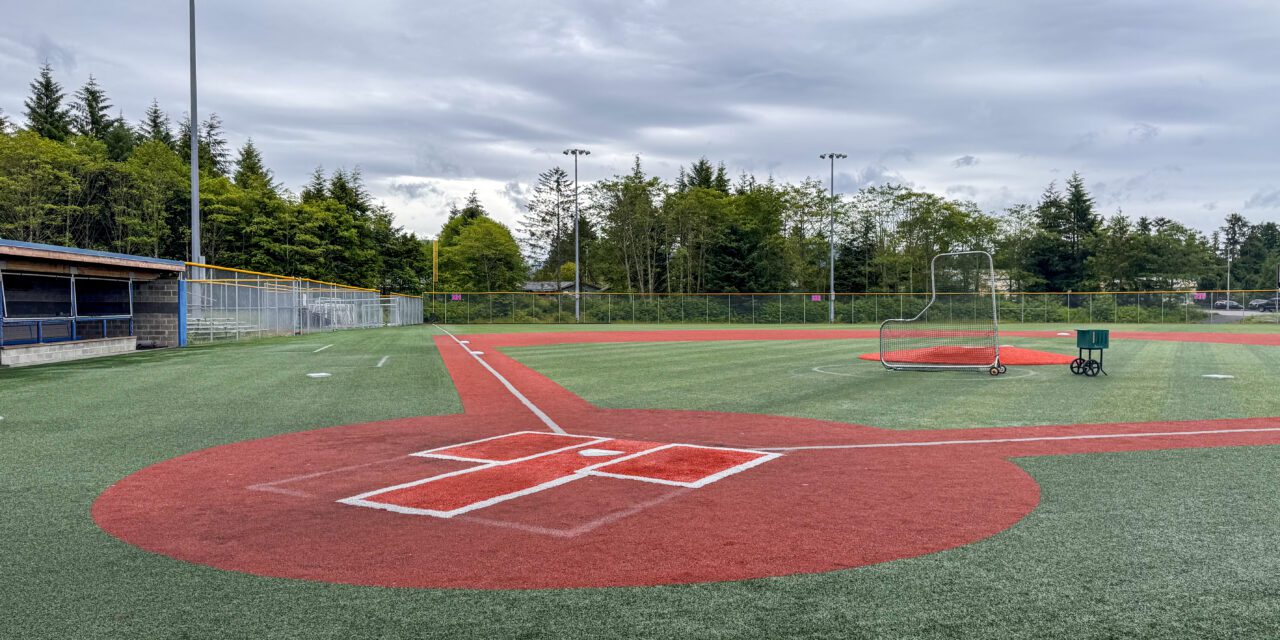
Moller Field is Sitka’s sole artificial-turf ballfield. (KCAW/McKenney)
Sitka’s athletic facilities could get a major upgrade if a proposal the Sitka Assembly is considering gains traction. Sponsors of the initiative to build a sports and recreation complex have identified funding that could support its construction, but freeing up the money will require a vote of the people to amend the city’s Home Rule Charter. While it’s an exciting proposition for some, others wonder whether it’s the best use of the funds.
Sitka has one artificial-turf ballfield that was built with state money. Building a new one is a costly endeavor. That’s why assembly members Chris Ystad and Kevin Mosher have proposed that the city take on bond debt to cover construction costs and use the excess revenue from a fund dedicated to the former city-owned hospital to cover payments on those bonds.
Right now, the money is set aside to cover retirement costs for former employees of Sitka Community Hospital, which was sold to the Southeast Alaska Regional Health Consortium in 2019. The fund also takes in money from the tobacco tax, and city staff anticipate in the coming years there will be a surplus.
At the Sitka Assembly meeting on July 8, one member of the public and several assembly members wondered if using that surplus for sports and recreation was the best use of the money.
Lauren Wild is with the Early Childhood Coalition. She said more than a year ago, they identified the tobacco tax as a possible fund to subsidize child care in Sitka. And while she said she supports youth athletics, she feels let down by the city.
“We’re losing kids primarily due to lack of child care and housing,” Wild said. “This body is working on housing, but shows little interest in childcare. Childcare centers need subsidies to operate if we do not invest in it. Now, you’re not going to have any youth left in this community to use the athletic facilities and recreation facilities you want to build and fix with the Sitka Community Hospital Fund.”
Mayor Steven Eisenbeisz referenced last year’s State of Sitka’s Economy report, in which local business leaders were asked to rank the importance of issues in creating a vibrant business climate. Childcare and attracting and retaining a workforce aged population topped the list. Recreation was at the bottom.
Eisenbeisz said it’s not that the business community doesn’t want recreational facilities, but that those facilities are already sufficiently serviced.
“We have many fields, we have pools, we have cabins, we have trails, we have playgrounds, but I don’t think there’s anyone at this table that can say that we have sufficient teachers, daycare facilities, and youth education facilities,” Eisenbeisz said. “I have a child in this community who’s going to be a user of athletic facilities, but I think the critically important task right now outweighs the ‘nicer to have’ task for me.”
Several assembly members said while the issue of childcare is incredibly important, there won’t be enough money in the fund to address an issue that large. And, they said, the money won’t be available for years.
“It’s going to take too long,” said assembly member Ystad. “Childcare needs something now, and this is going to be something where there’s not really a decent amount of funding to really make a good impact with childcare for quite some time. But recreation and athletic facilities, they can wait. It isn’t such an urgent thing. We can plan.”
Assembly member Mosher agreed with Ystad and said sports and recreation facilities will be a major driver in retaining families in Sitka.
“That’s a very crucial thing that people are interested in,” he said. “They want their children to have things to do.”
Ultimately, after making several amendments to the initiative, including changing the language in the ordinance from “athletic facility” to “athletic and recreational facility” to broaden the use and funding for the facility, the assembly approved it on a 4-2 vote with assembly member JJ Carlson and Mayor Eisenbeisz opposed. It will consider the item again at its July 22 meeting.
If the assembly approves the initiative, it will go before voters in the municipal election this October.
In other business, Lincoln Street will remain open for the rest of the summer. The Sitka Assembly agreed at its meeting Tuesday to keep the street open for the remainder of the cruise season — a decision in line with the most recent recommendation from the city’s tourism commission.
“We’ve continued to see an improvement in passenger flows in and out of town,” said Amy Ainslie, Planning and Community Development Director. “We have not had any incidents regarding vehicles and pedestrian interactions. And I think the institution of our pedestrian safety guards here at Harrigan [Centennial Hall] has definitely helped with the jaywalking issue.”
As of July 1, Sitka has experienced 29 days with more than 5,000 cruise passengers this season, according to a city memo.
For the past several years, the city closed the downtown thoroughfare on days with high cruise traffic, but the closure policy saw pushback. So this summer, the city began the season with the street open in a two-month trial run. On Tuesday, the assembly extended that trial run through the end of the summer season.
Assembly members weighed both the pros and cons of keeping Lincoln Street open for the summer, and expressed a desire to review the data after the season wraps up before making a recommendation for next year.
“I’m really, really impartial on this. I see benefits both ways. I see the pros and cons, and I think that they’re both equally important,” Eisenbeisz said. “The one downside, I will say, of keeping the street open is a traffic flow concern that I’ve seen.”