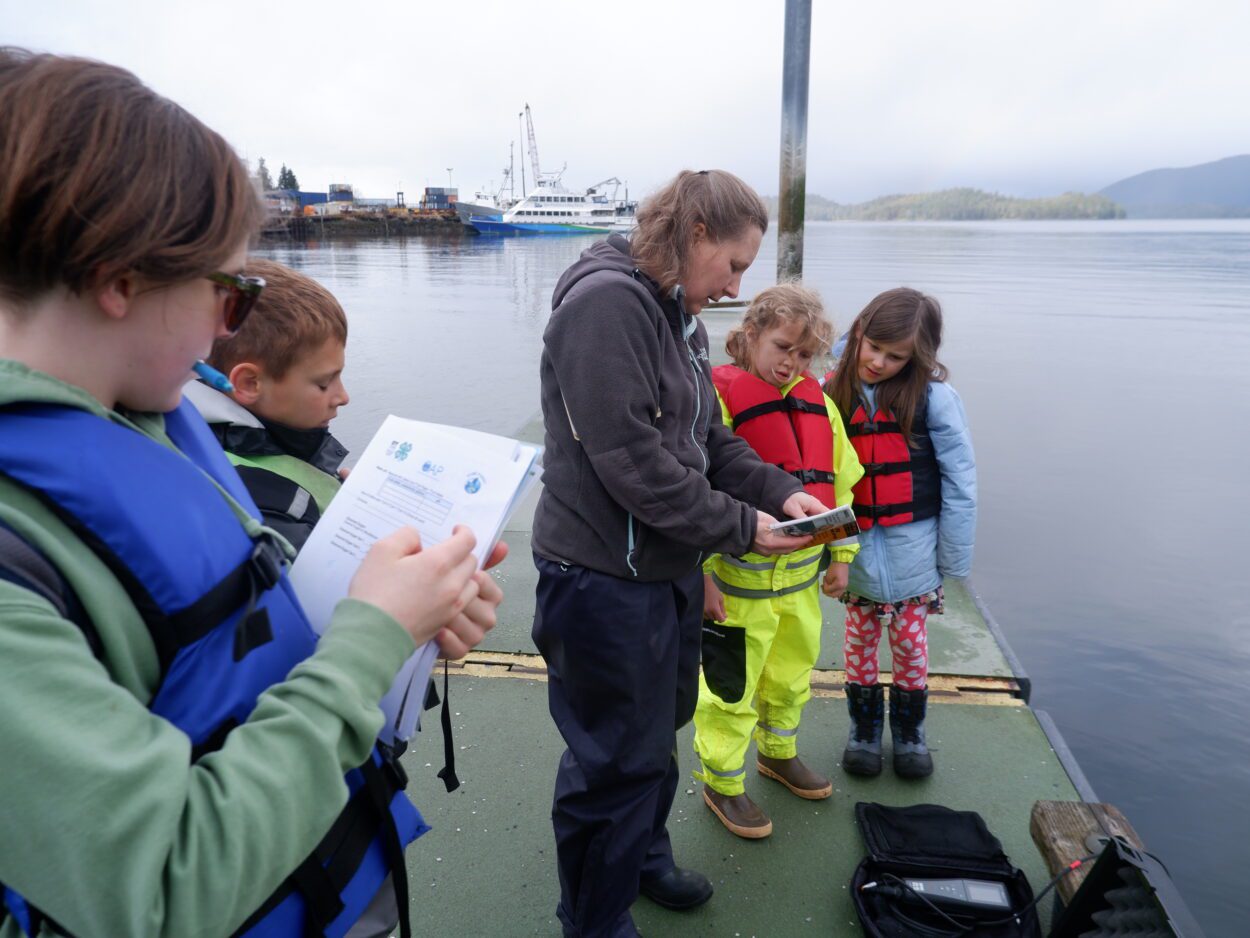
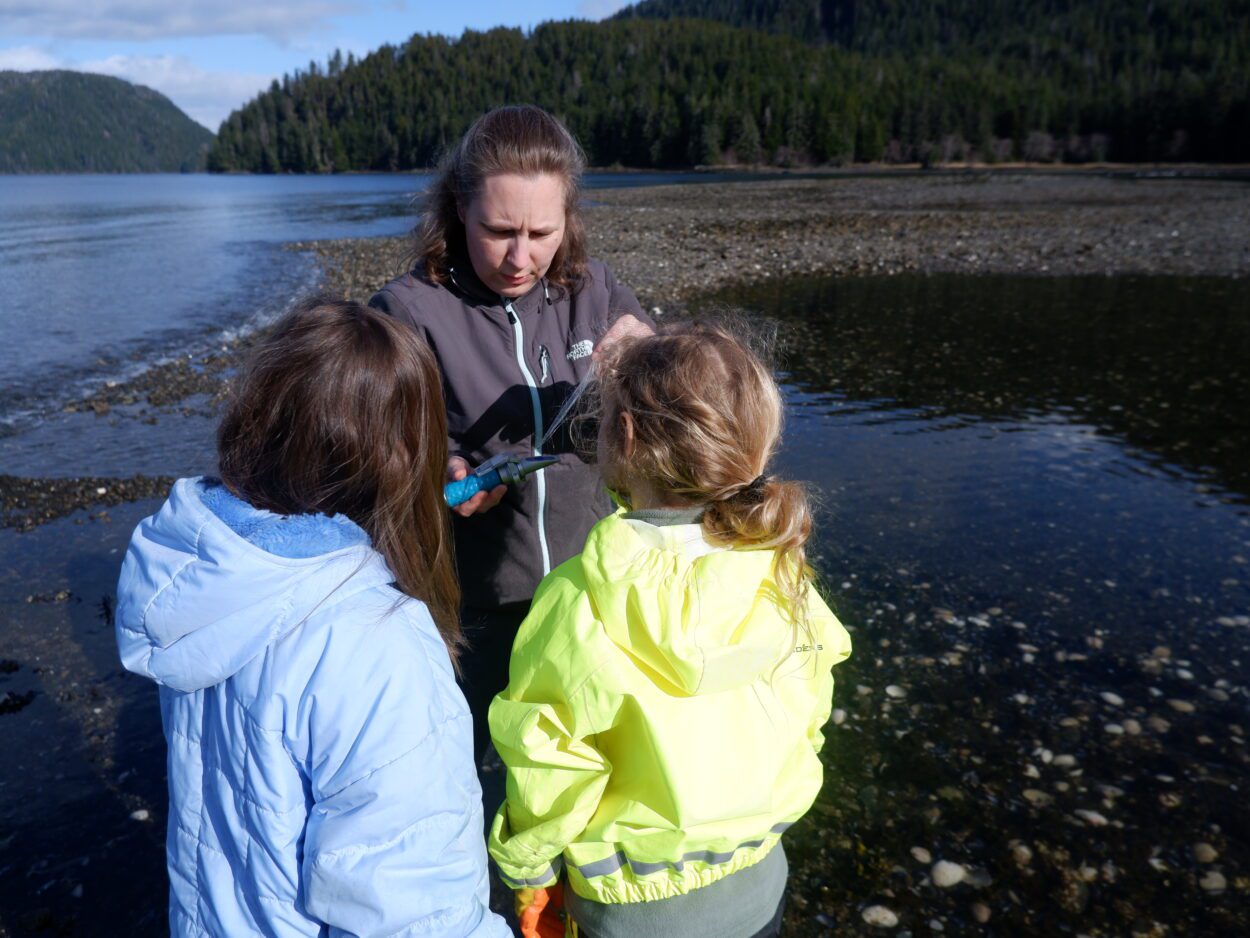
From January to May, about a dozen elementary students in Sitka shuffled down to Sage Beach each month, thermometers and pH strips in hand, to gather data. The students would throw a bucket attached to a long rope as far out as they could, and slowly pull the bucket back in, careful not to spill the water. Then they’d test it.
“Before this spring, I couldn’t have told you what the actual pH of the ocean was at different times a year or the temperature even,” said Jasmine Shaw, the Sitka Spruce Tips’ 4-H leader.
Shaw recently wrapped up a five-month project testing local waters for ocean acidification. The education program is called “4-H pH,” and introduced elementary school-age kids in the island’s 4-H program to the world of ocean science.
The pilot project was the first of its kind, and the curriculum will soon be published for 4-H groups to use nationwide.
Shaw said the goal of the project was to expose younger students to the concern of ocean acidification in their communities. There’s already a lot of curriculum geared towards middle school and high school students around the issue, she said, but not so much towards younger ones.
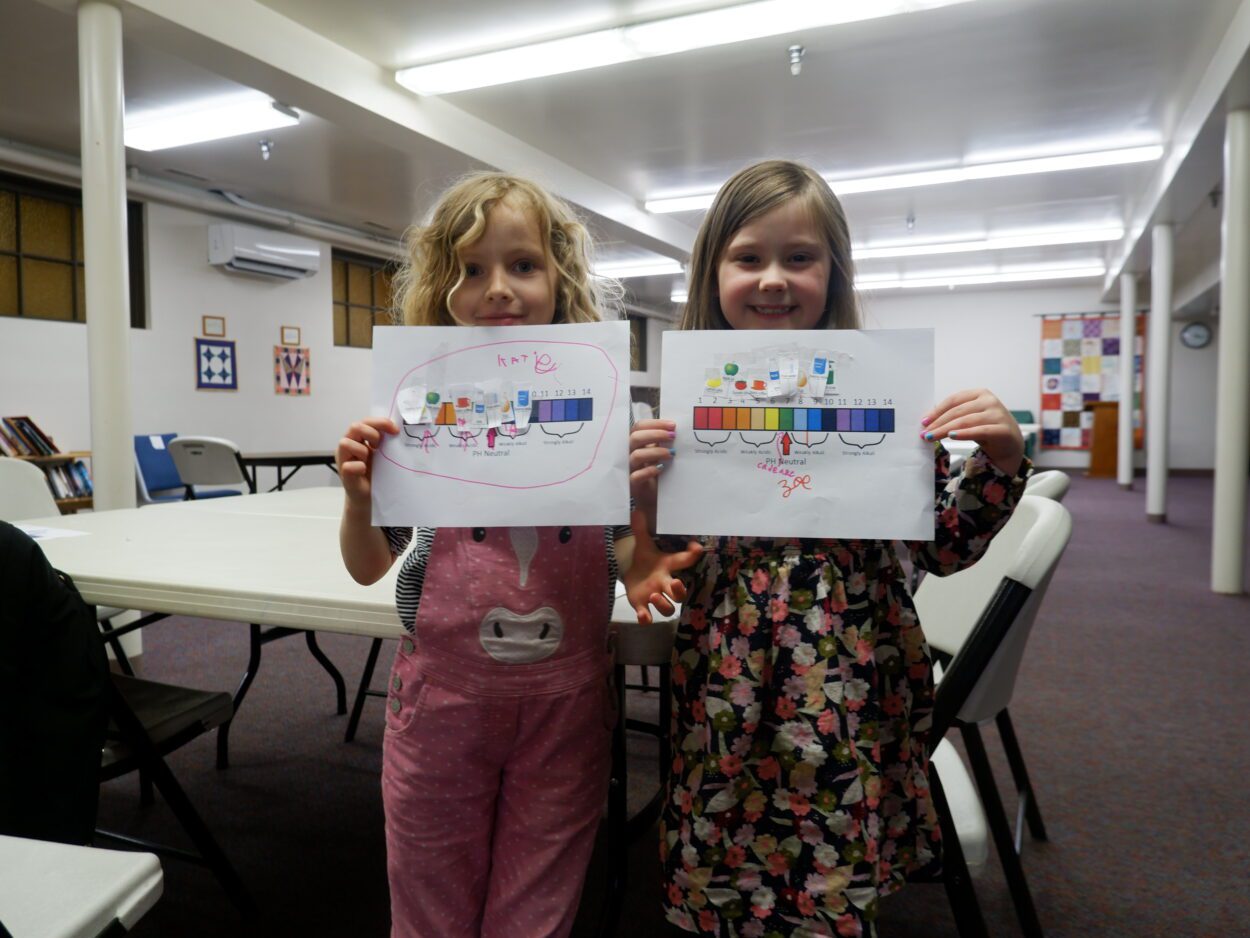
“I majored in chemistry, but I probably didn’t learn about the pH scale until high school, and so to have these kids learn about the pH scale in second, third, fourth grade was really cool to see,” she said.
Over the course of the spring, kids learned to measure pH, temperature and dissolved oxygen in the ocean, and the measurements were uploaded to a national database.
Shaw said pH levels remained mostly even over the course of their testing. But the temperature did rise in March before going back down again during the region’s particularly cold April.
“We had about five degrees Celsius as our low temperature in February, but then it jumped to almost eight degrees in March,” she said.
The “4-H pH” project, funded by the NOAA Ocean Acidification Program, is part of a citizen science program called Global Learning & Observations to Benefit the Environment Program, or GLOBE for short.
The program is led by NASA. And, according to the NASA website, it aims to bring together students, teachers, and scientists to promote science and learning about the environment.
The great thing about citizen science projects like this one, according to Shaw, is that they show you don’t have to be a scientist to participate. You can collect data no matter who you are or what you do, and it will be useful and important to those in the field.
“As with any science, you don’t know until you measure it,” she said. “You might think, ‘Yeah, sure, the ocean’s fine,’ but we don’t actually know that until we stick a thermometer in there or a probe and take those measurements.”
Shaw said part of what made this pilot program so accessible to younger kids is its interdisciplinary approach.
“Cooking and art are such community spaces,” she said. “So it made it very easy then to approach something like pH or ocean acidification that might otherwise seem a little complicated or overwhelming to learn about, and it made it more fun.”
And the interdisciplinary approach seemed to pay off. Or at least that’s what nine-year-old Greyson Browning said.
“We made sushi and we did a little experiment where we made purple lemonade,” he said. “We put some baking soda in it and we made it fizz.”
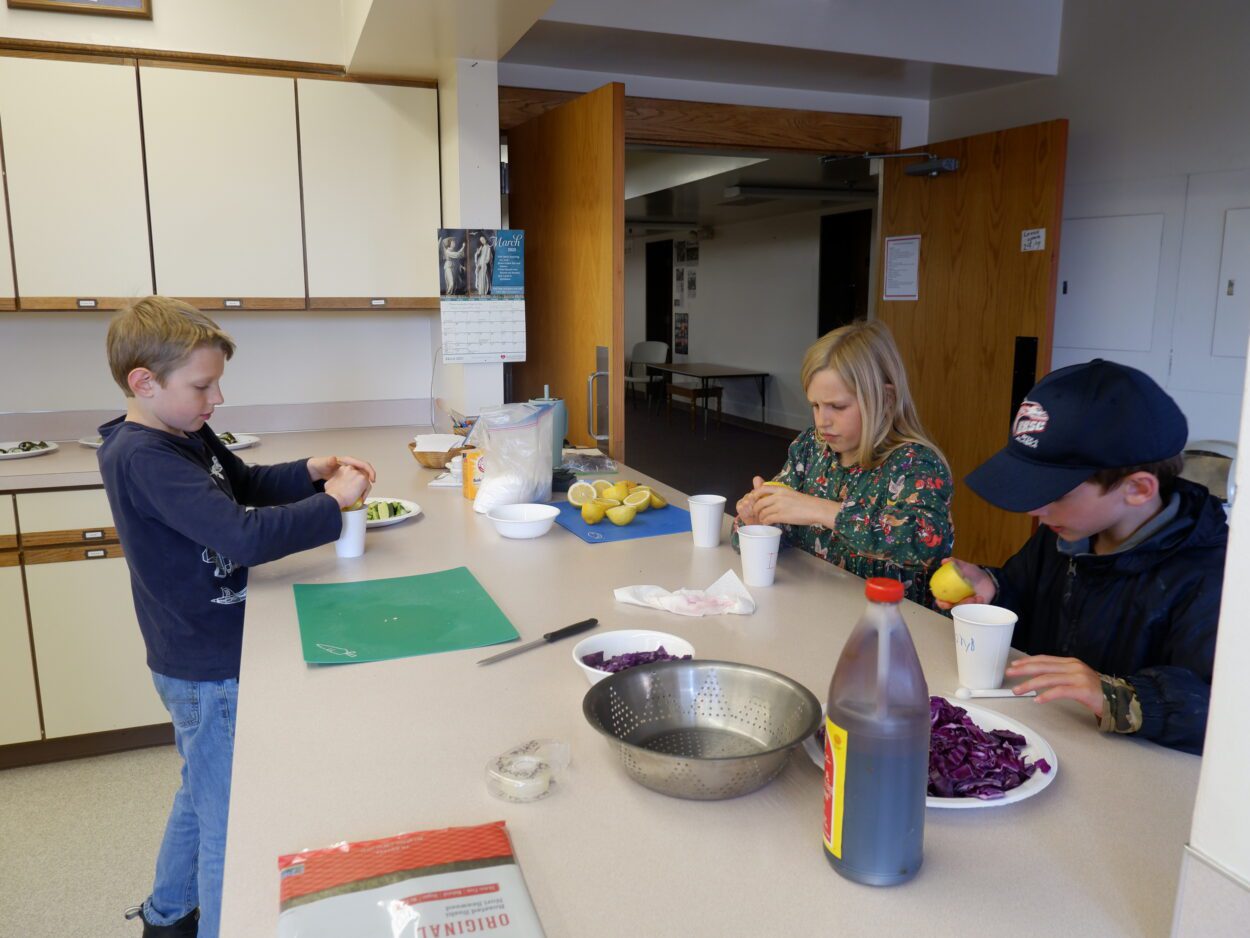
Shaw said in this case, they were looking at the reactions of acids and bases in the kitchen, and then talking about how pH and temperature can affect all different things in the ocean, especially sea life. She asked Browning why he thinks it’s important to monitor Sitka’s waters.
Shaw: “What would happen if the ocean kept getting warmer and warmer here?”
Browning: “It could affect some of the marine life.”
Jasmine: “Yeah, and we’re a fishing community and marine-based community right here on the water, so it’s pretty important to know what’s going on in the ocean and the pH of it.”
Browning said that although he doesn’t know yet what he wants to do when he grows up, he loved participating in the program.
“It’s fun,” he said. “You get to learn stuff. And it can inspire kids to maybe grow up and be a scientist and help protect marine life.”
In fact, he enjoyed the “4-H pH” program so much that he said he wasn’t sure he wanted to go on his family’s trip to Hawaii this spring and miss a 4-H meeting.
“Though, if I didn’t do that, I wouldn’t have been able to experience some stuff I did there,” Browning said. “Like I went snorkeling and I saw sea turtles.”
Because he missed a meeting, Browning did make sure to take the temperature of the ocean in Hawaii during his trip. He said it was much warmer than in Sitka.
Shaw is heading to Angoon to introduce the program later this month, and to Petersburg in August.
Then, the curriculum will be published as an official 4-H “CLOVER” curriculum that can be used by any 4-H club or afterschool program throughout the country.