Should restrictions be lifted on a city hospital fund to pay for upgrades to local recreational facilities? Sitka voters will consider that question on the municipal ballot this fall.
Voters approved a tobacco tax 20 years ago to support the city-owned Sitka Community Hospital. When the hospital was sold to the Southeast Alaska Regional Health Consortium (SEARHC) in 2019, that money continued to go into a fund dedicated to former employees’ retirement. Right now, that fund pretty much breaks even each year, and if it eventually has a surplus, the funds are restricted.
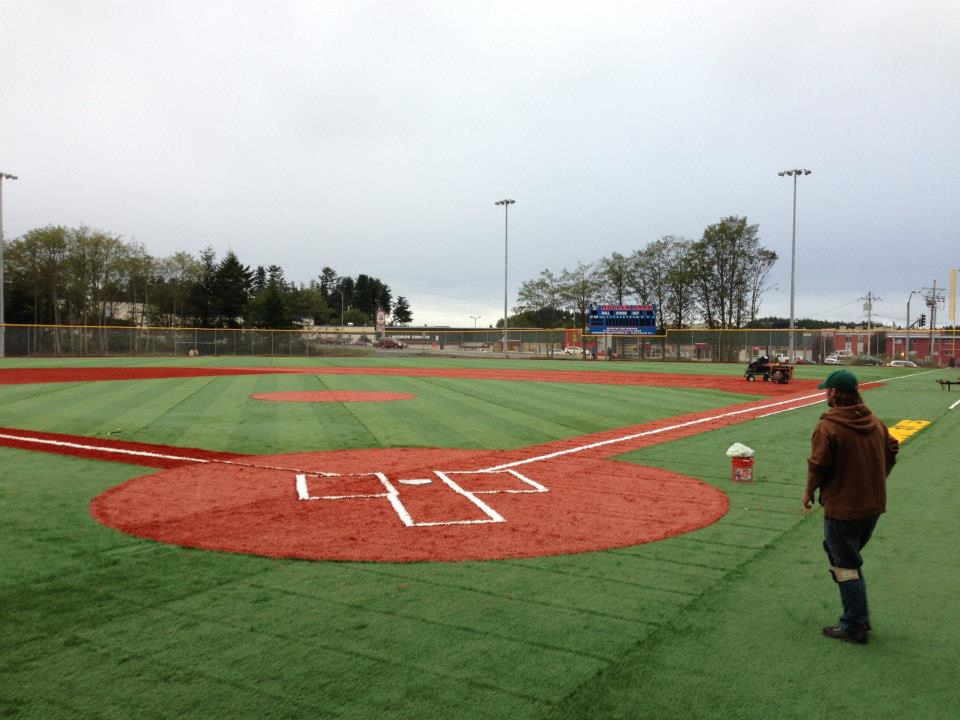
Sponsors of a ballot initiative, assembly members Chris Ystad and Kevin Mosher, have proposed lifting the restrictions, directing future surplus revenue from the fund toward a multi-purpose sports and recreation complex.
The idea is exciting for some, including Sitka Youth Soccer President Brian Farley. At the Sitka Assembly meeting on July 22, he said the community deserves an outlet for healthy activities, and youth deserve access to more high school sports.
“Here in Sitka, our soccer program, just last year, had eight kids who were high school aged who quit soccer because they had no ability to compete for their high school team,” Farley said. “We have no high school football in Sitka. However, in Alaska, there are 36 high school soccer programs in both girls and boys competition, and at least 22 football programs. A turf field would allow for our schools to participate in both soccer and football.”
Getting the assembly to agree on the initiative hasn’t been seamless. At previous meetings, several assembly members questioned if using the surplus for sports and recreation was the best use of the money, when there are a number of issues they say are more pressing to the community.
There’s also uncertainty over how much surplus the fund will have and when it’ll be available.
Finance Director Brooke Volschenk said while some former hospital employees might already be a number of years into their retirement, it’s likely many more are not. Because of that, she said there’s no way for the city to know how long it will be paying out retirement from the hospital fund, or whether that number could increase down the line.
“In a year where we have a lot of active retired Sitka Community Hospital employees, this liability amount could substantially increase from year to year, and then we would be in trouble,” Volschenk said. “If you look at the fact that what we’re receiving now is barely covering, or not quite covering, the amount of the liability for Fiscal Year ‘26.”
That uncertainty is amplified by the fact that the state tells the city how much it has to pay in PERS liability (the state’s public employees retirement program) every year. And Volschenk said that number isn’t consistent. If the city ever gets to a point where the tobacco tax and the hospital payment aren’t enough to cover that liability, it could be in trouble.
For Fiscal Year 2026, the city has to pay $1.4 million for its PERS liability, she said. Between the $700,000 a year payment from SEARHC and the $800,000 or so the city receives from the tobacco tax, Volschenk said that revenue will be eaten up.
At the assembly meeting, Brian McLaughlin, a member of the Sitka Community Outdoor Recreation Project, said he’d love to see a facility in Sitka that would promote health and recreation for the town.
“That said, we’re not quite that far into our discussion yet,” he said. “What we are here to vote on tonight is simply to get this in front of the voters and whether or not to allow the community as a whole a chance to vote on where to use the funds from the hospital sales. In that respect, I’d ask, what’s the downside of putting it in front of the voters?”
While they weren’t convinced at previous meetings, both Mayor Steven Eisenbeisz and assembly member JJ Carlson said they’d been swayed by community discussions, and decided to vote in favor of putting the question out to the public.
“Prospecting means you’re staking a claim on something and then hoping it pans out later,” Carlson said. “That’s kind of an analogy I see here with this, because we don’t really know what’s happening in this fund and where it’s going to go in the future. In the last meeting, that was kind of a statement of fear from me, but now I’ve had another two weeks to think of it. And I think prospecting is something we do with new endeavors, and it’s a very big part of the state of Alaska.”
Ultimately, the assembly unanimously approved the proposition for consideration in the Oct. 7 municipal election, where Sitkans will decide if recreation is the right use for the future surplus.