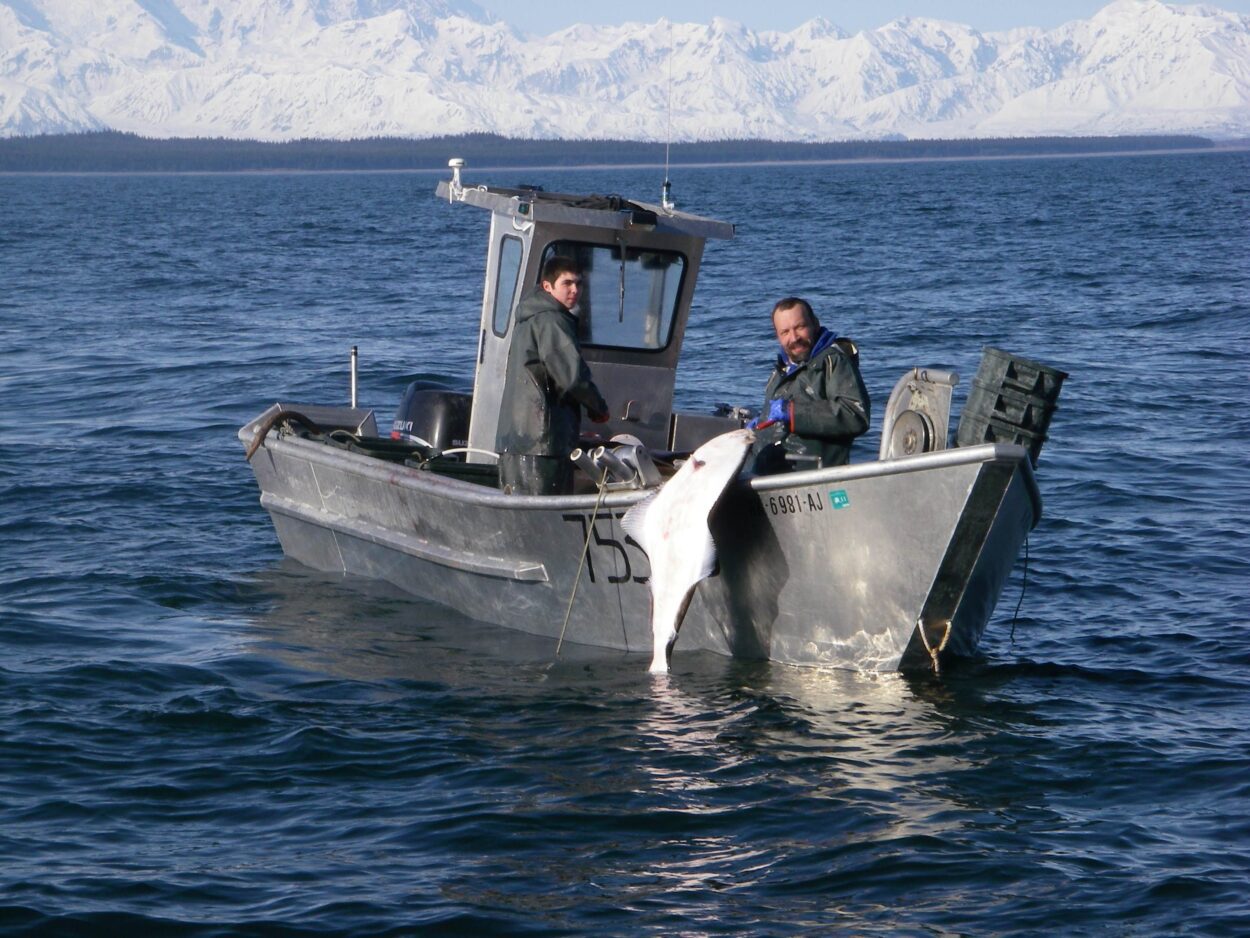
Two small Southeast communities will soon have an opportunity to enter a fishery that’s become difficult for many rural fishermen to participate in.
Residents of Yakutat and Kasaan will be able to lease halibut quota through a regional program aimed at restoring rural and Indigenous access to Alaska’s coastal fisheries.
Jill Weitz is with the Central Council of the Tlingit and Haida Indian Tribes of Alaska, which is partnering with the Alaska Sustainable Fisheries Trust to get the regional collective off the ground. She said their collaboration is a way to provide new opportunities.
“The Southeast Village Fisheries Collective that we’re a part of is a way to open up some of the doors for the communities that lost access to permits because of the high permit prices and outside investment that really drained the permits from villages and left a lot of young people with no way into the fishing industry,” Weitz said.
The barrier to enter fisheries used to be lower. But in the 1970s, state fisheries managers started capping the number of commercial fishing permits, effectively limiting how many people could participate. And since the 1990s, the commercial halibut fishery has been limited to those who hold quota shares.
While the goal was to address a sustainability problem, it largely pushed out rural, Indigenous and young fishermen, and resulted in a smaller number of people earning a much higher share of the profit.
Now, ASFT and its partners are trying to remedy that. They received $934,000 from the Rasmuson Foundation (a $700,000 grant and a $234,000 program-related investment) to form the collective and try to restore access.
The nonprofit will purchase halibut quota, or shares, which will then be assigned to participating communities and fished by residents there.
Weitz said improving access to commercial fisheries for Alaska Native communities is imperative.
“When we have more Alaska Native people fishing, they can feed their families In these communities where the cost of living is exorbitant and the cost of groceries is exorbitant,” she said. “They can fuel those local economies within their communities, and continue to carry culture forward.”
Linda Behnken, board president of ASFT, said the fishery also needs the support of Alaska Native communities.
“We need their voices as spokespersons for maintaining the health of that resource, and we need that culture of stewardship and connection to place that has existed since time immemorial that really feels jeopardized right now,” she said.
Behnken said they ultimately hope to expand to additional eligible communities of 1,500 or less people in the region.
Project partners include Sealaska, the Central Council of the Tlingit and Haida Indian Tribes of Alaska, and Spruce Root.