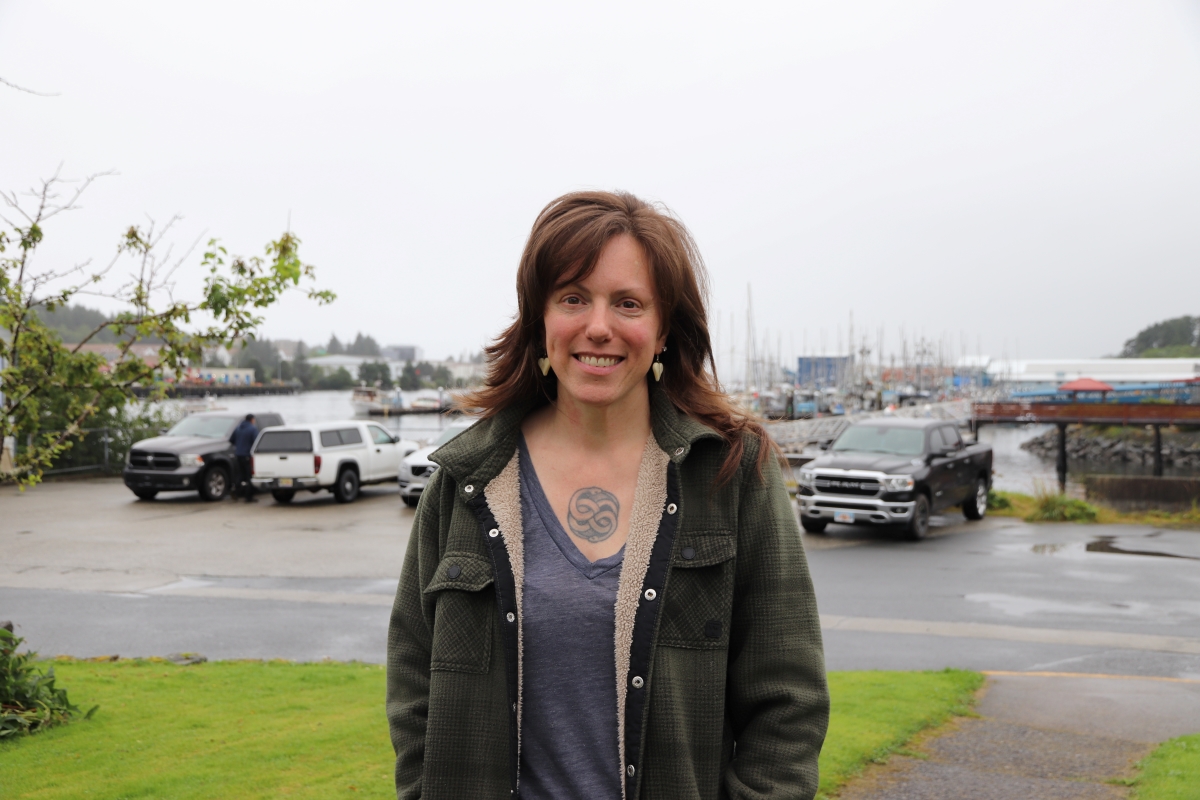
Late last week, two more candidates filed to run for a seat on the Sitka School Board ahead of the filing deadline– Courtney Amundson was one of them. Amundson is a data scientist and is hoping her experience can help the school board as it navigates funding uncertainty in the future.
KCAW spoke with Amundson about her priorities if she’s elected:
KCAW: Why have you decided to throw your hat in the ring for a seat on the Sitka school board?
Amundson: Oh, goodness. So I’ve been here, I’ve been in Sitka about five years, and I moved here kind of in the beginning of COVID with twin six-month-olds. They are starting kindergarten this fall at Xóots Elementary. And so, beginning last year, I started kind of paying attention more to the school board and listening to meetings. And my background is in statistics and data science. And so I kept thinking, ‘Man, I wish I knew more. I wish I could look at this information and synthesize it, because a lot of what I do is look at data and try and tell stories with it.” And so I thought, “Maybe this skill set would be useful to the borough to help decide some of these difficult policy issues and difficult, kind of, budget issues that we’re facing. So that was really the impetus. I’m also a foster parent, and we have a recent placement who’s also going into kindergarten, and she is nonverbal autistic, and so that is another reason, where we’ve got three little kids going into school, so it’s time to get involved.
KCAW: It sounds like the budget, definitely like a part of that decision, any other sort of, like, core issues that spoke to you, you know, in joining?
Amundson: I mean, related to the to the budget is just being able to support staff and teachers, and, you know, every year, if you’re getting a pink slip, it doesn’t build great morale. It doesn’t make you feel supported. And I think that what teachers and staff do. It’s more than just teaching, right? It’s like students, that’s their safe place, and that’s where they go to figure out who they are and who are they’re going to become. The role of schools in that is so much more important. And so if we can make them feel supported, that’s really number one, policy wise.
What I’ve also been thinking about a lot, because I’m kind of in the technological field, is artificial intelligence and how that’s going to kind of fundamentally change how we educate, and how students learn. So I’d love, you know, I was first on the internet when I was about 19, so I didn’t grow up with that. I had a set of encyclopedias that I referenced as a child, but now all this information is at our fingertips, and the pace of student learning, and sort of unverified sources of information is really rampant. And so how do we teach children to be critical thinkers when they literally just have to press a button and learn the answer to something? But I think that is happening now, right? Teachers are using it, students are using it, parents are using it, and so we need to come up with a policy, I think, to to address how we’re going to tackle that issue and and use those tools as as best as we can.
KCAW: And then as far as your experience on boards or commissions or serving in public office, do you have any any experience that you think will be relevant to this role?
Amundson: So in my work experience, I work for the federal government, for the US Department of Agriculture. I’m currently a senior data scientist and and my role is to use data to tell stories to inform policy. So for example, I work in food safety, and we have a lot of sampling data that can be used to help inform how we act to reduce human illness based on that. So can we use the information that we have? So we have, and I don’t mean just student performance, but things like historical budget numbers, things like that, to come up with, ‘Okay, this is what we’ve done in the past. This was the impact. These are the possible scenarios for the future. Can we either model or build off that to try and determine the best course of action? Can we use what we have in order to better inform what we do in the future?’ Because I think that’s one of the thing I noticed when I listened into school board, is that we’re really forced to make this really important decisions with very little information. And so if there’s something that we can do to kind of research a little bit and dig a little bit deeper into what’s been done in the past, what data do we have to help inform that, I think it might positively affect how we do business. So that’s the hope.
KCAW: Why should Sitkans vote for you in the municipal election on October 7?
Amundson: Well, I mean, I think anyone they vote for is is a good choice. I think public service is something that I’m passionate about, both as just a member of the community and someone who has children going into the school district. But I think that what I have to offer is a lot of empathy for the staff and the teachers that are affected by the decisions that the school board made, but also just my background, working with both technology and data, I think might be a unique resource for the school board to help inform policy making, and other decisions, other tough decisions that we know are coming. Because this year we had a last minute windfall, and I’d be surprised if times weren’t a little bit tougher in the next few years, especially with a shortcoming of federal grants.
Editors Note: That was Sitka School Board candidate Courtney Amundson speaking with KCAW’s Katherine Rose. Sitka’s municipal election is Tuesday October 7.