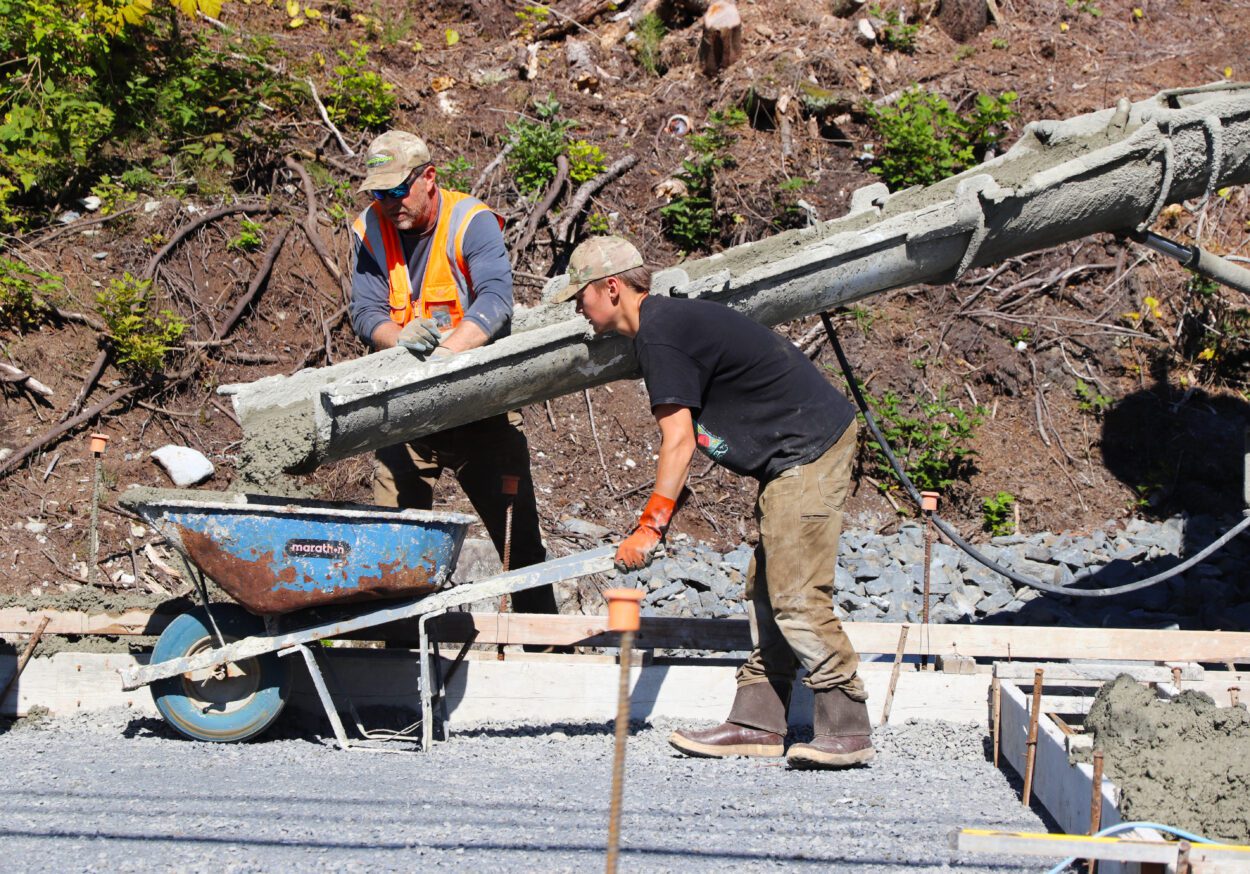
Contractors broke ground in Sitka Friday on the final piece of a two-decade project seeking more affordable housing. The new units will be rented at a reduced rate, and aim to help young families stay in the community.
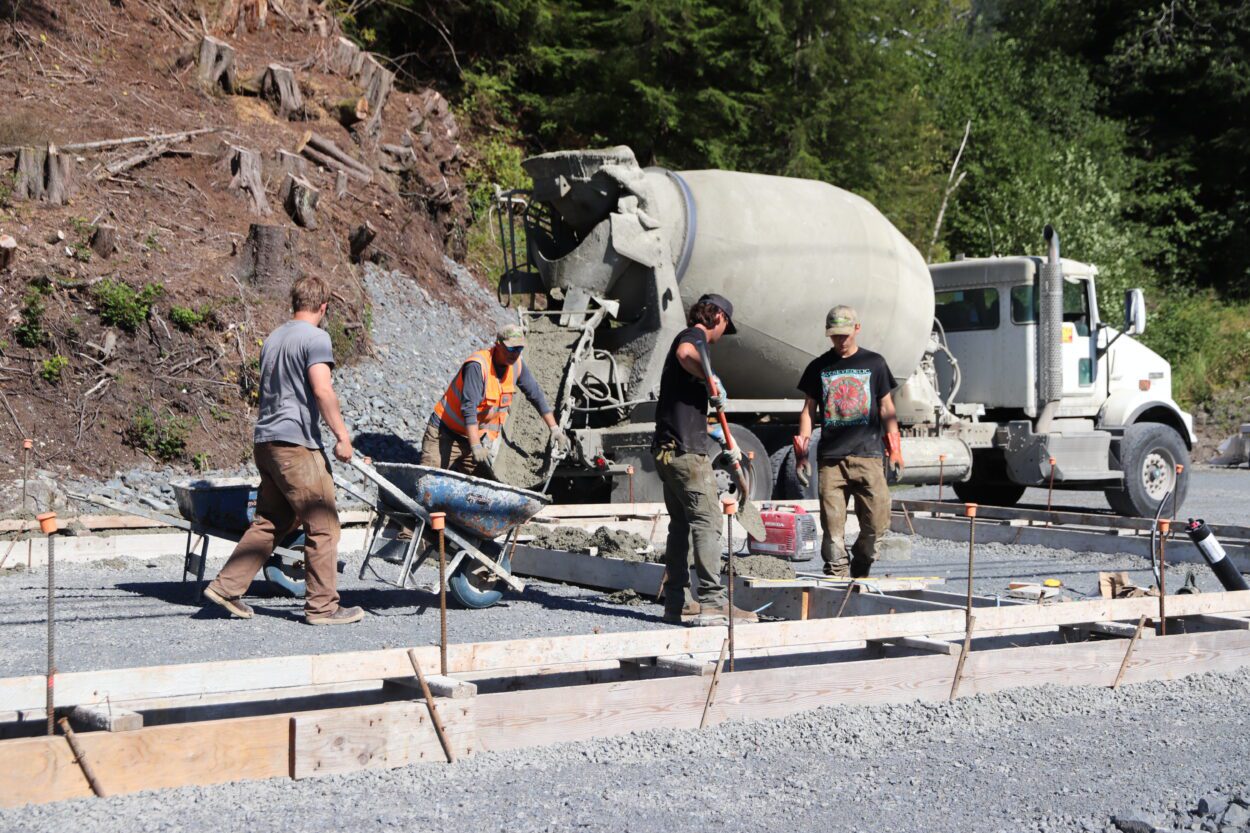
It’s a sunny, windy day in Sitka, as a concrete truck pulls into the Sitka Community Land Trust’s lot on Halibut Point Road and starts to pour grey concrete into a 25 by 34 foot foundation.
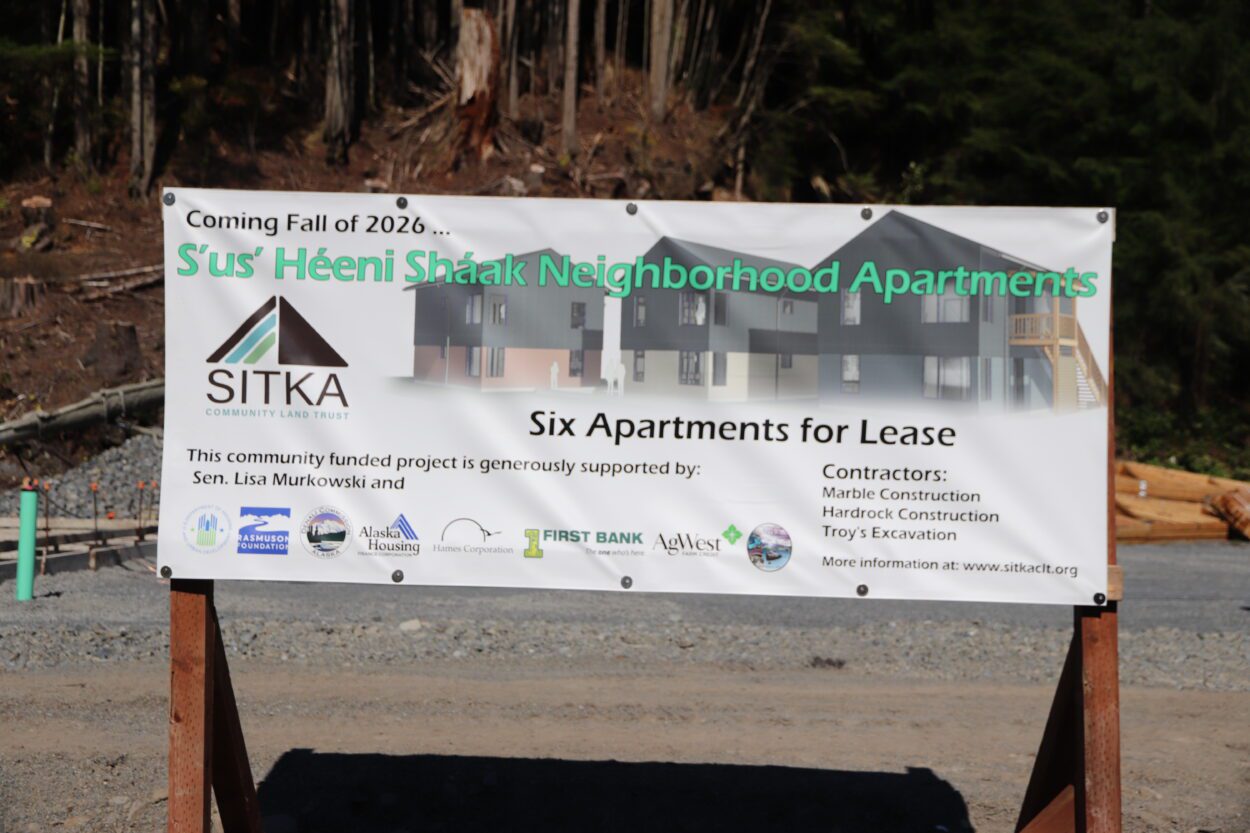
Contractors are breaking ground on three duplex apartment buildings that, once completed, will be rented to Sitkans at below-market rates. The six units in the works are part of the S’us’ Héeni Sháak cottage neighborhood, a land trust community where Sitkans can purchase a house, but not the land beneath the house, which saves substantial money for the buyer.
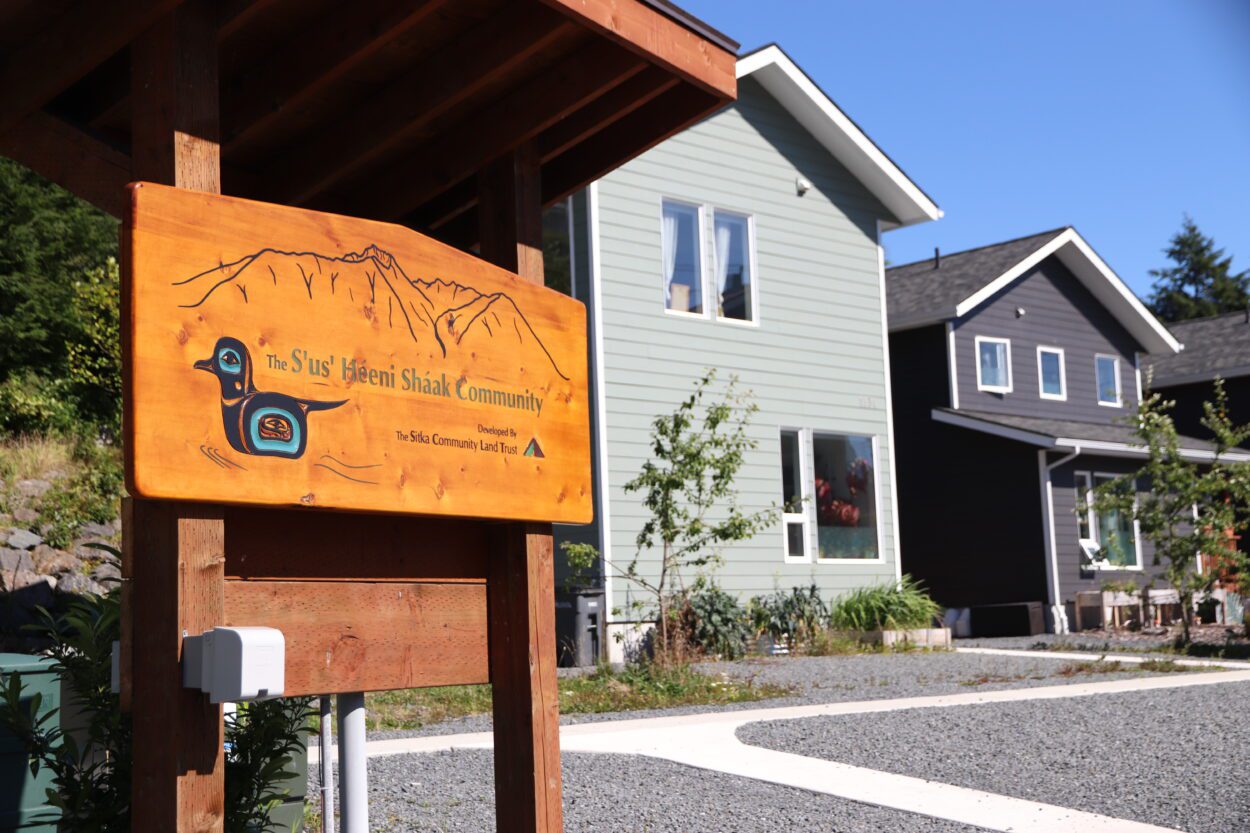
“We’re able to provide these homes, as we envision, to young families and first time home buyers entirely,” says Randy Hughey, executive director of the Sitka Community Land Trust, which bought this land from the City of Sitka in 2015 for one dollar.
The project is part of a decades-long push for affordable housing in Sitka — which, like many communities throughout Southeast Alaska, has struggled to keep up with housing demands, particularly during the busy summer season which sees an influx of both workers and visitors.
“Sitka has a housing problem,” Hughey said. “It has a housing crisis. It needs every kind of housing, ownership and rental.”
The cottage neighborhood will ultimately have 14 owned homes and six rentals. The rental income, says Hughey, will hopefully help the land trust — which relies heavily on the work of volunteers and semi-retired staff like himself — build more affordable houses in the future.
“Our mission is home ownership,” he said. “But we have the opportunity with this little piece of land that we’re now standing on here at the far western end of the site. We saw the potential for creating some apartments in these that we will provide at below-market value, and it’ll create an income stream that will help sustain our work in creating home ownership opportunities.”
Hughey says the crisis in Sitka is as much a demographic crisis as it is a housing crisis. Sitka has lost 800 people in the last 10 years, ringing in at just about 8,200 residents. The last time the population was that low was in 1987 — nearly 40 years ago.
In the past decade, the population of those 65 and older has grown by 43%. Meanwhile, the population of residents of prime working age (19-65) has decreased by about 15%, and the population of minors has shrunk by nearly 24%, according to a 2024 report on Sitka’s economy.
“That’s a demographic crisis,” Hughey says. “So if Sitka wants to be a vibrant, healthy, living community, and not just some vacation, getaway home or second home for people my age, then we got to change something, and the first thing to change is housing. We need more of it, and it has to be less expensive. And it is my belief that home ownership is the way that you get young families to stay here.”
Hughey says it comes down to the availability of land. Geographically, Sitka has the ocean in front, mountains behind, and a lot of muskeg in between. And a lot of that land is owned by the federal government, further limiting buildable space.
“If Sitka were a community in Southeast Alaska where young families could buy a home, we would be flooded with them. It’s not about jobs, it’s about housing,” he says.
The beauty of the community land trust model, Hughey says, is that it addresses the fundamental economic problem in housing in America, where property values have escalated vastly beyond incomes.
And while these two and three bedroom houses and apartments are compact — between 800 and 1,200 square feet — he says both the owned homes and rentals will help young families get a foot in the door, and encourage them to stay in Sitka. Hughey says they estimate construction will be complete by end of summer 2026.
“These are the size of homes that I grew up in, and all my cousins grew up in,” Hughey says. “Everybody had small homes back then. And when they sold them, nobody made a ton of money. They all made some money and were able to maybe buy a little bit bigger home or a little nicer, some land, whatever. But nobody was getting rich in home sales. Now, those days are past.”
The City of Sitka is currently working on a land study to determine the feasibility of land for future housing development. Thus far, consultants have identified nine possible sites.