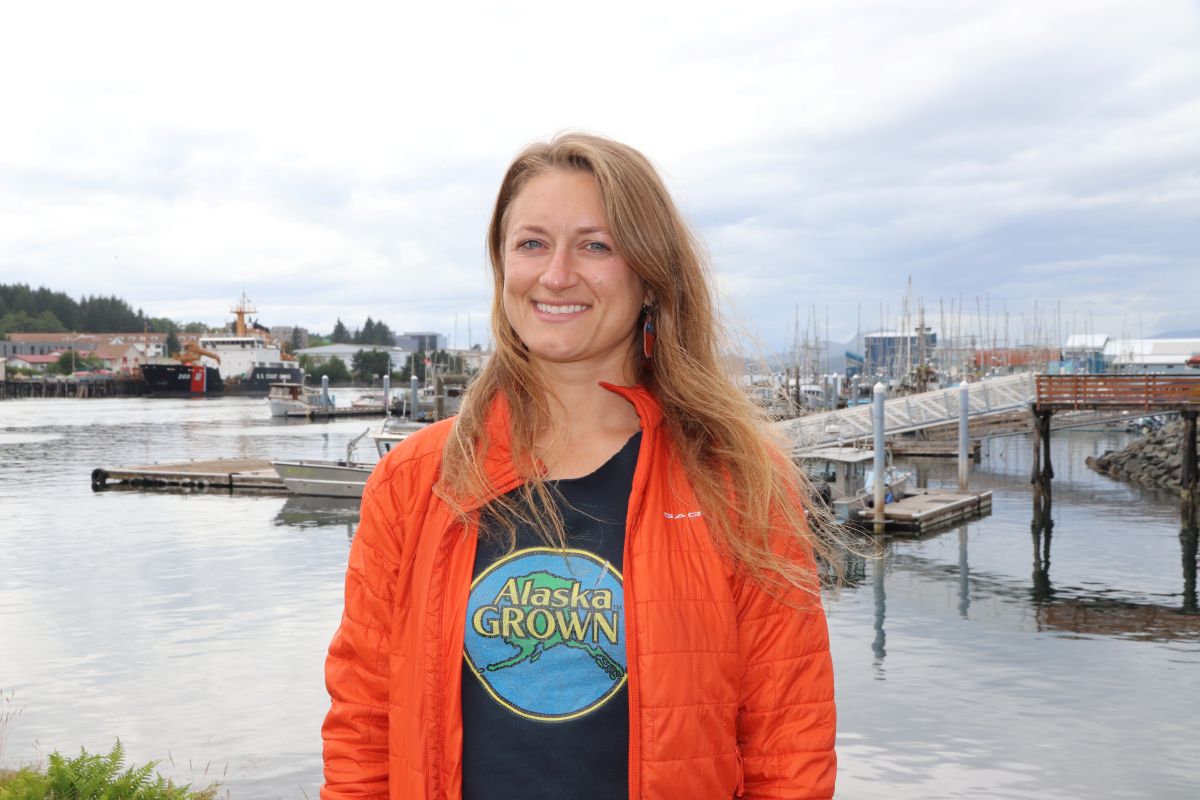
Katie Riley
Age: 32
How many years have you lived in Sitka and in Alaska? I was born and raised in Sitka and have lived most of my life here. I attended college out of state and briefly worked abroad.
Occupation: I am thankful to have two jobs that I am passionate about. I fish commercially in Bristol Bay, and serve as deputy director of the Sitka Conservation Society. I love the physical work of fishing, as well as being on the water and the dynamic decision-making and problem solving involved in the job. At SCS, I develop policy and programs to support the cultural richness, ecological health, and economic prosperity of our community and region. These roles are complementary: they are both rooted in my love for being out on the land and water, living our Alaskan way of life, and making sure that future generations can also thrive in this place.
Family:
My parents, Sandra Gelber and Tim Riley, were part of a generation of newcomers to Alaska who were inspired to move far away from their families to make their lives here. They both contributed their time and efforts towards the betterment of our community, whether through public service on municipal commissions or working tirelessly with many of Sitka’s special needs kids and their families. I was also raised by the larger community of Sitka Sound Seafoods, where my dad ran the packing room, and the employees of the Sitka Community Hospital, where my mom worked as a physical therapist. My parents raised my brother and I to interact with and fully appreciate this amazing place by taking us camping, hiking, snowboarding, fishing, kayaking, harvesting, and immersing us in our natural environment and the broader community.
My mom is a huge inspiration for how I live my life and think about service. She passed away in 2014. My dad still lives in Juneau and visits Sitka frequently in his work as an appraiser, and my brother lives in Anchorage where he lives with his wife. I am lucky to be surrounded in Sitka by an extended support network of aunties and uncles.
Have you previously run for public office? When and what office?
This is my first run for public office.
Previous government or other relevant experience:
I have served on the Planning Commission for the past five years, currently serving as vice chair. I am also vice chair of the Sustainability Commission, and have previously served as chair. This commission was created out of the work of the Climate Action Task Force, which was created by the assembly in 2020.
I spend a significant amount of time in my day job interacting with and strengthening relationships with people in our local, tribal, state and federal governments. I also advocate for solutions that will benefit Sitka and Southeast Alaska in the long term. Last year, I lived in Washington DC for 3 months working at the US Department of Agriculture Office of Tribal Relations. During this period, I researched and advised the agency on how they can better support rural and Indigenous communities that depend on fish for their cultural, social, and economic prosperity. I also worked to shift federal procurement methods to support small-scale fishermen and processors.
Community involvement, past and present:
In addition to my service on local boards and commissions, I have volunteered for the AFS intercultural exchange and a variety of local events, including koo’eex. I played rugby with the Sitka Sockeyes and volunteered on the team’s board. I practice values that I have learned from Tlingit culture by subsistence harvesting and sharing with others who don’t have access to the resources, knowledge, time, or infrastructure needed to take advantage of these opportunities.
Why are you running for a seat on the Sitka Assembly this year?
I plan to live my life in Sitka, and I am motivated to ensure that it remains possible for other young people, families, and elders to live here, too. I am running for assembly because I believe that supporting the ability of younger generations to build our lives in Sitka will strengthen our whole community. I think that local government can have a positive impact on people’s lives, and I want to bring a positive, solutions-focused approach to the table. I work to bring people together to find compromises, research the issues and ask questions, and listen and learn before making decisions. I speak up for what I believe in, but I keep an open mind and strive for balanced outcomes.
I can speak to the challenges and opportunities that my generation is facing, while bringing the skills I’ve cultivated over the last five years to be effective in local government. I know from experience that there is a big learning curve here – and I’ve taken the time to learn about how municipal systems work, where changes can be made to increase efficiency, and how to get results.
I’m at a place in my life where I’m ready to dedicate the time and energy that this job requires. Since 2020, I’ve consistently attended twice monthly commission meetings that have run anywhere from 30 minutes to 3 ½ hours while working, fishing, and adventuring. I am grateful for all the folks that have dedicated time to serving on our assembly and other local boards and commissions, because I know how much effort it takes.
1. Address our housing crisis through a mix of zoning code changes, vision and guidance for future lands development, and finding creative pathways to support higher density housing on our limited buildable land.
2. Ensure that the Assembly is prioritizing finding solutions and funding pathways to address our childcare needs
3. Achieve a balance between the economic benefits of our growing tourism, healthcare, and marine industries and the impacts and costs to our housing stock, infrastructure, and local workforce.
Ballot Propositions
Proposition 1: This fall, voters will consider a ballot initiative to amend the city’s Home Rule Charter and direct future surplus revenue from the Sitka Community Hospital Dedicated Fund toward new and revitalized athletic and recreational facilities. Do you support this proposal? Why or why not?
No. While I support the intention of this initiative, I am not convinced that it represents the highest and best use of our limited capital funding.
I am really grateful for the amazing recreational opportunities that this community offers and all the community volunteers and supporters that dedicate their time and effort to making these a reality for so many kids. I was one of those kids who benefitted and I participated in everything from softball, baseball, swimming, Sitka Fine Arts Camp, soccer, the Julie Hughes Triathlon, water polo and rugby. I know that our entire community would benefit from revitalized athletic and recreational facilities. I also feel the need to be extremely judicious with our capital investments, and ensure that any ‘extra’ funding we have goes towards the most dire needs facing our community wellbeing right now, which are housing and childcare. I think that any funding source that we can identify, no matter how small, can contribute towards solutions for these challenges by creating incentives for building higher density housing, rehabilitating homes or improving energy efficiency, subsidizing childcare facilities to increase their capacity, or providing utility bill support for those most in need.
Proposition 2: Sitkans will vote on a ballot measure this fall that would require future citizen initiatives to include economic impact studies, paid for by the initiative’s sponsor. Do you support this proposal? Why or why not?
No. I am a firm believer that a more civically engaged population is a good thing, and this ballot measure creates unnecessary barriers to participation. Our community prides itself on civic engagement and community involvement, and I do not think that becoming the first community in Alaska to limit citizen initiatives is a badge that we want to wear.
I think that creating a requirement to include economic impact studies creates more jobs for consultants and lawyers, who will be paid to produce results that support the point of view of the groups contracting them. However, there are many folks that do not have the means to hire expensive consultants, and if they are willing to go through the difficult and time-consuming process of organizing language, gathering signatures, and working to advocate for a citizens initiative, then they should have the opportunity to present their case to the community and have people vote on their proposals.
I researched this issue, and learned that citizens initiatives are overall uncommon; there were 0 between 2008 to 2017. One of my goals for serving on the assembly is to listen to resident concerns and find good compromises. I think if the Assembly can do that, it will hopefully reduce the number of these initiatives into the future, because they are time-consuming and expensive for the city to deal with.
Tourism
Last year, the Sitka Assembly approved a Memorandum of Understanding with the local cruise ship operator. Is that MOU working? Are there any changes you would propose?
I don’t think that we have fully had a chance to see whether the MOU is working because it was unable to be fully implemented this year, given that bookings had already happened for the 2025 and into the 2026 season when the MOU was passed. I look forward to receiving community feedback on its implementation next year and making adjustments as needed. One change I would like to see is an agreement between both parties to collaborate on mitigating impacts from cruise tourism to telecommunications, workforce housing, and energy use. These are broader impacts that the industry has on our community beyond the number of visitors, and addressing them collaboratively would increase the quality of life for all Sitkans.
Overall, I am supportive of the Sitka Assembly taking a collaborative approach with the local cruise ship dock to negotiate terms of a mutually beneficial MOU and address the concerns of citizens. I think that the provisions outlined for no ship Saturdays, a shorter season through May to September, and the effort to ‘flatten the curve’ by reducing days with high passenger numbers are steps in the right direction.
What other steps should be taken, if any, by the Sitka Assembly to address Sitka’s tourism growth? Please explain.
I think the city should proactively negotiate with the Cruise Line Industry Association to agree upon uses for tourism head tax dollars. By working in collaboration with the industry, I believe that the Assembly can find creative uses of these funds to improve the visitor experience, meet the needs of the ships, and benefit the entire community. These funds should be used to contribute to the revitalization of our iconic downtown, including the Lincoln Street project, which is heavily utilized and visited by cruise tourists. They could also be used to support the electrification of the cruise ship dock and improve the over-burdened transmission line that runs out HPR.
– Downtown Sitka is unique among destinations in that it is mostly locally-owned businesses. I want the assembly to explore incentives and methods to maintain the strong cultural heritage and small town Alaska character of our downtown.
– As a fisherman, maintaining our ocean health and the resources that our sport, commercial, and subsistence fishermen rely on is of paramount importance. I want the tourism industry to respect our marine resources like the rest of us do. Alaska’s economy also relies on healthy fisheries, and the rise in wastewater dumping violations across the state concerns me. I would like to see the city elevate this issue through their legislative priorities and advocate for a return of the voluntary Ocean Rangers program.
– I would also like to continue learning from the efforts of other communities across the region that have worked with industry to establish tourism management regimes that benefit locals and visitors alike.
Budget
BUDGET: How do you propose funding city government (including enterprise funds, electricity, water, etc.)?
A budget is how a community expresses its priorities. My priorities are to balance our city budget in a way that is fair to our current residents, while also making sure we are not putting undue burdens on future generations.
City government should be funded through a balanced mix of taxes, enterprise revenues, and support from state and federal grants. However, we cannot rely on grants to fund our priorities and we have to live within our means. That means identifying our most critical assets and making sure we have a maintenance plan and are consistently putting away funds to pay for maintenance, so that we are able to maintain levels of service and avoid the increased costs of deferred maintenance. WIth the amount of infrastructure we built during the oil boom of the 1970s and 80s, our enterprise revenues have had trouble keeping up with maintenance and back-up equipment.
I do not support building assets that we don’t have funding to maintain unless there is a strong case for a positive return on investment that would create broader economic and community benefit, and such investment is in line with our community priorities and values. We need to be judicious with the assets that we have and where possible, use them as a lever to both a) meet the needs of our community (especially in regards to housing and childcare) and b) generate a return to support community priorities.
School District
What’s your philosophy on school funding? Should we fund the Sitka School District to the maximum allowable by state law, or “the cap”?
Yes. Strong schools are the basis of a strong community; investing in our schools and our young people is an investment in the future of our community, our workforce, and our economy. Sitkans have shown their strong support for investing in educational opportunities for all our kids by passing additional taxes to pay for student participation in extracurricular activities and building maintenance. Our assembly routinely demonstrates these values by funding our schools to the maximum allowable by state law and finding creative ways to support students through in-kind contributions like providing utility support, and taking over maintenance of Blatchley pool and the Performing Arts center. Our school district also routinely collaborates on grants with the Tribe and other local and regional institutions, including the organization I work at, to enrich the learning opportunities available to our youth.
I am concerned by the State’s efforts to hold these contributions against our community and reduce our access to state funding. We need to work with other communities across Southeast and statewide to advocate for maximizing state and local contributions to education.
Housing
What tangible actions can the Sitka Assembly take to ease Sitka’s housing crisis?
While the Assembly’s ability to address the cost of housing in Sitka is limited, I will be a voice at the table to do everything in the power of our City government to make housing more affordable and accessible through local investment, public-private partnerships, creative use of municipal land, and zoning and fiscal policy. As a member of the Planning Commission, I’ve already taken action to ease Sitka’s housing crisis. I have consistently voted in favor of projects that have eased regulations to create more housing. I’ve also worked with assembly members to pass community-driven short-term rental regulations via ordinance, which didn’t solve the problem but contributed to not making it worse.
The city’s new housing study provides an opportunity to not only get more land out for development, but also to ensure that some of these lands are developed in ways that retain their affordability and accessibility to year round residents. Affordable housing in Southeast Alaska is extremely difficult to achieve, and it has to be subsidized; whether by investing in utilities and roads or decreasing the cost of land itself. The Assembly can do a few things to ease our housing crisis:
1. We can adjust our zoning code and give discretion to the Planning Commission to ease permitting requirements and speed up the regulatory process for builders
2. We can create incentives for developers to build higher density housing, including accessory dwelling units and multi-family units
3. We can dedicate some portion of city land to the Sitka Community Land Trust, which will create options for some folks to buy a starter home and start building equity
4. We can work to designate land for workforce housing, year round residential housing, and visitor housing, so that all three groups are not competing for the same housing stock
Policy
Describe one piece of legislation you would like to bring forward as an assembly member, and explain how you would fund it.
As an assembly member, I would look for low-hanging fruit while working on bigger goals. Specifically, I will work to expedite permitting processes for developers to increase housing density. I am already working on ordinance language with a fellow Planning Commissioner that would allow the Planning Commission to act with more discretion (thus increasing speed) to implement the housing initiatives outlined in our comprehensive plan. This would not cost anything apart from staff time, would ease the regulatory burden on developers, and would result in quicker permitting of lots for higher density housing. I look forward to bringing this ordinance language forward as an assembly member.
If elected, I will also work with my colleagues on the assembly to determine whether it is possible for the City to reprioritize any of our existing revenue sources, such as the bed tax, to address our housing affordability crisis.