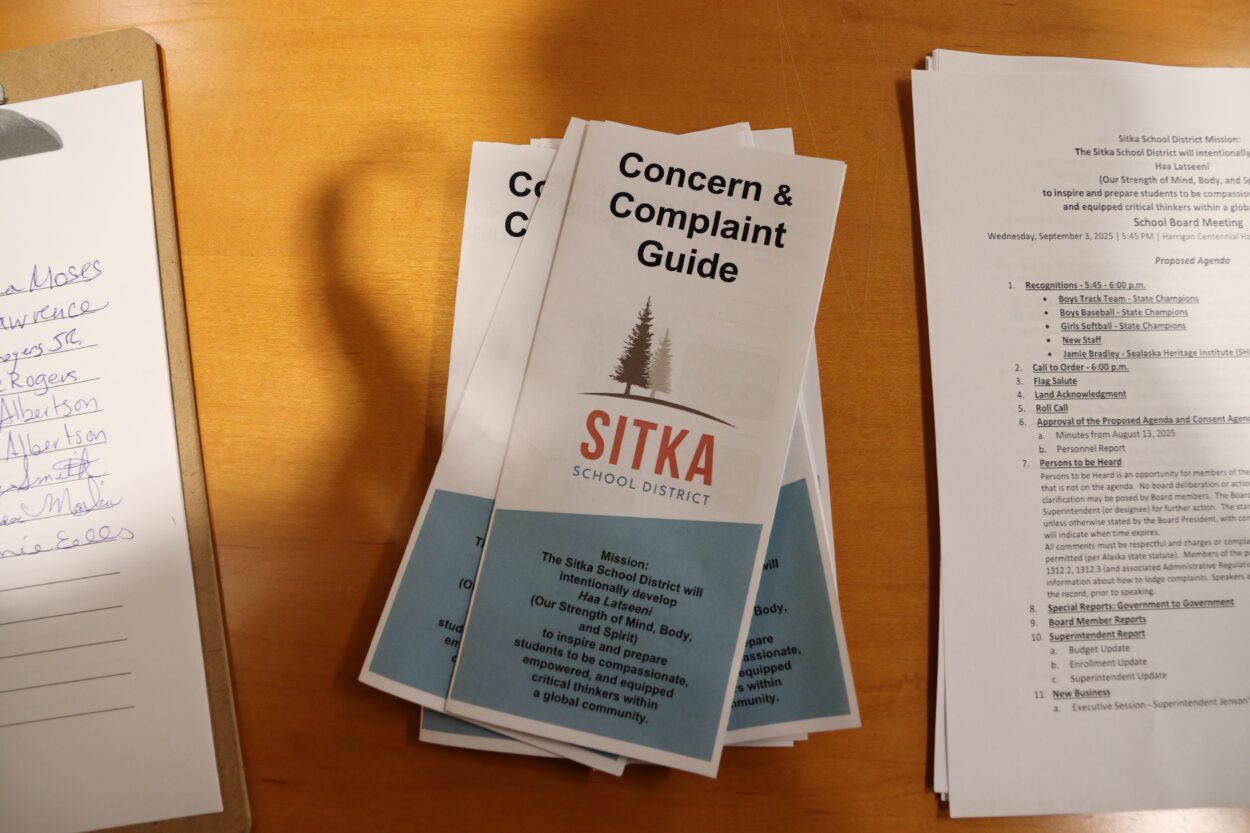
Wednesday’s (9-3-25) Sitka School Board meeting turned contentious after board members told the public it wasn’t the forum to lodge complaints about school staff.
Instead, the 30 or so audience members were directed to a stack of the school district’s “Concern and Complaint Guides.”
Much of the crowd showed up to speak about a local teacher. But board members asked them to lodge a formal complaint through the district’s official process.
School Board President Phil Burdick started the meeting by reading part of the board’s policy and Alaska state statute that says “comments must be respectful and charges or complaints against specific employees are not permitted.”
“I understand that there are many people in the audience tonight who may wish to take some time to air grievances against or sing the praises of a district employee. This is not the time or the place or the process for this,” Burdick said. “I’ve heard from many of you already, and I will not allow this portion of the meeting to turn into a trial of public opinion.”
The name of the teacher and the nature of the complaints were not disclosed at the meeting, but KCAW has learned the complaints deal with a teacher’s alleged social media post about an assault that occurred during a political protest. KCAW has learned the name of the teacher and reached out to them, but they didn’t want to comment without an attorney.
At the school board meeting, Sitka resident Linda Marlin said she was disappointed by the board’s decision to not let them speak.
“I really find it odd that we have a problem talking to you folks about what’s going on in our community,” she said. “I’m really deeply saddened by the way this committee doesn’t really want to listen to the people that really care.”
Marshall Albertson was an alleged victim of the assault at the protest, suffering a broken nose and concussion, according to Sitka police. Early in the meeting, he called Burdick a “coward” for not allowing public comment concerning district staff, and said he wanted “a good reason” for why not.
“I find it kind of strange why you would not want to hear from the community about maybe a faculty member that is — how can I put this so you don’t shut my mic off — condoning things that everybody should be against, no matter what side of the aisle you’re on,” Albertson said.
Most members of the public left the meeting after the public comment portion wrapped up.
In an interview with KCAW, Superintendent Deidre Jenson said the public is welcome to comment at meetings if it’s on a “general topic,” but not if it’s a complaint about personnel.
“Complaints should be handled at the lowest level possible, first,” she said. “Really, [it should be] sent to their supervisor first, and then if they don’t like that response, then it moves up the chain to superintendent and then to the board if they don’t like that response.”
She said while her door is always open for feedback from the community, the formal complaint process is necessary to protect the rights of staff per state statute and board policy.