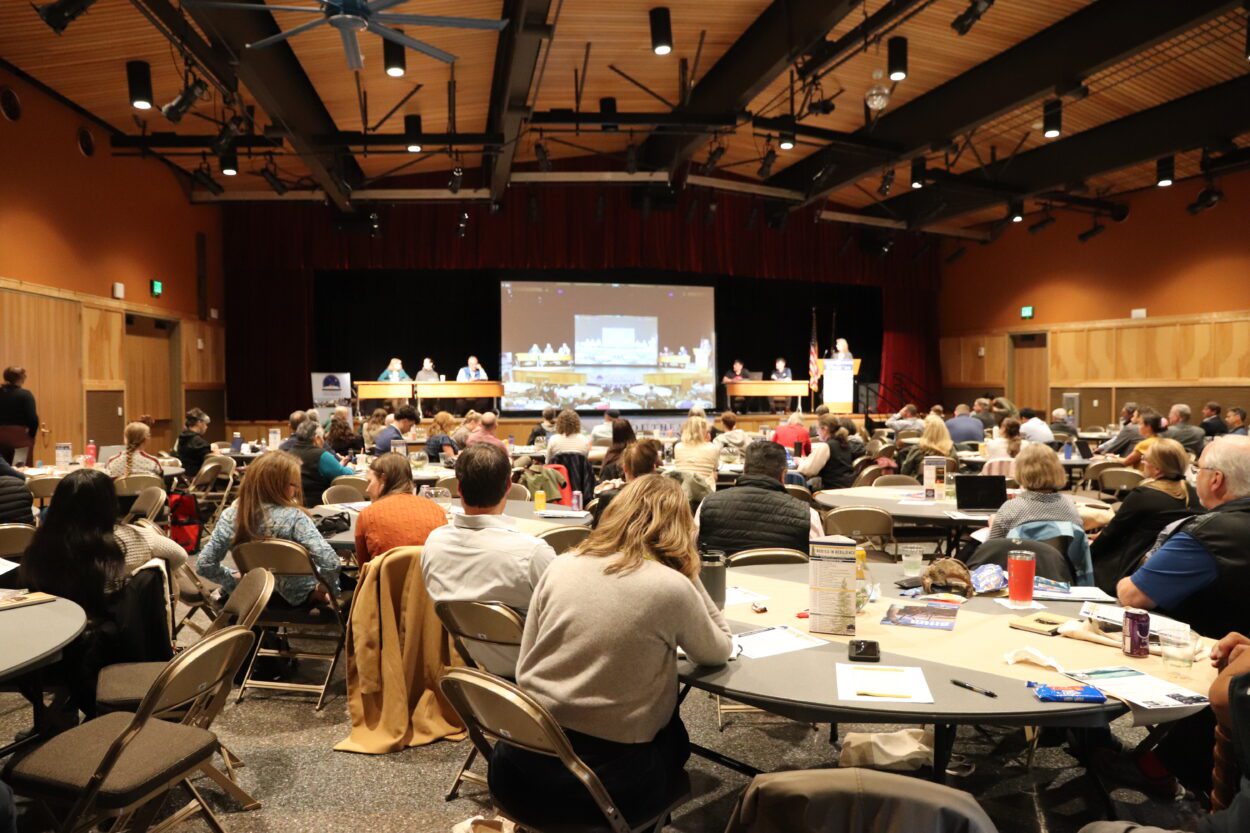
Southeast Alaska’s annual economic conference is taking place in Sitka this week. For three days, people from around the region will explore economic drivers like tourism and the seafood industry. One of the sessions on Tuesday looked at economic factors like jobs, wages, and business challenges. The region has seen steady job growth over the last five years, but the workforce isn’t keeping up.
The problem points to a demographic shift, according to Meilani Schijvens, owner of the Juneau-based research and consulting firm, Rain Coast Data. She presented at the conference.
“Our number one economic problem is declining younger people,” she said.
Most of the region’s jobs are in the government sector including federal, state, local, and tribal. That’s followed by tourism, healthcare, and then seafood.
But there aren’t enough young people to fill the jobs. The region is aging – in Petersburg, seniors 65 and older make up a quarter of the population.
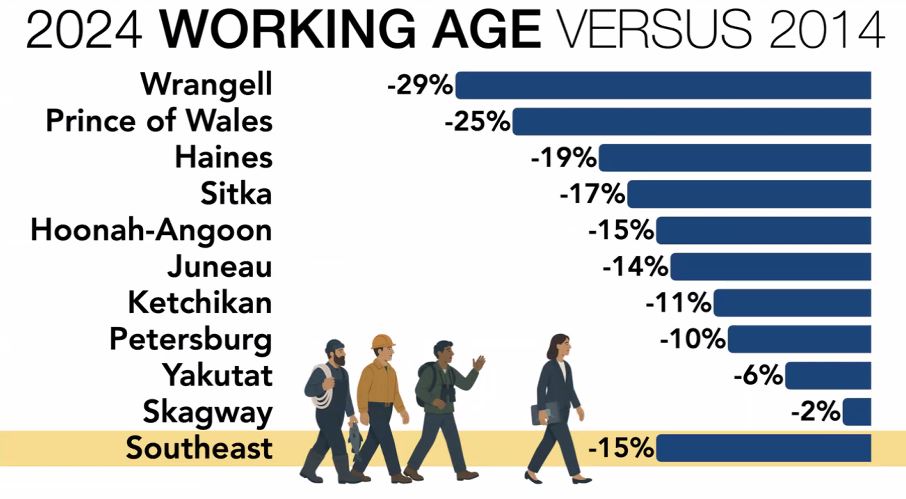
Schijvens said the region lost 7,700 kids and working age residents in the last decade.
“For Southeast Alaska to prosper in the future, we must focus on attracting and retaining a vibrant future population now,” she said.
Retention is a major issue. Last year, more people moved out of Juneau than moved in. Wrangell lost nearly 30% of its workforce over the last 10 years.
The top three reasons young people leave? Lack of affordable housing, the high cost of living, and lack of affordable childcare – in that order. The average price of a home in Juneau is $503, 354, and in Sitka it’s $485, 334.
Schijvens said the region’s demographics aren’t expected to change in the coming years.
“We’ve mapped it out, you know 25 years, and we still have a region without the young people and the workforce that we need,” Schijvens said. “So, the only way out of this issue is to build, build, build housing.”
The Southeast Conference continues in Sitka through Thursday.