Kelp is showing up in everything these days– cookies. Hot sauces. Even vodka martinis. The last one may be thanks, in part, to Mark Shear, a kelp and oyster farmer who partnered with a distillery in Ketchikan to develop sugar kelp vodka.
“And just on a, just on a whim, I was talking with them, and I had just happened to have some seaweed in the plant, and Travis said, ‘Well, let’s, let’s try to make a vodka out of it,’” recalled Shear. “And so we dropped a couple 100 pounds of ground sugar kelp off, and they went and did their voodoo that they do, and whatever it is, and came up with this hold fast vodka, which is, which is freaking awesome! It is really good!”
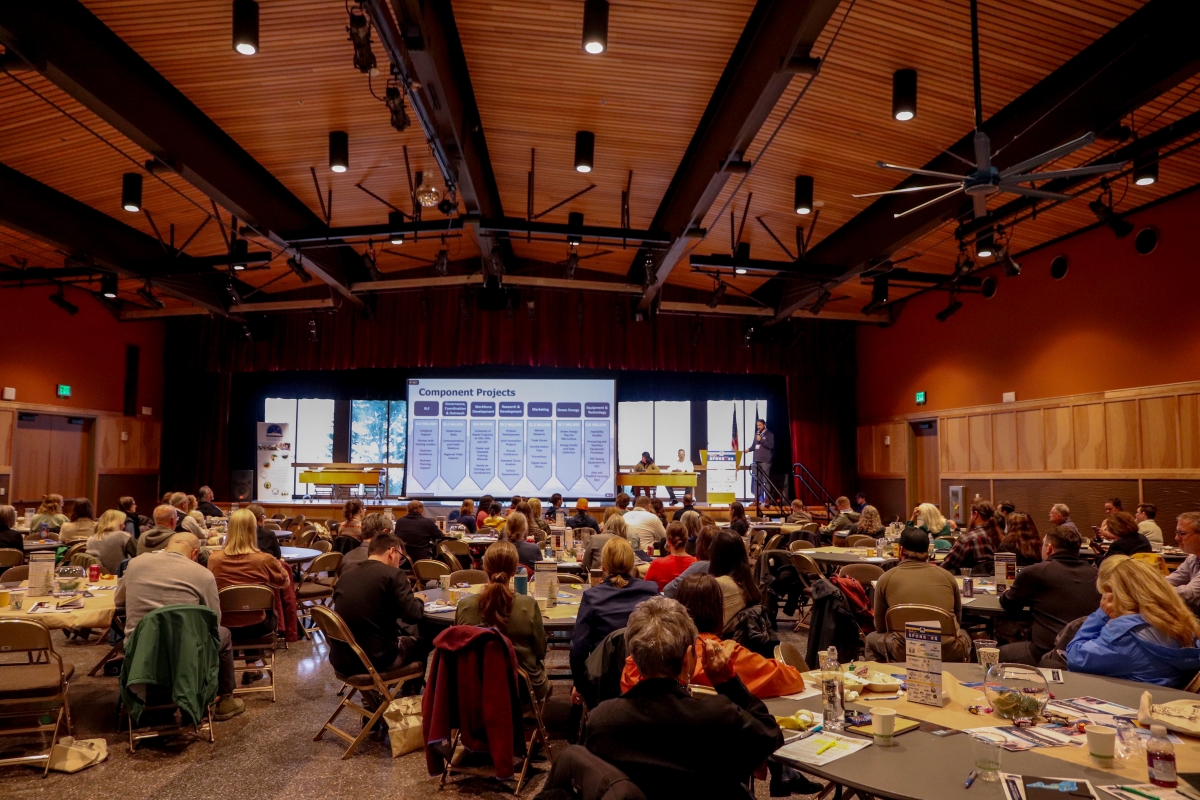
Shear was one of three mariculture experts who participated in a panel discussion at the Southeast Conference, an annual gathering of regional business and community leaders in Sitka in mid-September.
His company is one of many that has received funding from the Alaska Mariculture Cluster, a grant coalition working to develop a profitable and sustainable mariculture industry in Alaska in under five years. The cluster was funded by a $49 million grant from the U.S. Economic Development Administration under the Build Back Better Regional Challenge program.
With the support of the cluster, Shear’s business, Seagrove Kelp and Oysters, has not only been able to create over 12 new jobs, but also has gotten a foothold in seafood markets all over the world. Shear is optimistic that his company will continue to expand.
“If things go to plan, we will build another farm outside of Ketchikan, another scaled oyster grow farm outside of Ketchikan in the new year, and, and then hopefully stock that, and it would hopefully start producing in ‘27,” said Shear.
Panelist Angie Bowers is an assistant professor at the University of Alaska Southeast (UAS) Sitka campus. She said that nearly 90% of alumni from the university’s Applied Fisheries Program found work in the industry and aquaculture fisheries. Three-quarters of those jobs were based in Alaska. Bowers feels these statistics reflect how the mariculture industry has grown since the program began.
“Because I feel like in past years, especially when we first started this program, it was a little bit like the egg before the chicken,” said Bowers. “I guess it was kind of like we’re developing, we’re training these students in this industry that did, there wasn’t a lot of opportunity for them to go into and that’s definitely changing quickly, which is really exciting to see.”
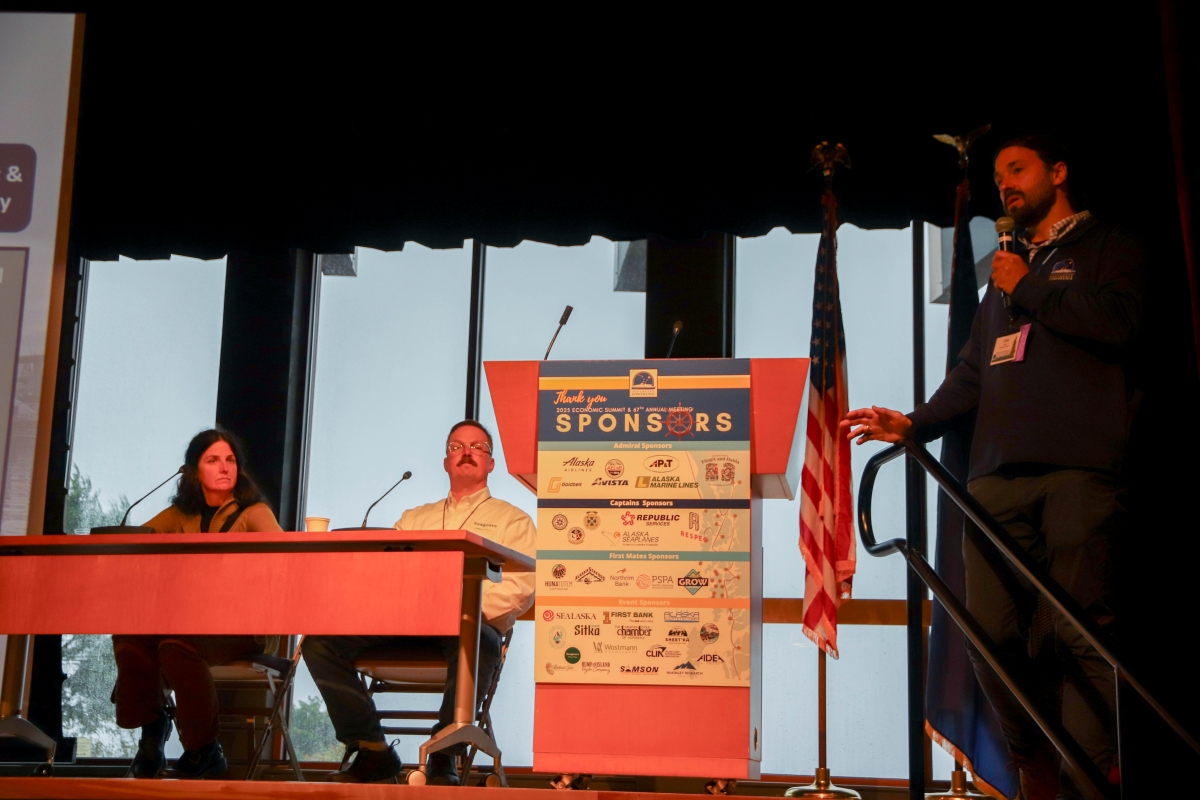
Dan Lesh is the deputy director of the Alaska Mariculture Cluster. He emphasized that collaboration is key as the industry continues to grow. Through a program the cluster has developed called the Alaska Mariculture Insights, people at all levels of the mariculture industry around the world are able to exchange knowledge.
“It’s just kind of interesting to see yourself being talked about on a global stage,” said Lesh. “It’s quite inspiring how much excitement and interest there is in what we’re doing. Even though we’re small, we’re innovative. We’ve got so many interesting problems and resources here.”
Amongst other initiatives, Lesh said the remaining $34 million will fund their current and new contractors in research, along with new farming and hatchery techniques, and the cultivation of different kinds of wild seaweeds. By the end of the next year-and-a-half, they hope that all their investments will have paid off so that they can continue on their own from there-on-out.
“We have to produce something of value to the world, or we this way, industry won’t stand on its own,” said Lesh.
With the Southeast shoreline at their fingertips, all three panelists were optimistic about the potential the industry has to support coastal communities.
Editor’s Note 9-22-25: Edited the audio for brevity