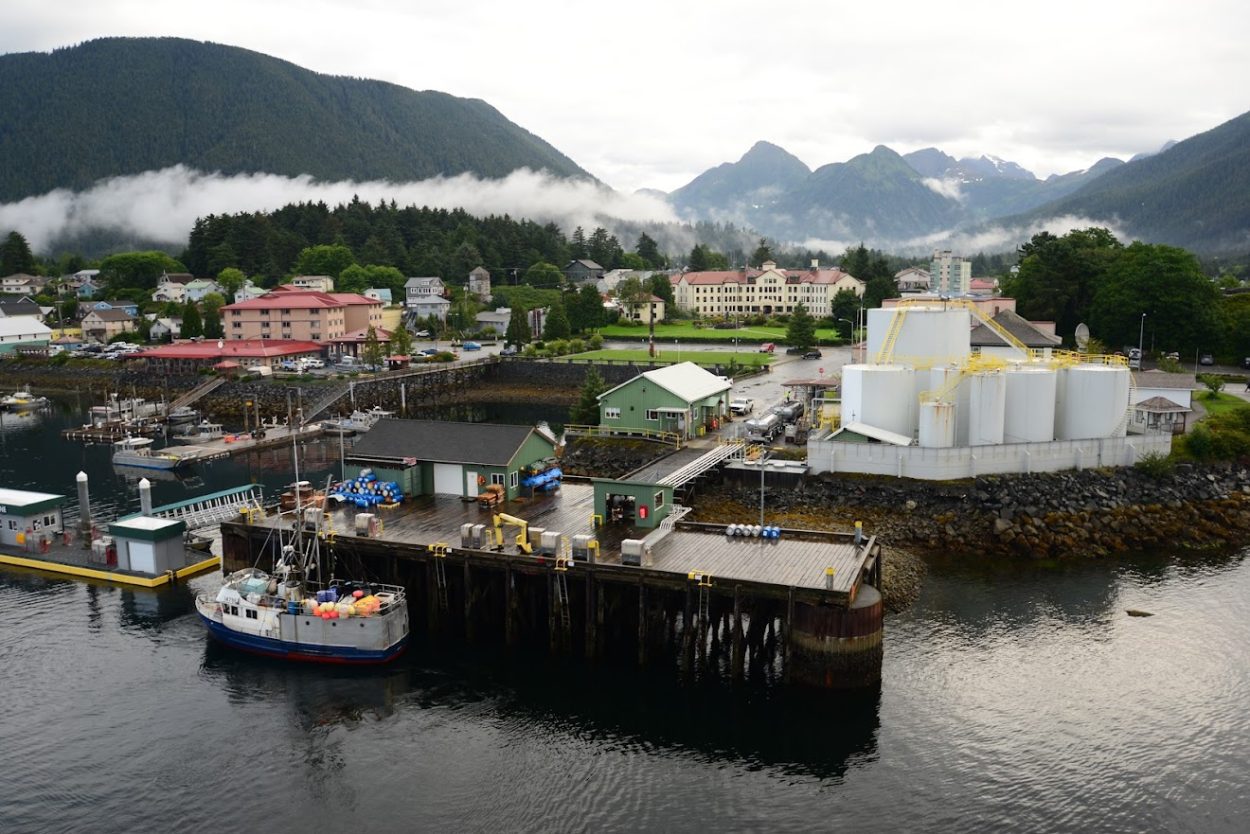
The Sitka Assembly transferred $3.2 million on Tuesday (9-23-25) to the city’s Public Infrastructure Sinking Fund — that’s money set aside for future infrastructure projects.
In a memo, Municipal Administrator John Leach estimated there was $7.2 million available to move to the fund, but recommended holding back more than half of that to cover anticipated increased costs of several ongoing city projects, including Lincoln Street utility upgrades and airport terminal improvements.
Mayor Steven Eisenbeisz said Tuesday this money is essentially a surplus — it’s the unspent funds from all city departments that get wrapped up at the end of the year.
“When we have a total amount available of $7.2 million that we can reinvest back into ourselves, back into infrastructure, because of the wise decisions made at the department head level that then filtered down through the staff, executing the visions. It really is a joyous moment for me,” he said.
Last year, the assembly approved a $4 million transfer to the fund. Assembly member Thor Christianson said until recently, the city was allocating hundreds of thousands of dollars in that fund, not millions. This, he said, is enough money to actually “do some stuff.”
“This is a big deal, and I doubt it will be the headline in tomorrow’s paper, but it should be,” Christianson said. “I know potholes have been in the news lately, but…as John calls it the alligators that are snapping at you — this puts a few of them to bed. And so it’s cool that we’re able to do this.”
Current city priorities, according to the city memo, include projects such as the city’s marine haulout, the airport terminal, the seawall, the seaplane base, and significant wastewater projects. Some of these projects, particularly those supported by federal or state grants, carry time constraints, which elevates their priority.
Assembly Member Kevin Mosher agreed with Christianson. He said the opportunity to transfer this higher amount of money into reserves in recent years speaks to the economic activity that Sitka is experiencing as a result of increased tourism.
“Sometimes we have to give up some of our town in the summertime,” Mosher said. “I’ve always thought we can either have this deal with that temporary inconvenience — that’s how we pay for some of these things and increase the funds. Or we have to pay it with taxes. And we don’t want to pay with taxes. So this is a workaround.”
The assembly unanimously approved the transfer of over $3.2 into the public infrastructure sinking fund. That money will be available for capital projects next fiscal year.