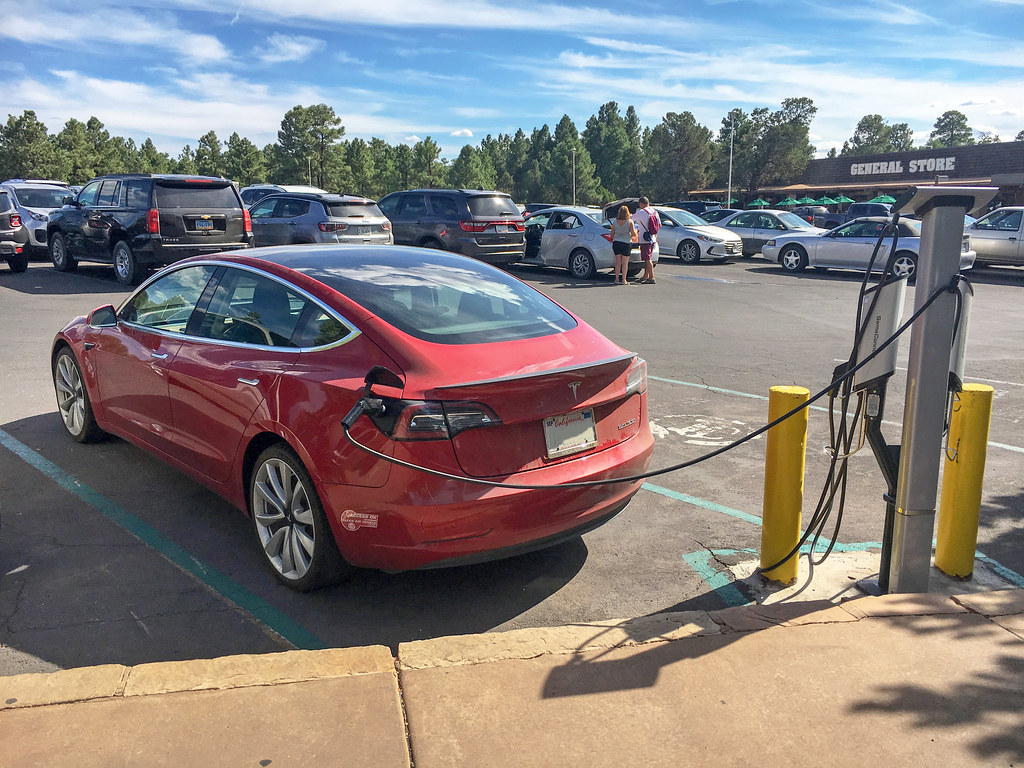
The City of Sitka is working toward electrifying as much of its vehicle fleet as possible by 2030, but a new barge policy may slow its efforts. In September, Alaska Marine Lines announced it would stop shipping electric vehicles on its barges to Southeast due to fire risk. Now the state ferry system is the only means of shipping those cars to Sitka.
Bri Gabel is the city’s sustainability coordinator. She says the ferry’s current limits of two electric vehicles per sailing may not be able to serve demand.
“We can now effectively move between 90 to 100 electric vehicles into Southeast entirely, in addition to between communities,” Gabel says, considering the average number of ferry sailings in a given year. “Let’s say a vehicle in Bellingham is going to Juneau. Well, now that vehicle can’t go to Sitka, right? Gotta wait for the next sailing. And so it is a pretty severe bottleneck.”
There’s a high demand for electric vehicles in Sitka and Southeast– the Alaska Energy Authority says there are nearly 1500 EVs and hybrid vehicles across the region already, and Gabel says Sitka has been bringing in around 75-80 EVs a year, on average.
In September, the municipal administrator, with support from the city’s Sustainability Commission, submitted a letter to the state in response to a request for comments on changing regulations for the Alaska Marine Highway System.
In the letter, they asked the state to update its electric vehicle policy by making improvements to its reservation system and increasing the number of electric vehicles allowed per sailing.
“Right now it is pretty arduous to try and book an EV, because the system is not set up to kind of fill those spots as they come. It requires a lot of phone coordination and back and forth with the ferry themselves, which is kind of challenging,” Gabel says.
Gabel says while Southeast Alaska may be feeling the squeeze right now, EV and battery technology is changing faster than policy can accommodate it, worldwide.
“It’s not going away. We’re increasingly seeing it as a more important thing in the way our grids are managed, and it is unfortunate that, in Sitka’s case, we are limited in our ability to get things due to a private company getting most of the things here,” Gabel says. “But it’s not an isolated issue. It really is a global challenge.”
The deadline to comment on changes to the state ferry system’s policies is this Friday, October 17, at 4 p.m.