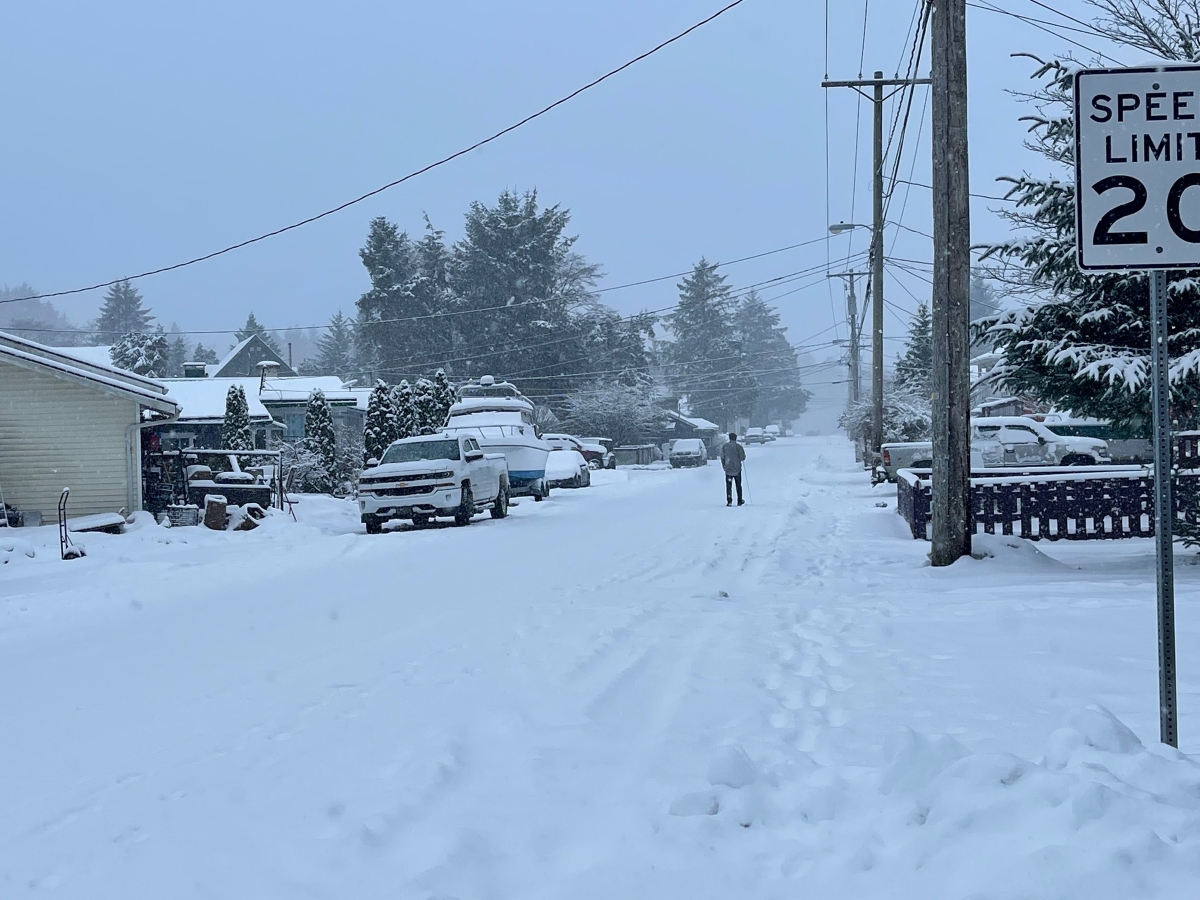
Southeast Alaska is better known for rain than snow, but this winter had an unusually frosty start. Much of the region saw heavy snowfall from mid-December into early January, including Sitka.
Spencer Fielding is a meteorologist with the National Weather Service in Juneau.
“We had that really long cold period, and it was really good for cold weather, and then we had a lot of moisture move in,” Fielding said. “So it brought a significant amount of snow to the area, especially for the last few weeks.”
And communities are seeing snowfall records shattered as a result of these weather systems. Last week, Juneau was inundated with over four feet of snow, collapsing roofs and sinking boats. A second snowstorm hitting the region on Sunday prompted city and tribal officials to issue a disaster declaration.
In Sitka, the snowfall has been much lighter than that, but Fielding said exactly how snow has touched the ground locally is unclear.
“We unfortunately don’t have any actual measurements for snow, unlike Juneau or other locations, so we don’t have any real way to say how much snow the Sitka area could be getting,” Fielding said.
Sitka’s weather data is collected at the airport by equipment owned by the National Weather Service- they gather rainfall data, wind speeds, and temperature. But snowfall needs to be collected manually by folks on the ground, typically by observers from the Federal Aviation Administration, or a contractor. Fielding said in Sitka, manual snow measurements haven’t been collected since 1996.
He said the region will continue to see snow showers through Thursday evening. Then, temperatures warm a bit, bringing heavy rain showers.
“I would just say, as we move into this warmer period, just make sure that folks, have any ways to mitigate their water ponding around their properties, or homes, that they’re clear of ice and anything that would impact removing the water,” Fielding said.
He said if any Sitkans are interested in volunteering to collect snowfall measurements as a cooperative observer, they can reach out to the National Weather Service office in Juneau.