Former Sitka state representative Jonathan Kreiss-Tomkins entered the race for governor this week. He’s the third Democrat to file alongside nearly a dozen Republicans vying for the role.
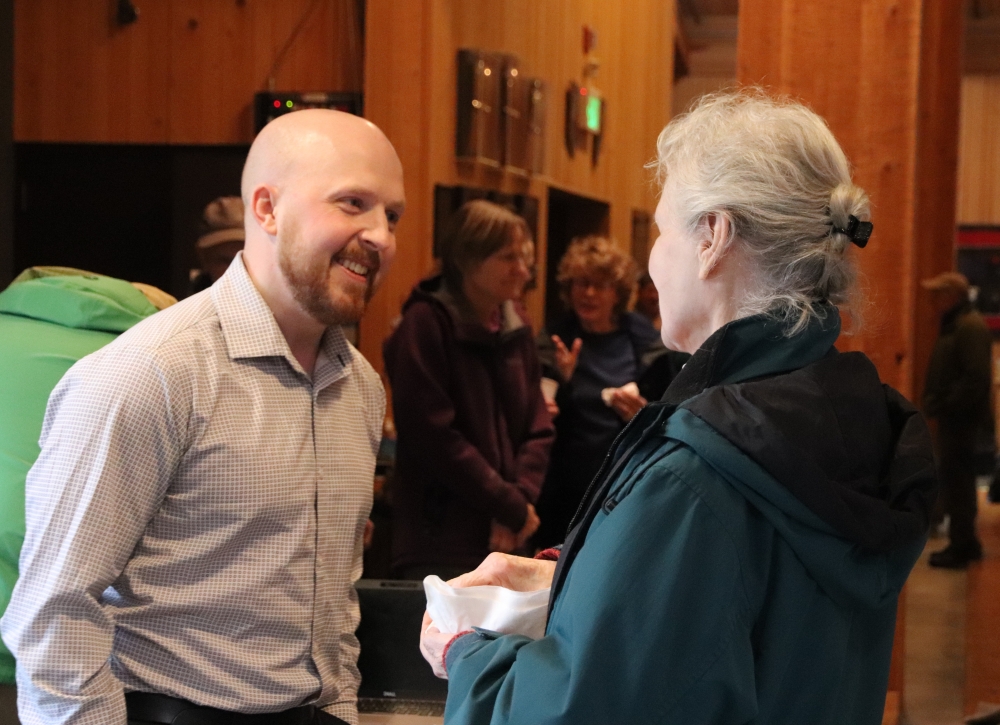
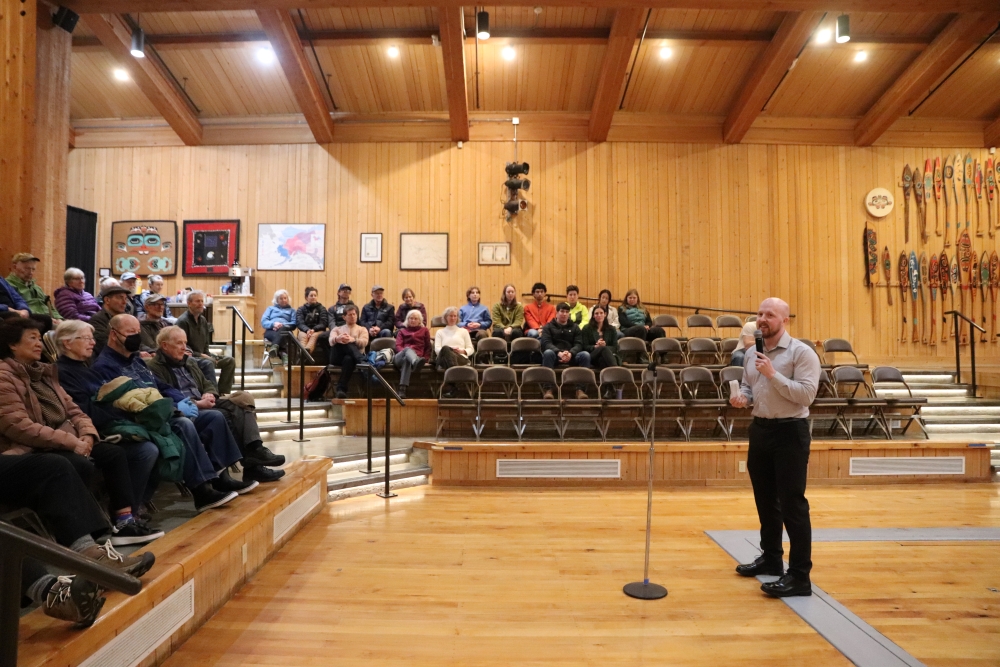
Kreiss-Tomkins announced his candidacy before an audience of around 70 supporters at a kickoff event in downtown Sitka today (2-4-26). He said, if elected, he’d approach the position the same way he tackled his work in the legislature, finding compromises across the aisle.
“It’s not like I’m throwing bombs, or putting out red meat press releases, or calling people names. I don’t think that gets you anywhere. It’s building relationships. It’s building trust. It’s treating people with respect,” Kreiss-Tomkins said in an interview with KCAW after the event. “That’s how I tried to carry myself in the legislature, and I think if we have a governor who can take that approach, there’s a lot of good that can happen for Alaska.”
In 2012, Kreiss-Tomkins dropped out of Yale at 22 to run for public office. He narrowly beat the Republican incumbent, winning his seat in the Alaska House of Representatives by just 32 votes. He spent a decade in that role, representing Sitka and other Southeast communities.
Kreiss-Tomkins said while he thinks the legislature is in the best place it’s been since the 1990s with its strong bipartisan coalition, the budget is another story. Last month, Governor Mike Dunleavy proposed a plan to bring in more revenue for the state, including introducing a temporary state sales tax and oil tax increase. Kreiss-Tomkins says there are parts of Dunleavy’s proposal he would take, and parts he would leave, but ultimately the question of balancing the state’s finances will take compromise and new leadership.
“I think it’s good he’s putting stuff out there. It’s a little rough that that’s happening eight years into an eight-year tenure, and there’s already been a lot of cost of inaction at this point,” Kreiss-Tomkins said. “And unfortunately, I think things are at a place between the governor and the legislature that it’s pretty unlikely that anything is going to happen this year.”
Last year, the legislature overrode the governor’s veto to increase school funding, but with increasing costs year-by-year, school districts are still facing budget shortfalls. Kreiss-Tomkins said he’d like to reduce budget uncertainty for school districts by passing a constitutional amendment to fund schools a year in advance, so schools aren’t basing their budgets on a moving target.
“The timing of the budget process is insane, where school boards literally have to guess the number that’s going to come out of Juneau while they’re finalizing their budgets. And again, more money, less money, whatever, but like, don’t do it at the 11th hour,” he said. “It’s actually like a pretty simple change that can just do a tremendous amount of good in terms of reducing uncertainty, and allowing school districts to actually plan and create a strong education for their students.”
As governor, Kreiss-Tomkins would influence fishery policy by nominating council members to the North Pacific Fishery Management Council. Kreiss-Tomkins said in his tenure on the legislature, he spent a lot of time lobbying for council nominations and testifying for policy changes, like lower bycatch limits, and his values haven’t changed.
“It’s suddenly becoming a much higher profile issue in the last year. I mean, I’m pretty proud that I was in the trenches for 10 years when it was less sexy, but it still mattered just as much,” he said. “And I certainly have the same values that small boat fisheries, like what we have here in Sitka or in Homer or in Dillingham are, you know, the economic lifeblood of the state, and it’s also just the way of life of coastal communities, and we need to make sure our fisheries management reflects those interests.”
He said he sees the decline of Alaska’s ferry system as a governance problem, and wants it to be politically independent.
“When you have infrastructure and multi, $100 million vessels and terminals, and there’s a different management vision every four or eight years, it creates such a dysfunctional patchwork system that it doesn’t work, which is it’s not working right now,” Kreiss-Tomkins said. “So making governance of the system independent, similar to the University of Alaska, where you have its own regents [and] it’s not like the President of University of Alaska comes and goes with every governor, I think is an incredibly important change for the ferry system.”
He said he has a lot of respect for fellow Democratic candidates Tom Begich and Matt Claman, and doesn’t want to campaign against them. In the end, it’s a question of which campaign connects with voters.
“Voters should have a choice, and they will have a choice, and I’m just excited to sort of put another option on the table,” he said.
At the kickoff event, Kreiss-Tomkins told supporters that so far they’ve raised over $400,000 for his campaign.
Kreiss-Tomkins is the 16th candidate to file for the governor’s race. In Alaska, the top four vote-earners advance from the August primary to the general election in November, regardless of political party.