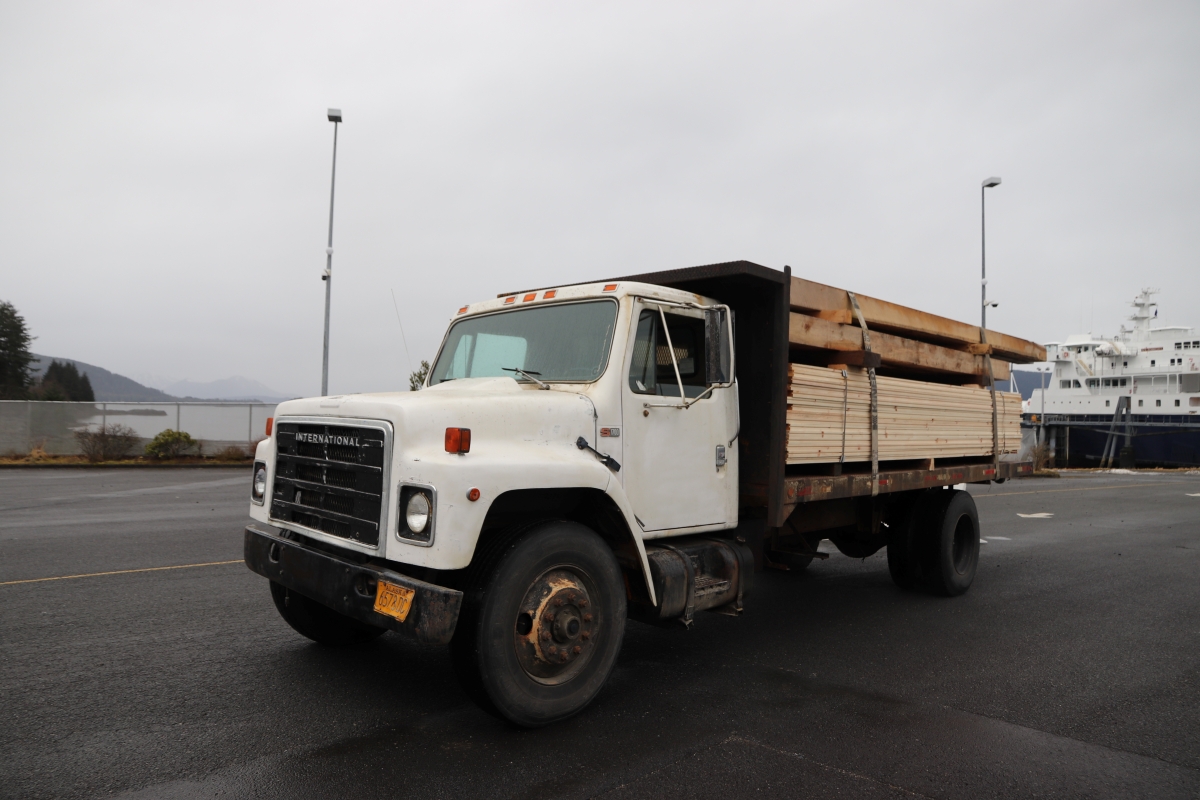
I climb up into the large white flatbed truck, its loud diesel engine roaring around me. The bed is stacked with hundreds of young-growth Sitka spruce boards harvested from Mitkof Island in the Tongass National Forest.
The lumber arrived in Sitka from Petersburg on the Kennicott ferry on Jan. 27. Its final destination? An outdoor learning shelter being constructed behind Pacific High School.
“I think there’s about three-and-a-half to 4,000 feet on the truck right now,” says Brett Martin, co-owner Alaska Timber & Truss in Petersburg, as we make our way from Sitka’s ferry dock to the construction site. The company aims to provide local lumber for Southeast and Southcentral Alaska.
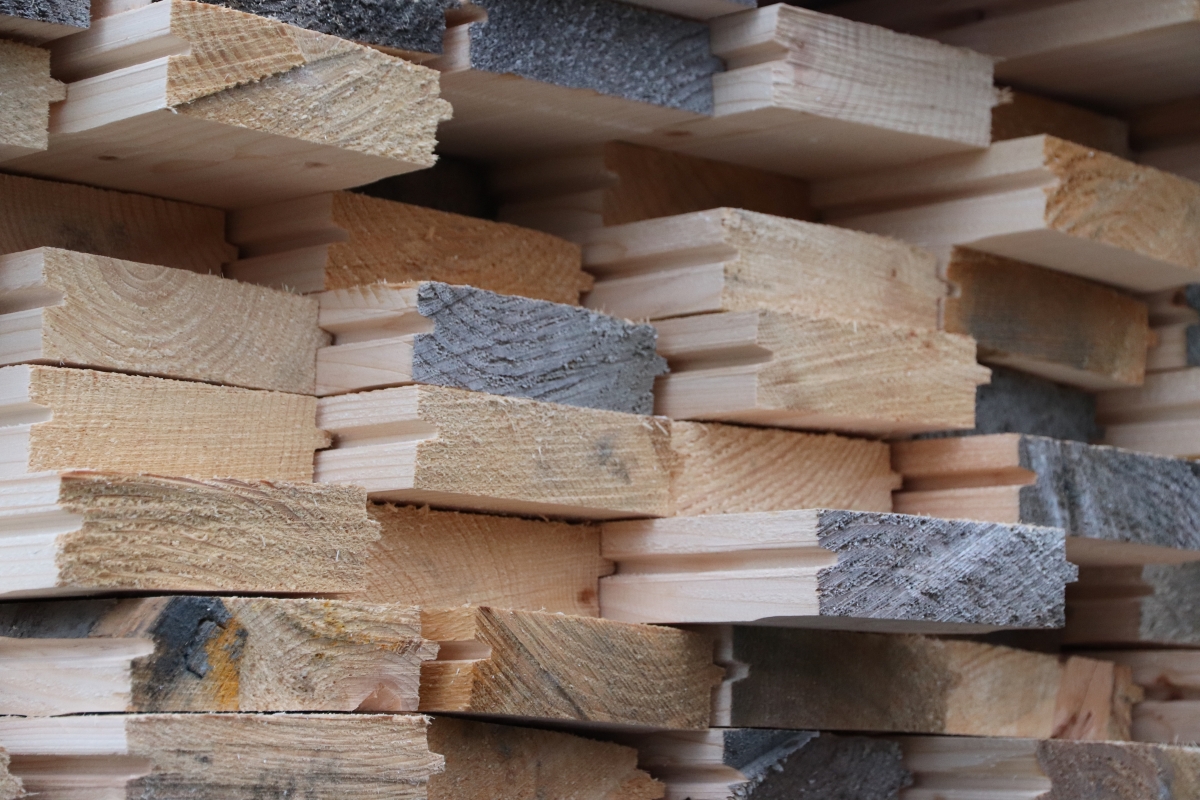
Martin says this is the second batch of lumber shipped to Sitka on the ferry for this project. To get it ready, they let the spruce air dry for a year after harvest before it went into the kiln to dehydrate for about six more days. He also used the company’s tongue and groove machine for the first time since buying the business in 2021 to make the boards interlock seamlessly. Martin says it’s exciting to be part of this build.
“It’s going to be around for decades, if not longer. It may be just like one of the houses around here, the bishop’s house, or somebody else’s, that’s going to be here for a century or more because they take care of it,” he says. “And it’ll be the first of its kind. I don’t know of anybody else that had focused on building a big timber structure like that in Southeast Alaska.”
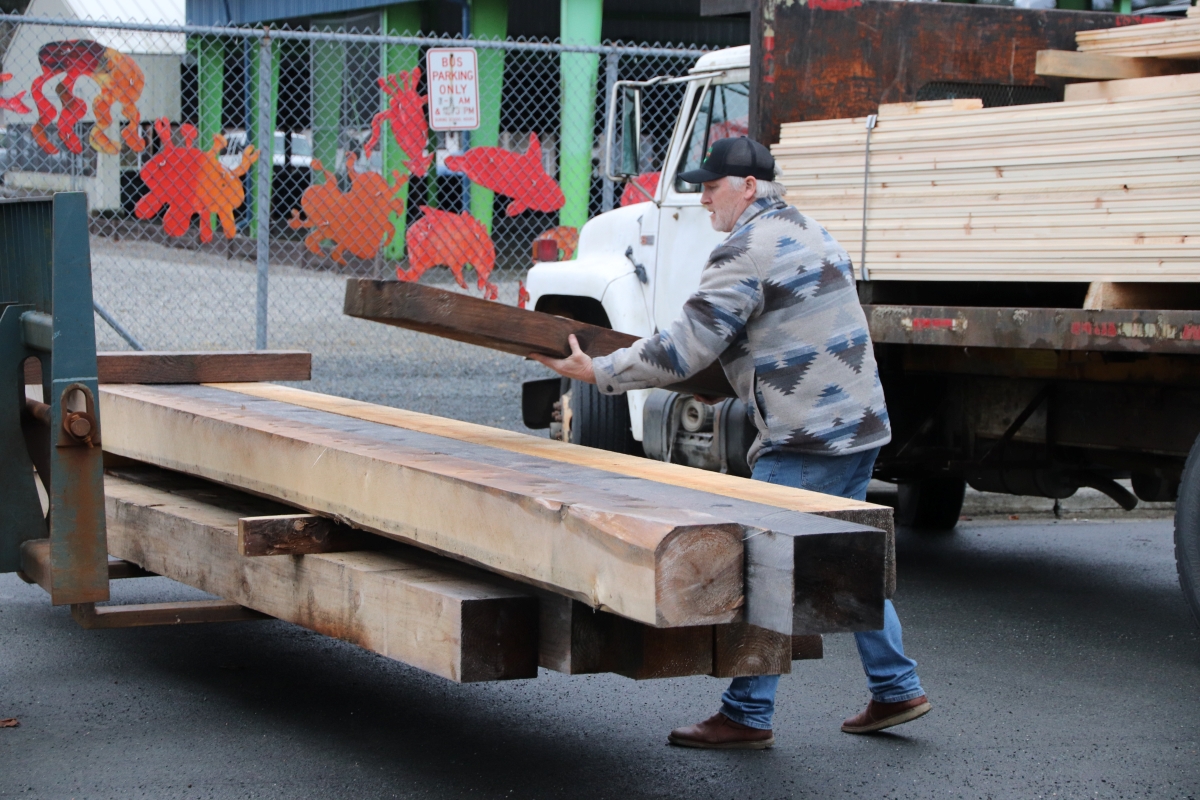
We park at the construction site behind Pacific High School. I exit the truck and watch as a large forklift begins to lift loads of lumber off the flatbed and places them next to the frame of a building they’ll soon add a roof to.
Andrew Thoms stands nearby, his two Schnauzers, Xela and Sueno, by his side. Thoms is the Executive Director of the Sitka Conservation Society, a collaborator on the project.
“These boards come from some of the first timber sales that are young growth timber sales, and it’s a mill that’s experimenting with how we can use that resource, what we can build with it, what we can manufacture with it, and how we use it here in construction in Southeast Alaska,” Thoms says.
About a decade ago, the U.S. Forest Service amended the Tongass Timber Management Plan to transition timber harvesting from predominantly old-growth to young-growth over a 16-year period, in an effort to preserve the ecosystem and support habitat restoration. Young-growth timber is wood harvested from forests that have naturally regrown in areas previously logged. The trees are around 50 years old as opposed to old growth, which can be hundreds.
Thoms says figuring out how to do sustainable timber management is a key part of the work they do at the Conservation Society.
“On the Tongass, there are places that we should protect and not touch,” he says. “There are places we should leave alone because they produce salmon for our fisheries. There are places that are important for wildlife, and there are areas where we have to figure out how we do timber harvest and rotational forestry.”
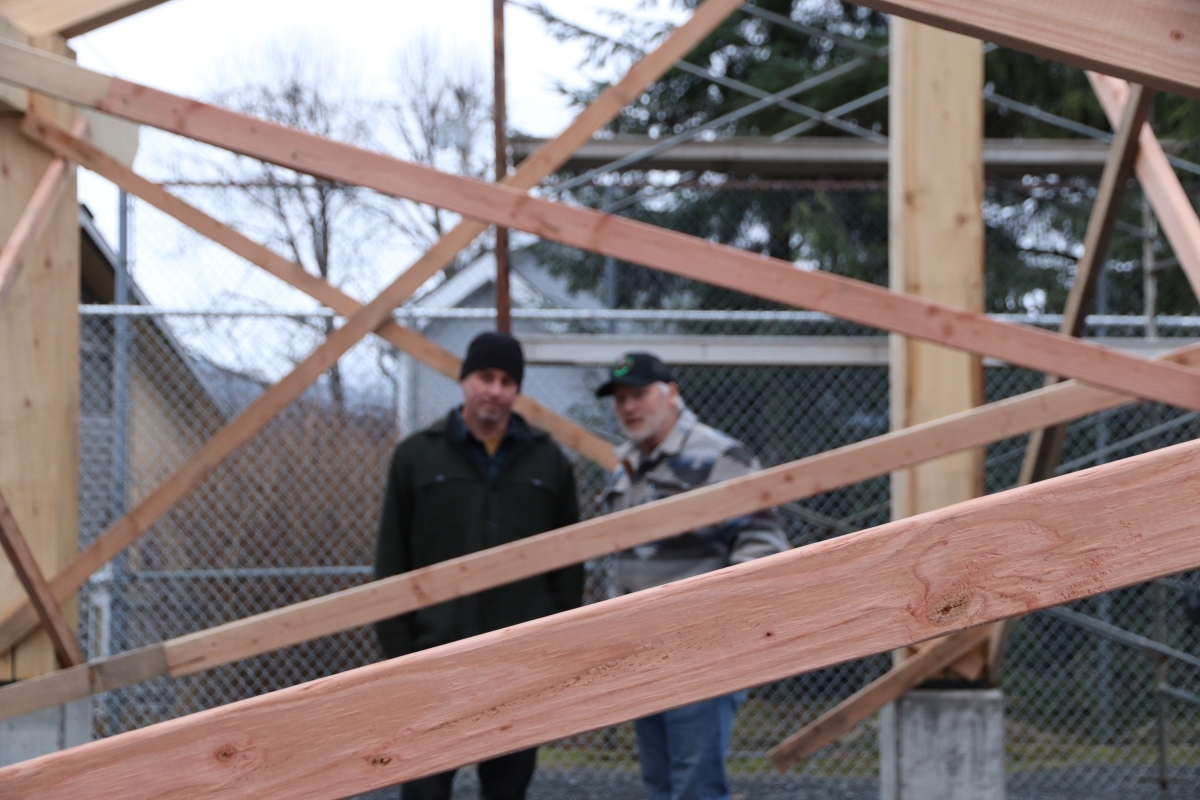
And that’s where the learning shelter comes in. Thoms says this project shows the potential for local timber to support community development. Once completed, it will be a 24 by 30 foot open air learning pavilion with hefty beams and roofing milled from young-growth timber.
Pacific High Principal Matt Groen says the learning shelter has been a decade in the making, and is rooted in the school’s experiential, place-based style of learning.
“We have about two two-hour classes a day for eight week sessions, and the reason for those extended class times are to provide meaningful hands on experiences for students, where we not just read about a concept, but we actually go out and get to the field,” he says.
Groen says the shelter will be used as an outdoor classroom and a place for students to work with vegetables grown in the garden and greenhouse, and learn about processing wild foods like deer and salmon.
“Whether that is on a sunny day or a rainy day, we have a guest speaker we can go out there. If we have a hands-on project, we don’t have to be doing that work inside classrooms,” Groen says. “Now we have a clear designated space where we can immediately access, which saves our teachers hours of additional prep work, and so those additional hours then can be used for providing even more meaningful experiences.”
And while students will be using the space to learn local skills like deer processing, it’s noteworthy that they’ll be doing it under a shelter made from local timber.
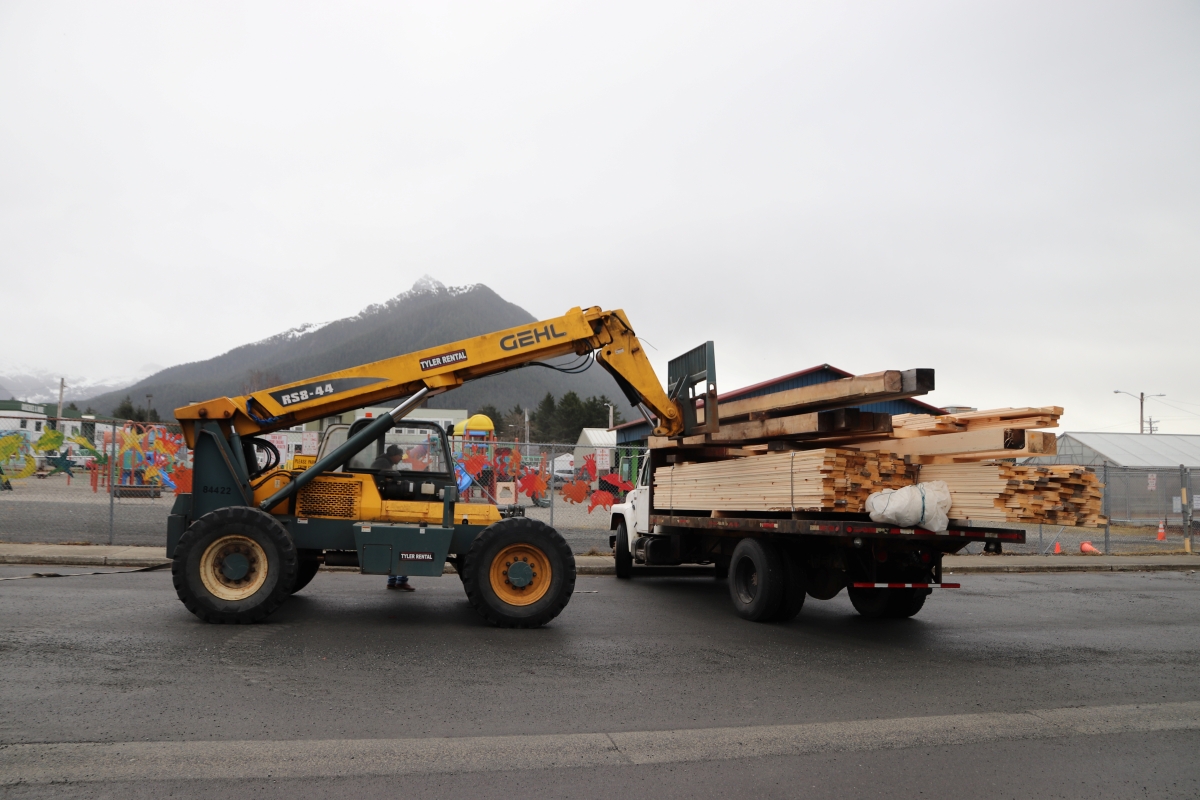
Lumber for construction in Southeast Alaska is typically barged up from the Lower 48 or Canada. Thoms says this local supply helps save on costs of shipping, materials, and construction. It also supports milling and logging jobs within the state, and connects local wood products to Alaska markets.
“This wood comes from Mitkof Island, which is 150 miles away from us,” he says. “And we’re not importing this lumber from the Lower 48, the Pacific Northwest or the southeastern United States. And we’re using this lumber resource here in our state rather than exporting a bunch of round logs to China. So this is all part of, how do we make sustainable communities? How do we create a robust economy here in Southeast Alaska, and how do we build with resources that come from our place?”
Thoms says many partners have been involved in laying the foundation for this years-long project. They hope to finish up the shelter by this spring.