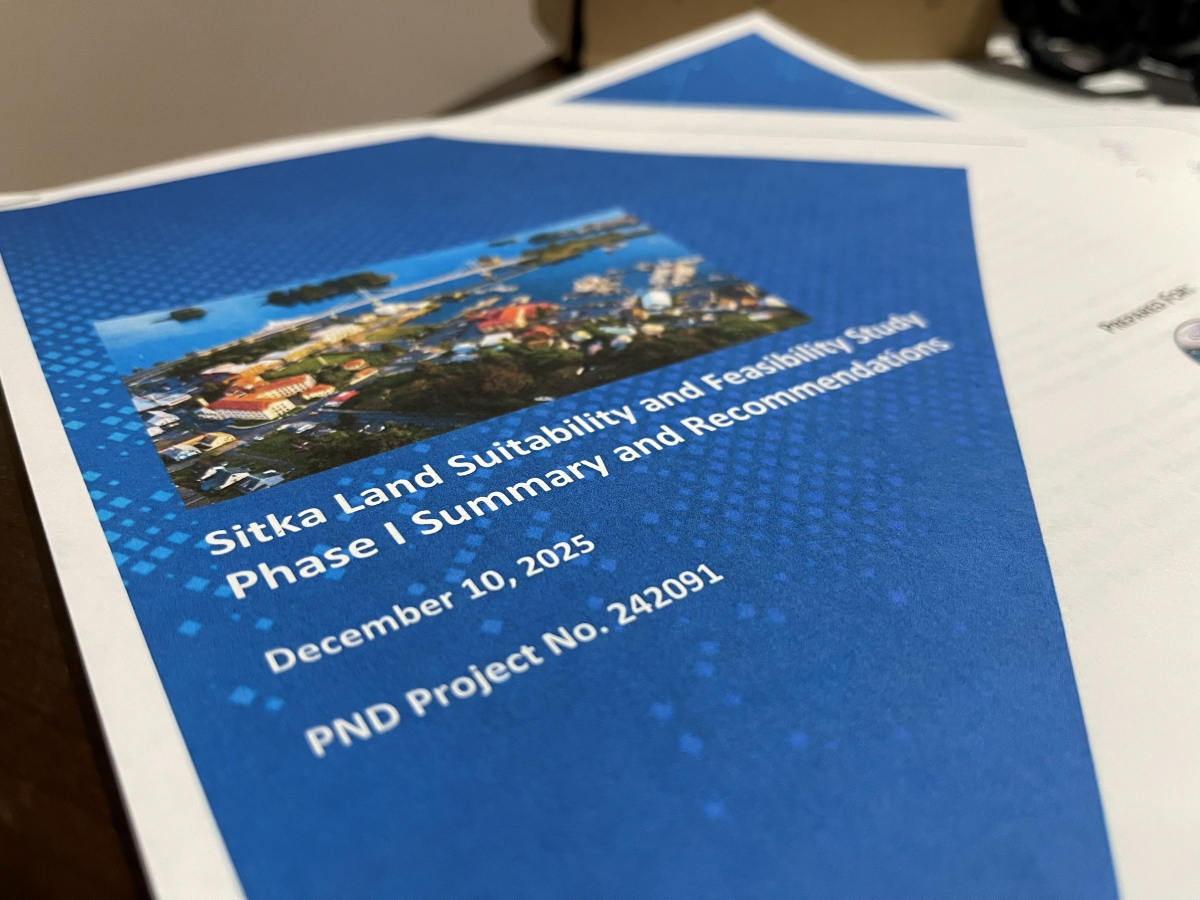
Osprey Street and Sitka High School: those are the top two areas for housing development identified in the first phase of the Sitka Land Suitability and Feasibility Study.
“We’re really looking at what are our best opportunities for land development? We know that the low-hanging fruit is largely gone,” Planning and Community Development Director Amy Ainslie said at the Sitka Assembly meeting Tuesday night (2-10-26). “We’re looking at mostly marginal tracks. But where should we be focusing our attention? What’s the best opportunity? How much housing can those opportunities provide, and at what cost? Again, we wanted to have a ranked order of our lands so that we understand where to really focus our time and resources next.”
The city initiated the study to evaluate nine municipally-owned parcels for housing development a couple of years ago. They contracted with Juneau-based PND Engineers, which compared each site based on criteria like landslide risk, capacity for utilities, environmental impacts, and proximity to services, like schools and shopping.
Ainslie said a one-acre lot on Osprey Street and seven-acres behind Sitka High rose to the top — those lots are lower risk with utility access and few necessary upgrades. Green Lake Road, Herring Cove Peninsula, and Upper Edgecumbe Drive ranked lowest on the matrix, and PND Engineers recommended eliminating them from further evaluation. The Phase 1 report is intended to inform land-use planning by the city, but “does not represent a final determination of site developability,” according to the report.
“I think for where we’re at in Phase 1, it becomes clear that the two smaller tracts — smaller, easier to develop — [have] really exciting potential,” she said. “We want to move study of those forward and closer to what a real development would look like.”
Assembly Member Kevin Mosher thanked city staff and the contractor on Tuesday for their work on the report. He said the city should focus on the more immediately developable sites for now, and look at other options down the line.
“I had hoped that there’d be more low-hanging fruit, to be honest with you. I think we all did,” Mosher said. “But I’m glad that we’re doing this. I think it was very important, because we needed to know what inventory we had, and what we can do with it.”
While the two sites rose to the top, more research is needed before the city moves forward with development. Ainslie said Phase 2 of the study is expected to take six months to complete. It will include preliminary layouts and population density scenarios, as well as more landslide risk analysis and hydrologic studies.