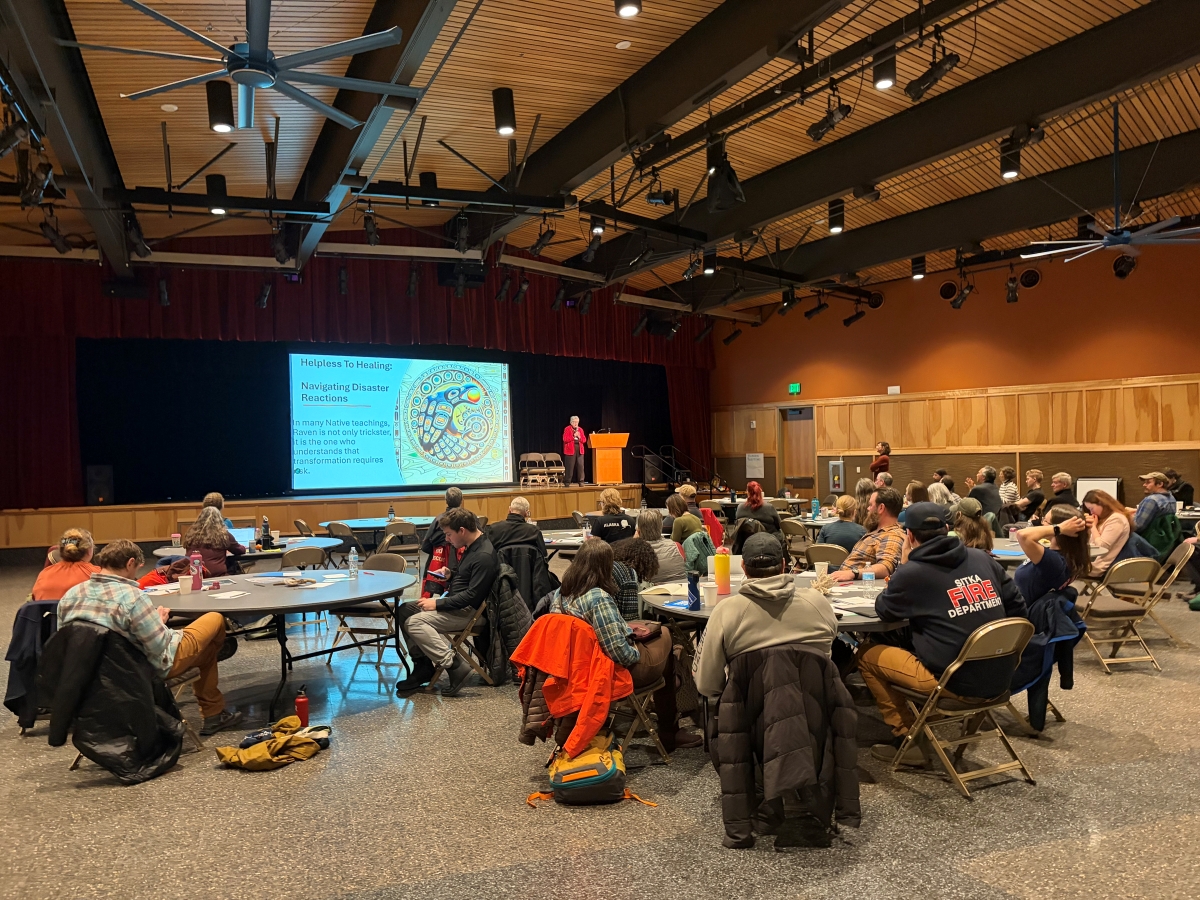
Dr. Mary Schoenfeldt is no stranger to disaster stress and mental health management. Throughout her career in emergency management, Schoenfeldt led the post-disaster response to school shootings such as Columbine and Sandy Hook, as well as for the Oso mudslide, the deadliest mudslide in U.S history. As a self-described “repurposed” emergency manager, Schoenfeldt shared her expertise navigating disaster reactions at this year’s Southeast Alaska Landslide Information and Preparedness Partnership, or SLIPP, conference in Sitka.
“We’re talking about traumatic loss. And trauma and grief are two different things,” said Schoenfeldt. “We can’t get to the grief of loss until we deal with how that loss happened, and that’s the trauma piece.”
Schoenfeldt says that research shows how there are predictable behavioral, physical, and psychological reactions that people experience following a crisis: from coming together in unity after a traumatic event, to navigating their sense of control being shattered and living with “trigger events.” Sometimes, victims experience changes in sleeping and eating habits, and may even avoid the traumatic event’s location in order to avoid being triggered. In the short time she’d been in Sitka so far, Schoenfeldt observed how Sitkans fell into these patterns following the devastating landslides over a decade ago, which killed three people.
“Talking about landslides, there’s always going to be a scar. And somebody pointed one out to me here in Sitka about that the other day. ‘Oh, look, there up on the hill. That’s a landslide scar,’” said Schoenfeldt. “There’s always going to be scars. Some of them are on people, some of them are visible, and some of them are not. We don’t see those emotional scars, but they are there. And then when it starts to rain again, that becomes a trigger event.”
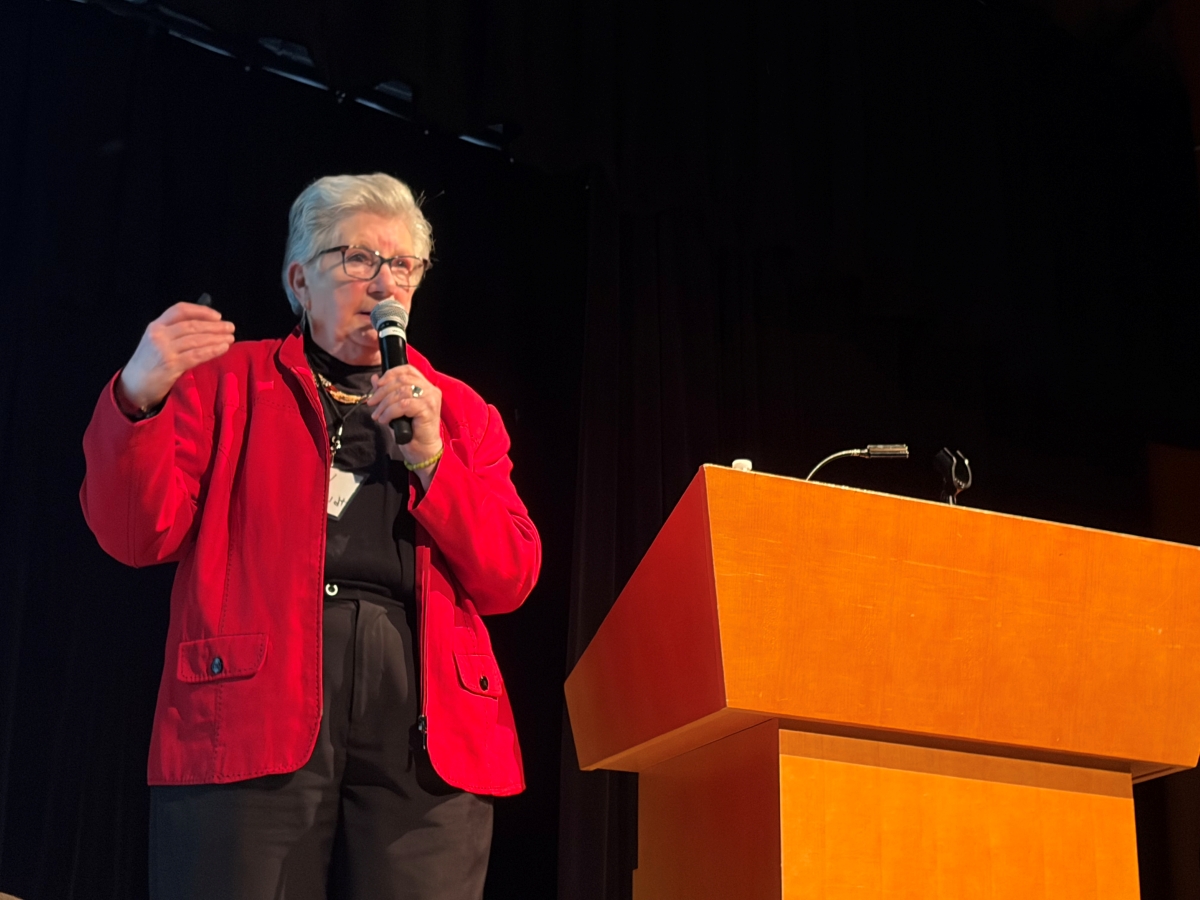
In order to move through trauma in the wake of disaster, Schoenfeldt advises that victims should not suppress or ignore their stress, as moderate stress is good for people, but rather to acknowledge and learn how to manage it.
She said, typically, communities that are tightly connected before disasters, often small towns and neighborhoods, are able to demonstrate greater resiliency in the recovery period. While individuals have different reactions and needs in the wake of trauma, communities are only as healthy as the people in them, so disaster response must include community engagement, from chatting with a neighbor about your feelings, to larger community gatherings.
“If I ever write another book, the title will be ‘The Power of Potluck,’” said Schoenfeldt, much to the amusement of the over 30 people in attendance. “Because I think everybody brings something into that community gathering. It’s pretty important.”
Through doing so, Schoenfeldt says that communities can experience “post-traumatic growth,” in which individuals and communities emerge from disasters with gained strengths as well as developed resiliency networks. And Schoenfeldt says this growth does not have to be limited within communities, pointing to the work SLIPP has done toward developing a mutual aid coalition across the region that can offer support in the wake of disasters.
Schoenfeldt was a guest speaker at a two-day conference hosted by SLIPP in Sitka in early March. The event aimed to connect experts and community leaders across Southeast to exchange knowledge on the latest information and strategies addressing landslide risk and response.