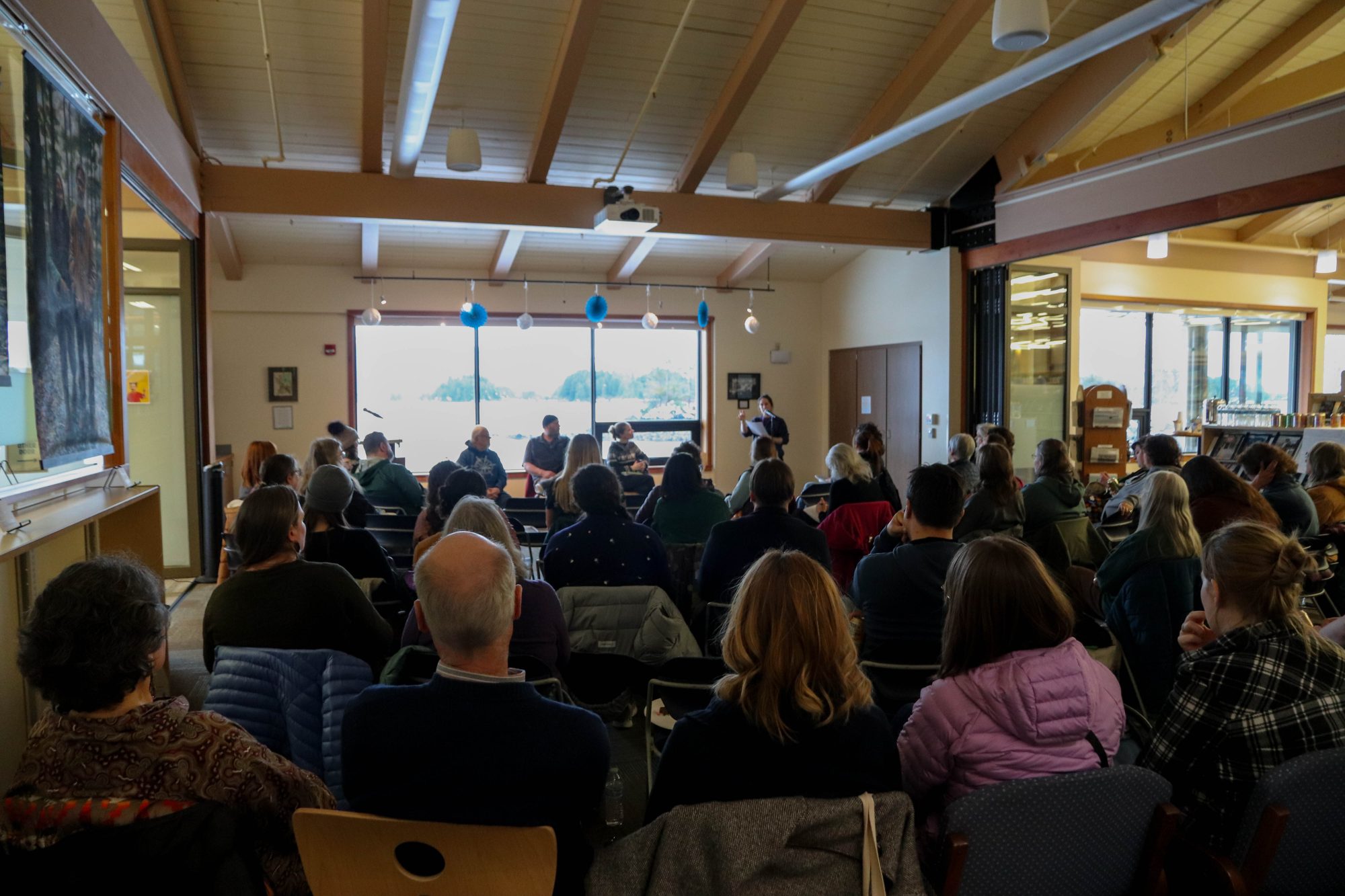
Dave Turcott is a commercial fisherman who has been trolling in southeast Alaska since the 1960s. Yet it was only two years ago that Turcott began transcribing his experiences from the sea onto paper, earning him the title of a “fisherpoet.” Standing behind a podium at the Sitka Public Library with the ocean at his back, Turcott reads to a room of over 30 attentive librarians an anecdote chronicling one of his earliest memories in Southeast, which involves him and his fellow fishermen improvising a solution to fixing a hole in their gas tank while on the road to catch a ferry in Haines.
“Somebody freshened the chewing gum. We added a little gas, and eased on to the next roadhouse. Someone was always chewing a fresh plug in case the old one fell off,” says Turcott, much to the amusement of the crowd.
And Turcott is not the only fisherpoet sharing his work. Mariah Warren has worked as a fisherman across a wide variety of vessels for 20 years, half of them as a captain. One of the short readings she shared with the audience was a poem titled “Please Don’t Die at Sea.”
“Please don’t die at sea, my dears. Tell the story someday instead over burgers and beers, about the time the storm called your name and you chickened out. The kids are listening. Those are the times that they need to hear about,” says Warren. “Remember your heroes, those storm gray, bright-eyed women and Poseidon-bearded men. I know we all do. Please survive so someday you can be a grouchy, salt encrusted, wise and inspiring old timer too.”
Sitting in chairs propped up beside the podium, Turcott leans back into his chair with tear-filled eyes and pursed lips. Next to him, Paul Rioux says for a long time, he struggled to understand how his routine life at sea would interest readers. He shares an essay where he realizes the life of a fisherman offers a unique literary connection between self-reliance and fate.
“Rare days of pure winning are made sweeter by all the days of struggling, fighting weather, and during poor fishing and/or depressing crisis. All of this occurs in an awe-inspiring setting seen by an infinitesimally small percentage of the population, thereby a very exclusive club,” says Rioux. “You cannot fake your way in. You have to get salty to be salty.”
One of the visiting librarians in the audience is Sandy Lukes, the Outreach Librarian for the Anchorage Public Library. It’s Lukes’ first ever Alaska Library Association conference, and she says listening to the storytellers gave her a greater appreciation for how crucial fishing is for communities like Sitka.
“Me being from Seattle, I know there’s a lot of fishing that goes around there, but I wasn’t as close to or familiar with it,” says Lukes. “So it’s really interesting seeing how how much that is part of the livelihood here, and what that looks like for people.”
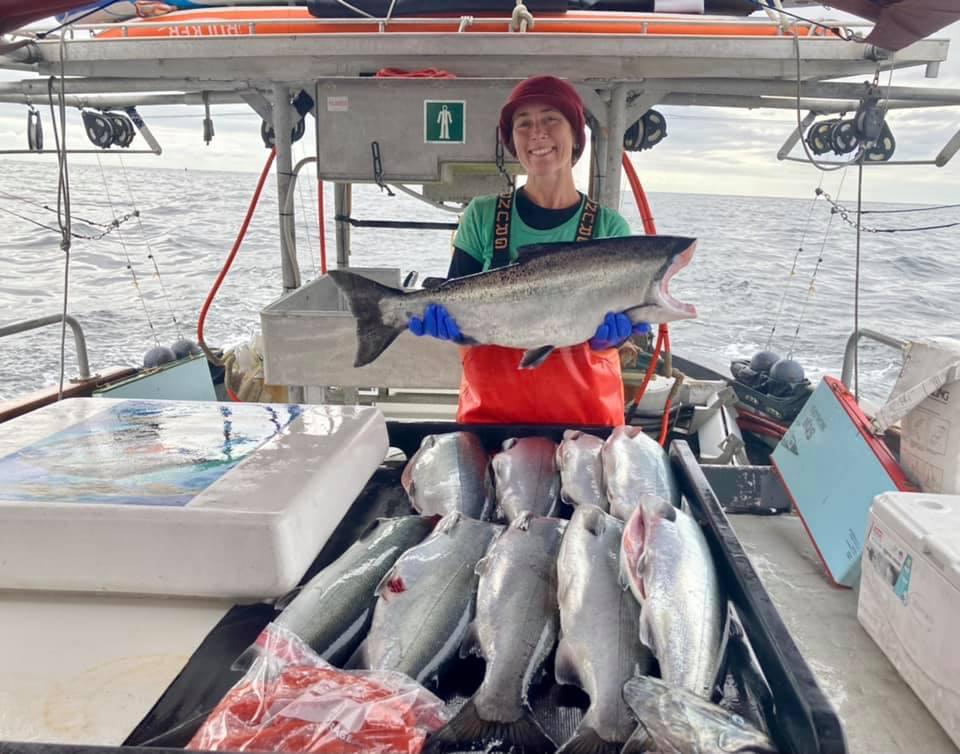
Tele Aadsen is the 4th and final fisherpoet and moderator for the event. She shares a humorous and heart-warming story of a fisherman who inspired her to embrace her queerness in their line of work. She hopes the librarians are inspired to highlight the unexpected storytellers in their own communities, fishermen or otherwise.
“Sharing with librarians is awesome. Who better to share with than people who are professional story shares you know and appreciate that thought that goes into it,” says Aadsen. “I think the takeaway is, who are the people in your community who maybe people don’t know their writing, or have their own stories to bring forward, because we all have those folks everywhere.”
As the event draws to a close, the fisherpoets and librarians mingle, with some snacking on the fish treats caught and prepared by the fishermen themselves. With shelves chock-full of books on one end, and a large glass window framing Sitka Sound on the other, the patrons are surrounded by stories.