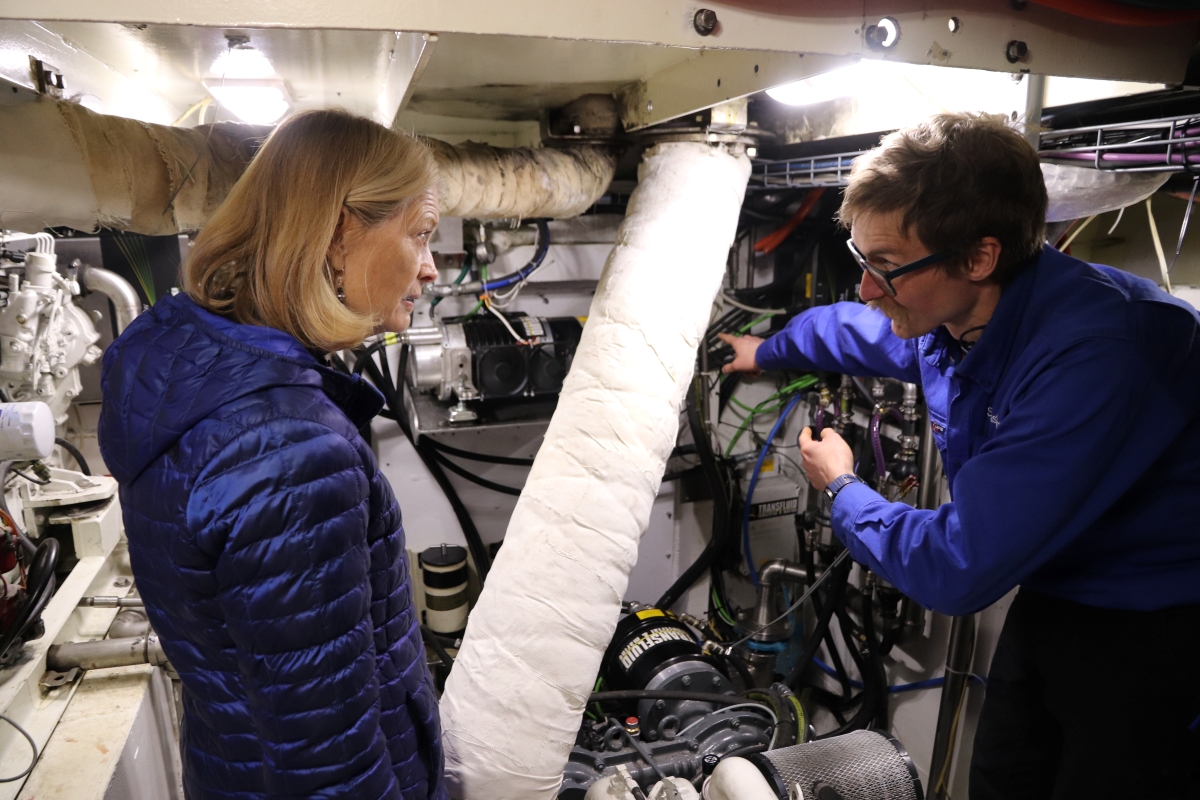
Crouched down in the engine room of the 50-foot vessel, Ben Matthys is showcasing the completed hybrid engine to Senator Lisa Murkowski, answering any follow-up questions she has. He’s the lead technician who joined the project four years ago. The project was funded by a grant from the U.S. Department of Energy as part of a pilot program to make commercial engines cheaper and more environmentally friendly.
Sitka fisherman Jeff Turner owns the boat. After hearing about the grant, Turner was quick to volunteer his boat for the project. Yet on the two trips Turner took prior to Murkowski’s visit, a third-benefit was revealed, one that both Turner and Murkowski agree is “transformational”:
“The noise pollution is something I really notice,” says Turner. “A quiet boat is fatigue free. I mean, you’re talking in a normal voice. You don’t have to yell across the deck.“
The team behind the hybrid engine plans to continue collecting data from the Mirage throughout the summer fishing season, logging the data in a publicly available document. That way, fishermen can decide whether they would like to install a hybrid engine as well. Another boat from Juneau is already lined up to be the second boat to have the hybrid engine installed. Turner says he’s excited to be a part of the development process to make the engine the best it can be for fishermen now and in the future.
“I want to take advantage of the system. I want to see what it can do,” says Turner. “And I want the next person, and the next person, to learn from it. They’re collecting data on every single piece of equipment there, and what’s it gonna be in five years, ten years.“
Additionally, with concerns over outmigration and fewer young people staying in Alaska, the hybrid engine offers professional opportunities that could help retain and attract working-age people in the state. Chandler Kemp, the project’s enginee, believes that their partnership with locals in developing the engine is a promising example for future developers.
“And so it’s not a case where we’ve hired a contractor to come in and build the project and then leave,” says Kemp. “Instead, we’ve invested locally to support people that want to do this type of work, and now have the expertise to do it more independently.“
But the promise for professional development is not without its obstacles, as highlighted by Linda Behnken, the executive director of the Alaska Longline Fishermen’s Association.
“There isn’t anybody in this country yet making these systems,” says Behnken. “There is a electric outboard maker that we want to use on a mariculture boat. But there isn’t anybody certifying marine certified batteries in this country yet, or building these systems.“
Batteries for electric vehicles are already proving a problem to transport. Alaska Marine Lines no longer ships electric vehicles to the state, and the ferry system highly restricts them.
Murkowski says it needs to be addressed for the technology to move forward.
“The whole discussion about how you move an electric vehicle to Alaska, we can’t put them on these container ships anymore because of the danger of the fire,” says Murkowski. “So we’re going to have to figure this one out pretty darn quick.“
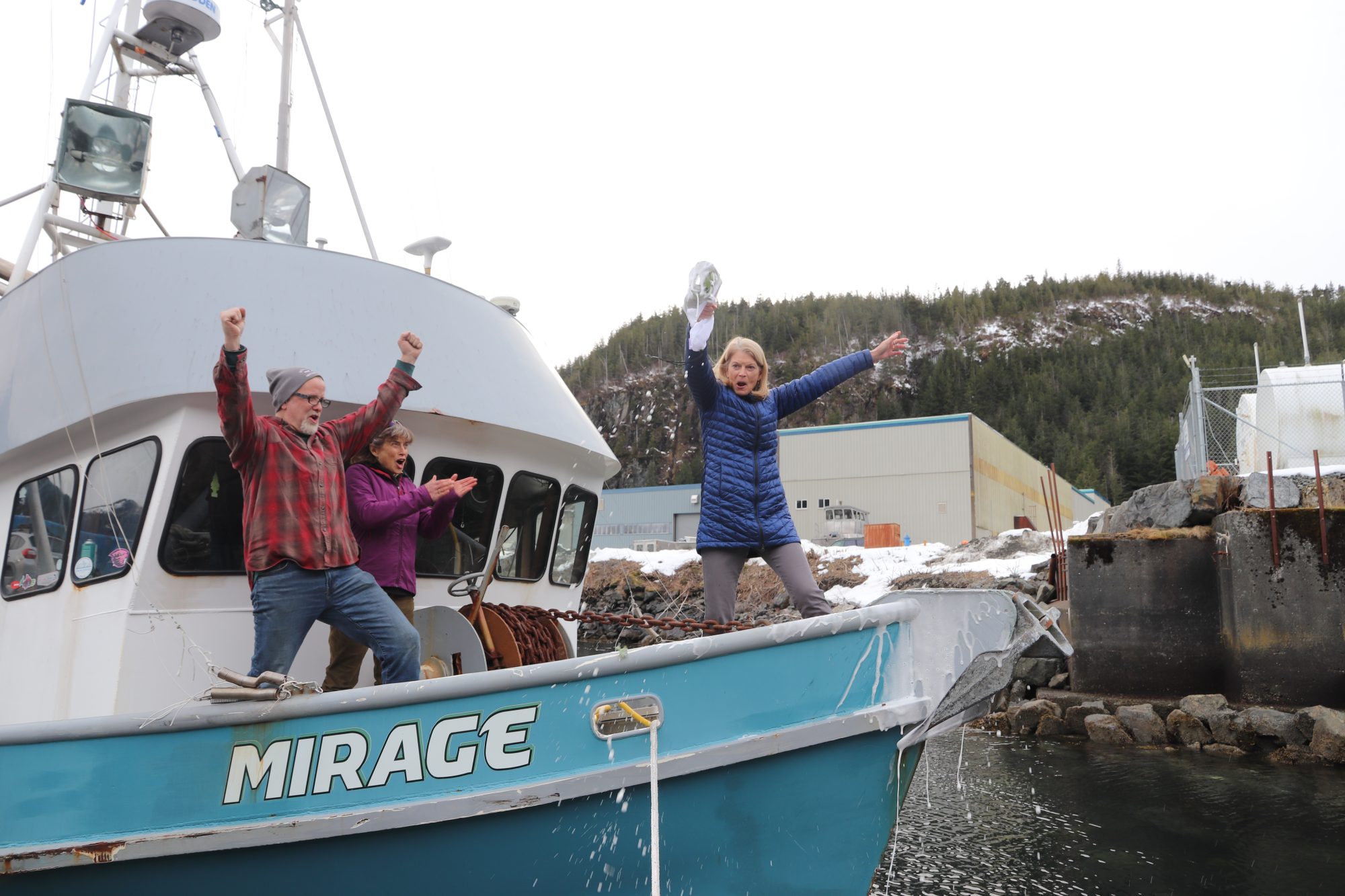
Murkowski is joined by over 20 attendees gathering around the Mirage at the Gary Paxton Industrial Park dock. Murkowski, Turner and Behnken take a spot at the bow of the ship, with Murkowski christening it by successfully smashing a champagne bottle over the bow. That’s followed by a toast in honor of what has been accomplished so far, and what the hybrid engine could mean for fishermen across Alaska and the rest of the country.