This past Tuesday (5-5-26), communities across Alaska and the country observed Missing and Murdered Indigenous People’s Day. The day commemorates the lives of Alaska Native and Native American people, and demands accountability for the high rates of violence against Indigenous people.
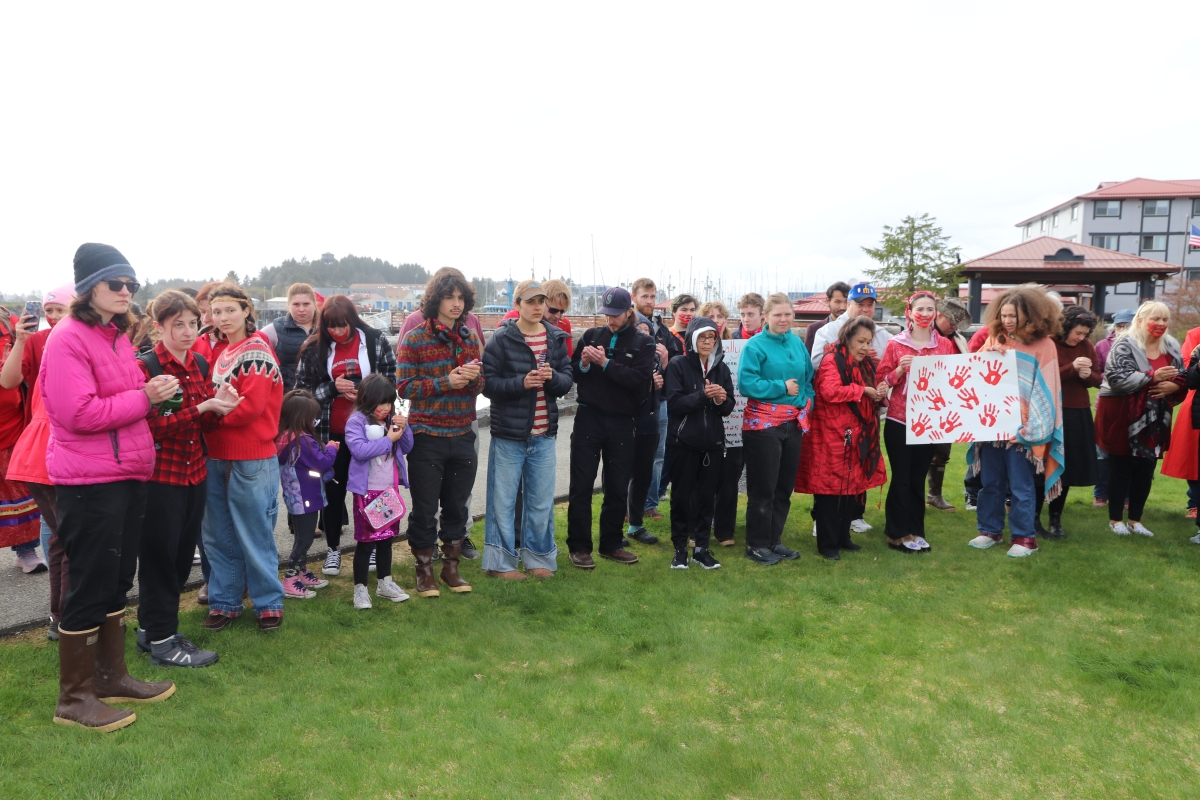
In Sitka, over 60 attendees dressed in red gathered at Totem Square to honor loved ones lost to violence and raise awareness. After they learned there was no scheduled MMIP event in Sitka, Outer Coast first-year students Robin Smith and Andrew Cranston Simmons organized the vigil. For Smith, the history of their college on the former Sheldon Jackson campus is a stark reminder of why the day is important to observe.
“Us at Outer Coast live on an old residential school… so we have to acknowledge what has happened at that school and what has happened to our grandparents,” said Simmons. “It is not just a few decades ago that something like that has happened to us. My own A’pa had to go to a residential school disguised as a church, and he does not know much of his native language because of it.”
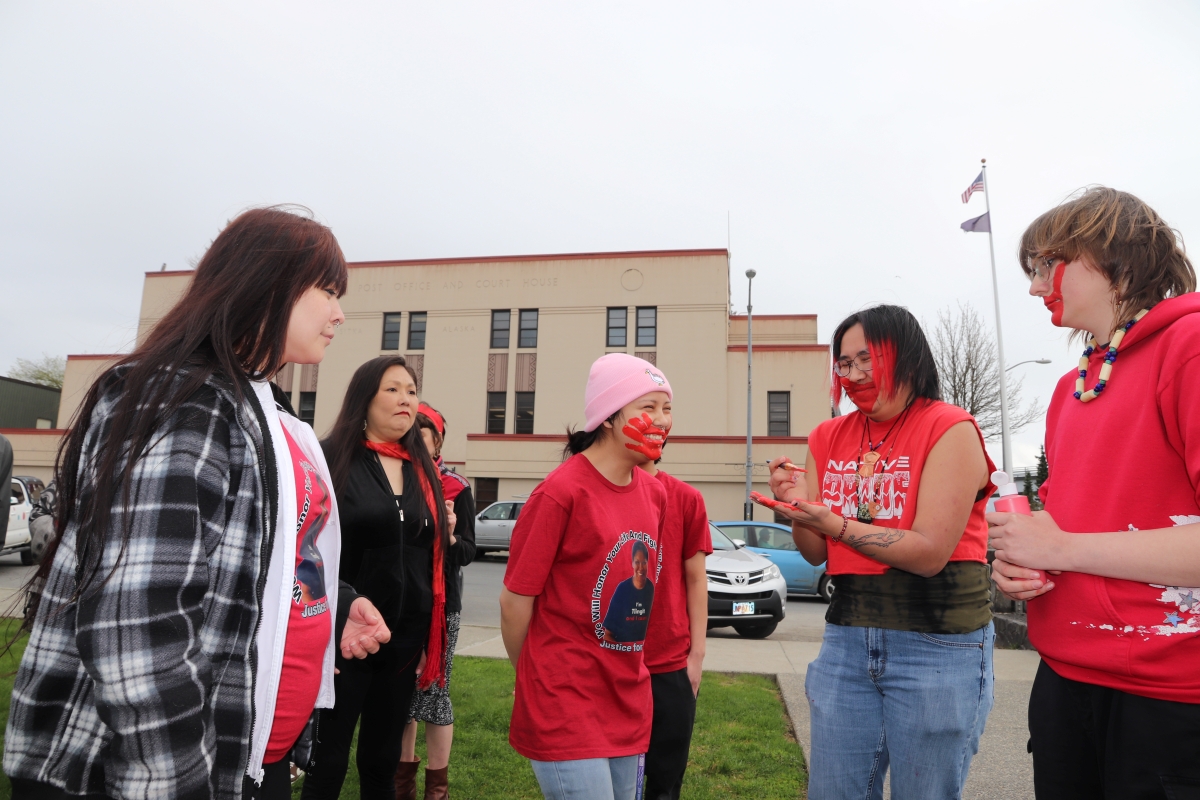
And it’s a crisis that’s rippling through Alaska communities today. Last month, the body of 19-year-old Kelly Hunt of Shaktoolik was found after going missing in January. Smith also says this year’s MMIP day is especially timely given that the Trump Administration removed the Missing and Murdered Indigenous Women’s report from the Department of Justice website last November, as part of a larger initiative to eliminate what the administration considers “DEI content.”
Numerous attendees gave speeches commemorating loved ones who have been murdered or missing, including Outer Coast Dean of Faculty, Matthew Spellberg, who was literally carrying the memory of the person he shared a dedication to.
“In memory of Sísele, a Salish woman who vanished up the Sto:lo River in the early 20th century, whose granddaughter used to wear this vest,” said Spellberg.
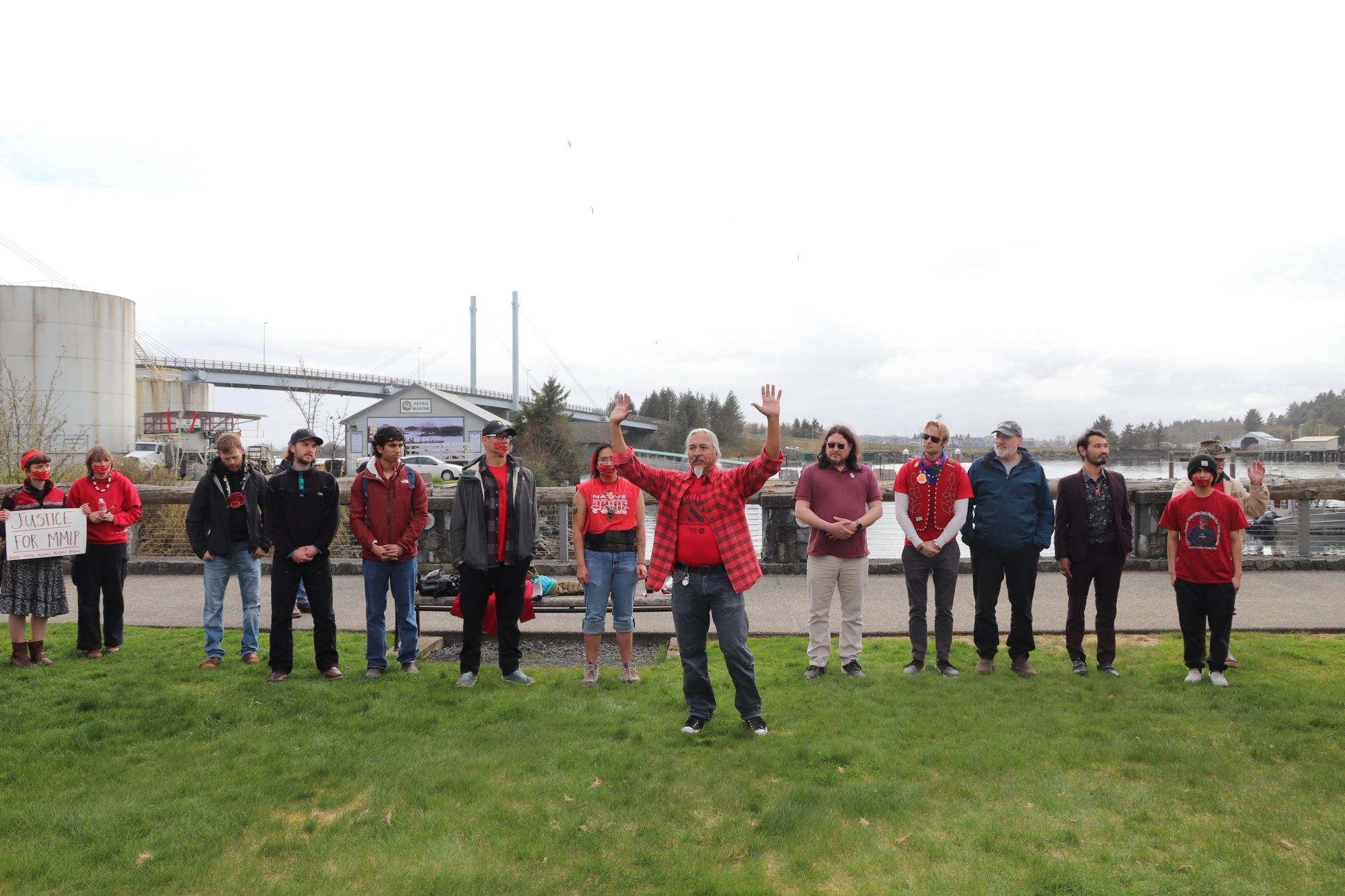
Gene GuuyYaau Tagaban was visiting from Washington state, and heard about the event from a friend. He invited his fellow men to stand up with him and promise together to be allies for Indigenous women who are disproportionately affected by violence.
“Are we as men here willing to take that stand? To call in other men and to call them out [and] say ‘That behavior is bad. It’s not good, it’s wrong. Come in. Let me teach you a better way.’ Are you willing to do that?,” said Tagaban. “I’m asking you, in front of the women who are witnessing it, because in order to stop this, men need to be a part of this.”
Speaker Kh’asheech Tláa (Louise Brady) spoke about her own experience healing from sexual assault and domestic violence. She said spaces where she could openly talk about her experiences with others made her feel like she wasn’t alone.
“There was a time, and it’s still difficult, as you can see, for our people to talk about all these things,” said Kh’asheech Tláa. “But the only way that we can heal is to talk about it, is to bring it out in the open and to say that these are our problems. Because if we don’t identify the problem, we aren’t going to be able to identify the solutions.”
Kh’asheech Tláa offered to share her contact information with any survivors in the crowd, along with support resources in Sitka for anyone who may need them.
The event concluded with a minute of silence, followed by a performance of the song Yak’ei Haa Yatee Yeisu to end the vigil on an uplifting note and celebrate the perseverance of Indigenous communities.