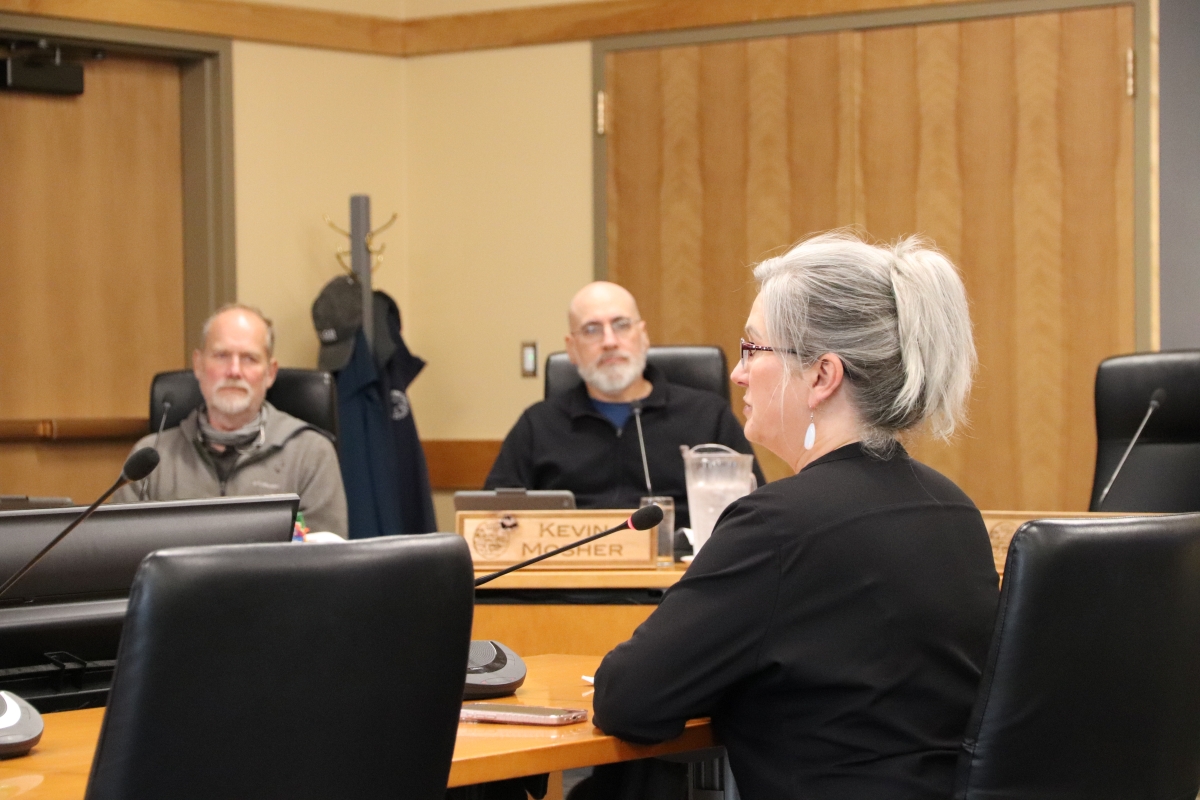
The City of Sitka is continuing to brainstorm solutions to the island’s childcare shortage. In a special work session Tuesday night (6-16-26), the assembly decided to move forward with an option from a recently completed childcare study. It’s estimated to cost about $1 million a year.
But assembly members still need to refine what they want in the plan before figuring out how to pay for it.
Sitka has been grappling with the issue of childcare for years now: There aren’t enough options, it’s expensive for families already struggling with increasing daily costs, and there simply aren’t enough people working in childcare to expand capacity.
The city decided to do something about it, and in January, hired a regional education nonprofit to write a report about the barriers to childcare and suggest possible solutions. Blue Shibler with the Southeast Childhood Collective released the 30-page report in March, and now the city is figuring out what to do next.
“I think [Shibler] did a pretty good job of finding answers, or at least giving us some clarity as to what’s available and what isn’t, and some ideas about how we might move forward,” Assembly Member Tim Pike said at the June 16 meeting.
He said the city started its childcare discussion with three main goals in mind: To increase capacity, stop the rise in childcare costs for parents, and maintain the viability of existing childcare facilities in town.
“My goal tonight is to see if we, as a group, can come up with what Sitka’s plan for childcare looks like going forward, so that we can see whether that matches what the community wants and/or needs, and also [have] a conversation as to how we figure out how to pay for that,” he added.
Eight community members spoke at the meeting, saying there’s a dire need for childcare solutions in Sitka.
Dr. Kimberly Capp is a local pediatrician. She said childcare centers and programs like Head Start are important for children’s safety and for catching developmental disabilities. She said while the city, the SouthEast Alaska Regional Health Consortium, and Sitka Tribe of Alaska all continue to have meetings about childcare, no one wants to “own” the issue, and it’s time for that to change.
“People are willing to pay for childcare, they just can’t pay more than they make,” Capp said. “So count the fees, count the possibility of grant partnerships or things like that, use the resources you have for excellent childcare in the limited spaces that exist, and help them help you expand.”
Patricia Bauder manages Avis Alaska Car Rental at the airport. She said they’ve lost several employees due to the lack of childcare options in Sitka, and it’s negatively impacted their business. She said the city needs to be involved in a solution, and suggested it provide subsidies to both families and childcare providers. She also pointed to a proposal in New York City that would tax high-value second homes to fund city programs, including expanding affordable childcare.
“It’s difficult to attract people in the business of childcare because they’re not paid enough, and if you pay them what they’re worth, then parents can’t afford the cost of childcare,” she said.
Erin Clay moved to Sitka with her husband in 2014. She said finding childcare has been a continual stresser on her family since their four-year-old son was born, and that it’s affected her ability to work outside of the home. She said the system’s flawed, and suggested funding a career pathway for youth.
“One of the biggest challenges that we’ve found is the turnover,” she said. “He’s had great caregivers, but they can make more money cleaning Airbnbs, which feels really broken.”
Assembly Member Katie Riley thanked the community for showing up. She said she thinks a “phased approach” is the best way to tackle the issue, and suggested filling Sitka’s existing facilities and stabilizing the system before trying to expand it.
“There are not many problems that you can just throw money at and they get better, but this really seems like one of them, and that’s a unique opportunity,” Riley said.
Pike said the city could continue to study and study and study this problem, but it’s time for action. He said there are a lot of things the city asks the community to invest in because Sitkans want their lights to turn on and their roads to be paved. He said this is no different than that, and the city is going to ask the community whether or not they want to invest in their kids.
“Is it going to cost people? Yeah. Is that a question that should be asked on a ballot? Absolutely,” he said. “We want the people of the community to tell us whether or not they want to invest in kids. I think everybody up here says this is good. Everybody in the room here says this is a really important thing, but the community is going to have to step up. It’s going to have to spend money, and they’re going to have to say, ‘This is important.’”
Ultimately, assembly members agreed to move forward with the report’s Program Option 3, a blended model which combines three strategies, including workforce incentives, per-child operating grants, and a family affordability component, which is estimated to cost about $1 million. They also unanimously expressed support for adding a workforce development component for youth into the plan.
The assembly plans to hold another work session on the issue in the coming months to hash out how to pay for it before putting the issue before voters.