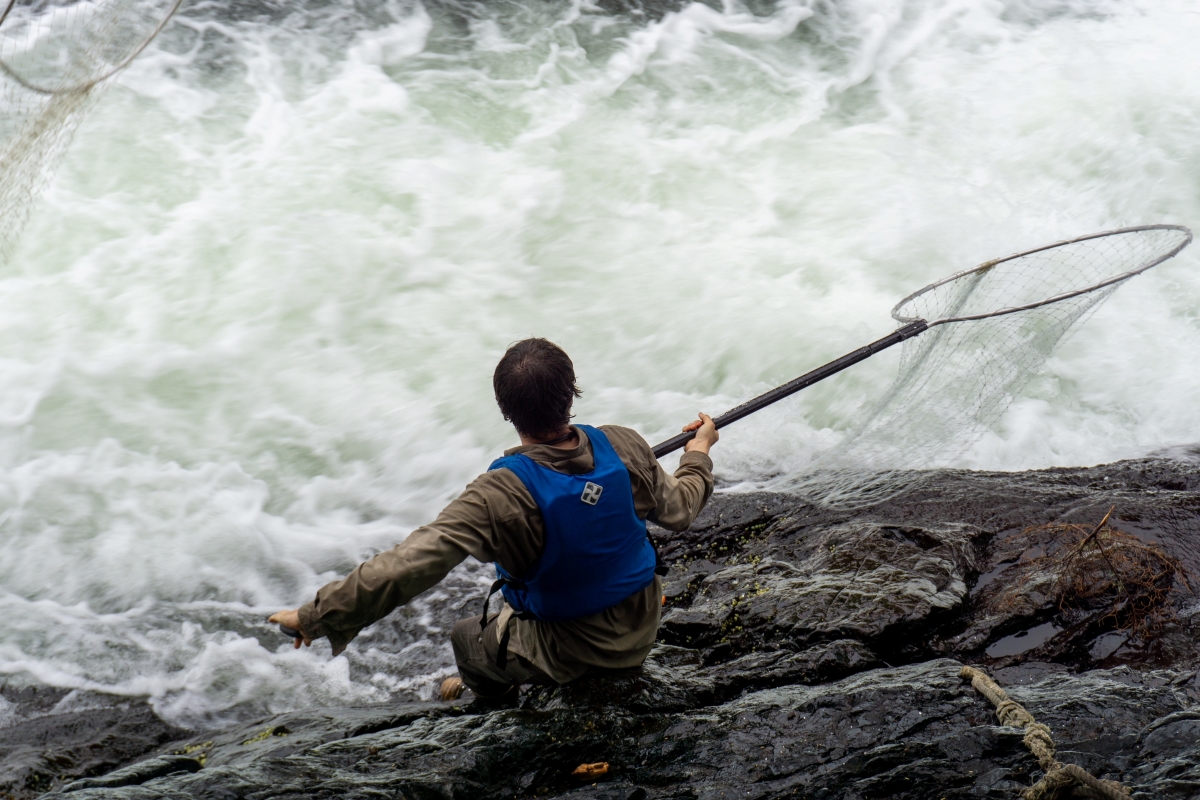
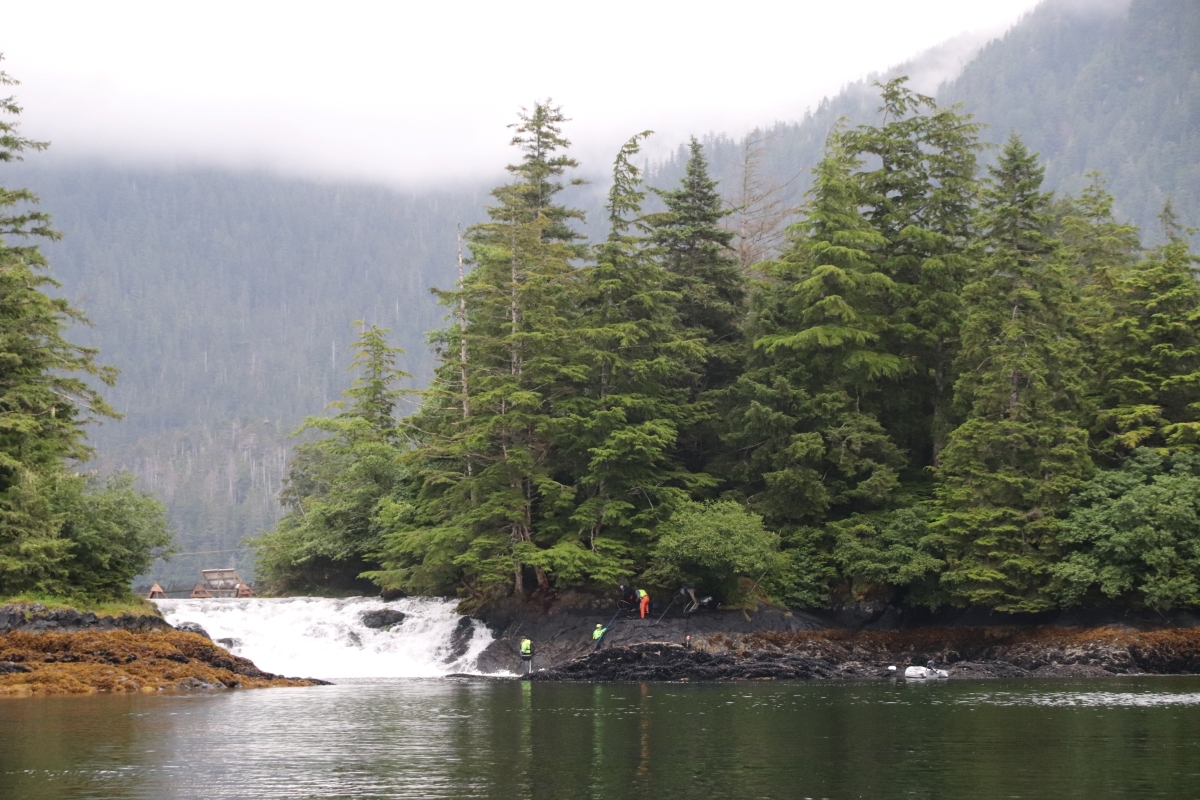
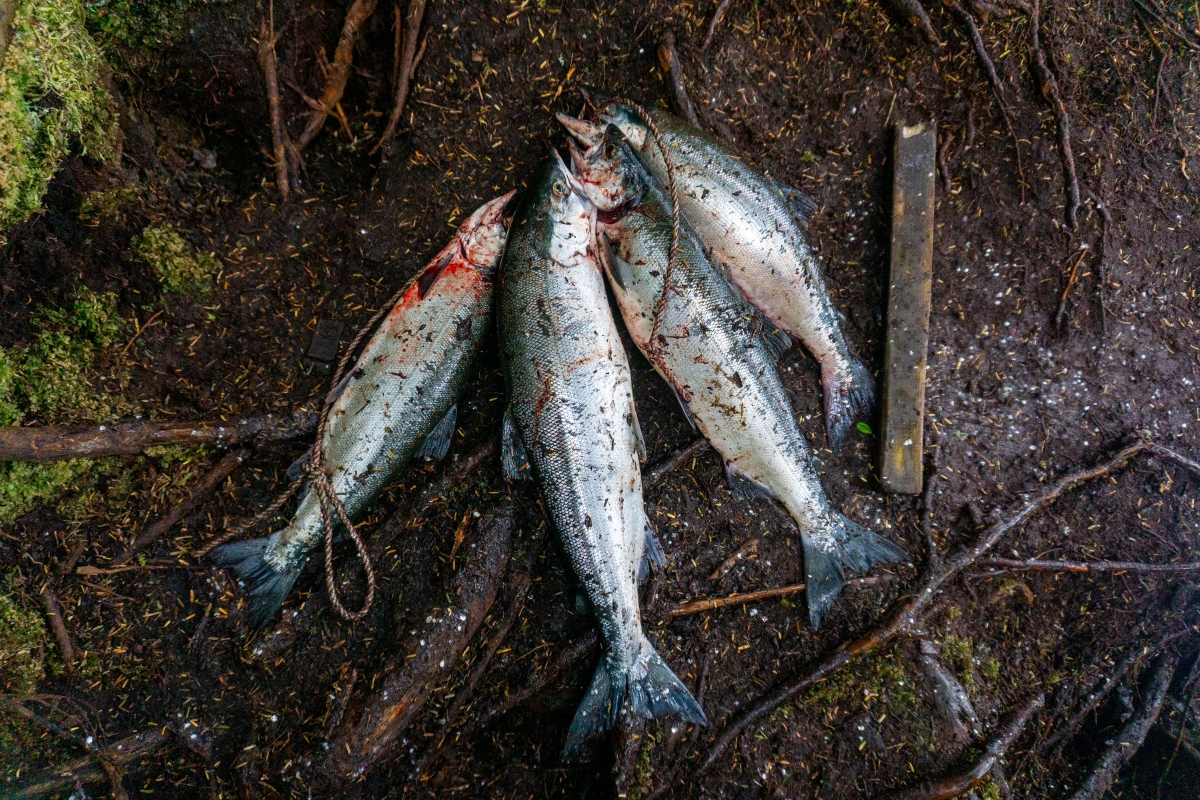
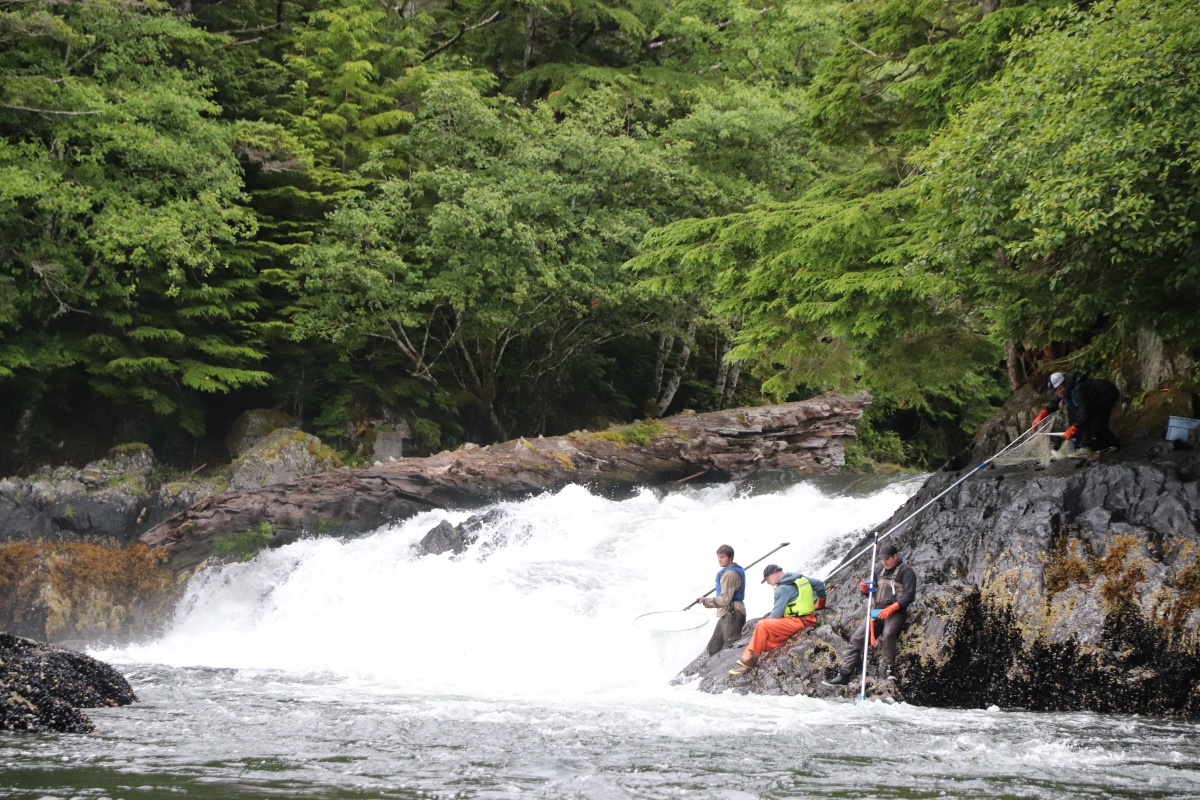
It’s just after 5 a.m. on a Sunday morning in late July, and fishermen are unloading their gear onto the shores at Redoubt Falls after the 15-mile boat ride from downtown Sitka. The sound of rushing water drowns out their chatter as they begin to dip their large nets into the rapids, trying to catch their allotment of sockeye. Time and again, they lean toward the water and scoop from the thousands of red salmon returning to the lake above.
Redoubt is an important area for many Sitkans. It’s a former Lingít village site, and it’s the largest, and closest, sockeye salmon fishery in the area. Every summer, subsistence, sport, and commercial fishermen flock there to fill their freezers.
Subsistence fishermen are currently allowed to catch 25 sockeye per household, with an annual limit of 100. But that wasn’t always the case.
“In the early ‘80s, the runs at Redoubt were significantly depressed. I think there were around 800 sockeye returning at the time,” said Jeff Feldpausch, director of the Resource Protection Department at Sitka Tribe of Alaska.
He said the Tribe, U.S. Forest Service, and Alaska Department of Fish and Game stepped in to develop a management plan that helped the fishery rebound.
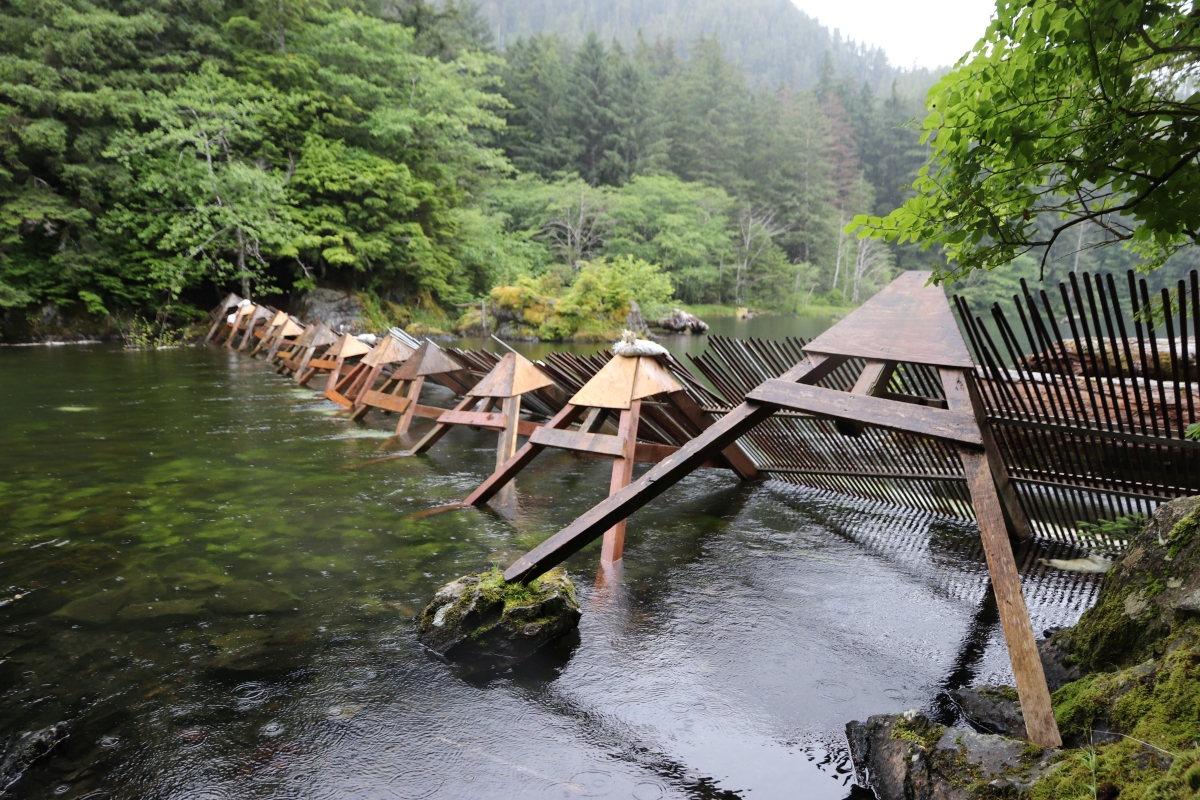
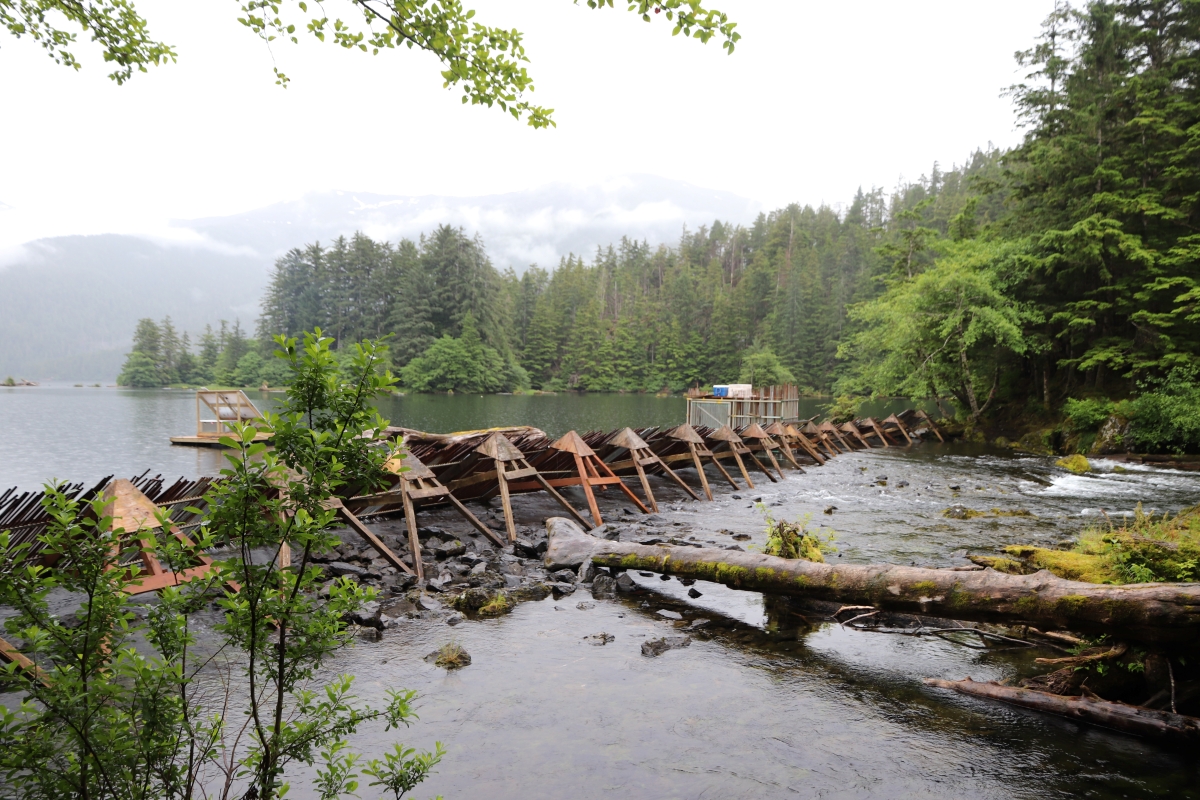
The salmon weir at the top of Redoubt Falls was essential to that effort. Every summer, technicians from the Forest Service and Tribe would hand count each fish one-by-one as they funneled through the hole in the long fence-like barrier that stretches across the outflows of the lake. During a low return, the State might reduce catch limits or even close the fishery for the year. During higher returns, they might open it up for a larger harvest.
“We have a commercial fishery that’s now taking place that wouldn’t if the weir wasn’t in place,” Feldpausch said. “The Tribe is able to utilize its community harvest permit. We would not be able to do that if the weir was not in place and that data wasn’t being collected. And right now, harvesters can get up to 100 sockeye a year, up from 50 — that would not happen without the weir being in place.”
But in recent years, Feldpausch said, funding has lapsed. As the fish rebounded at Redoubt, the Forest Service and Tribe weren’t able to get as much grant money to collect escapement data.
“The system is not broken. That’s the problem [when] going after grant funds,” he said. “There’s lots of money out there to fix and monitor broken systems, but there’s no regular funding out there for this side of it: for a system that isn’t broken.”
So now the Tribe is trying something a bit different. They got a grant, and last summer started testing out a new artificial intelligence system from the British Columbia-based company SalmonVision that Feldspausch says saves both money and time.
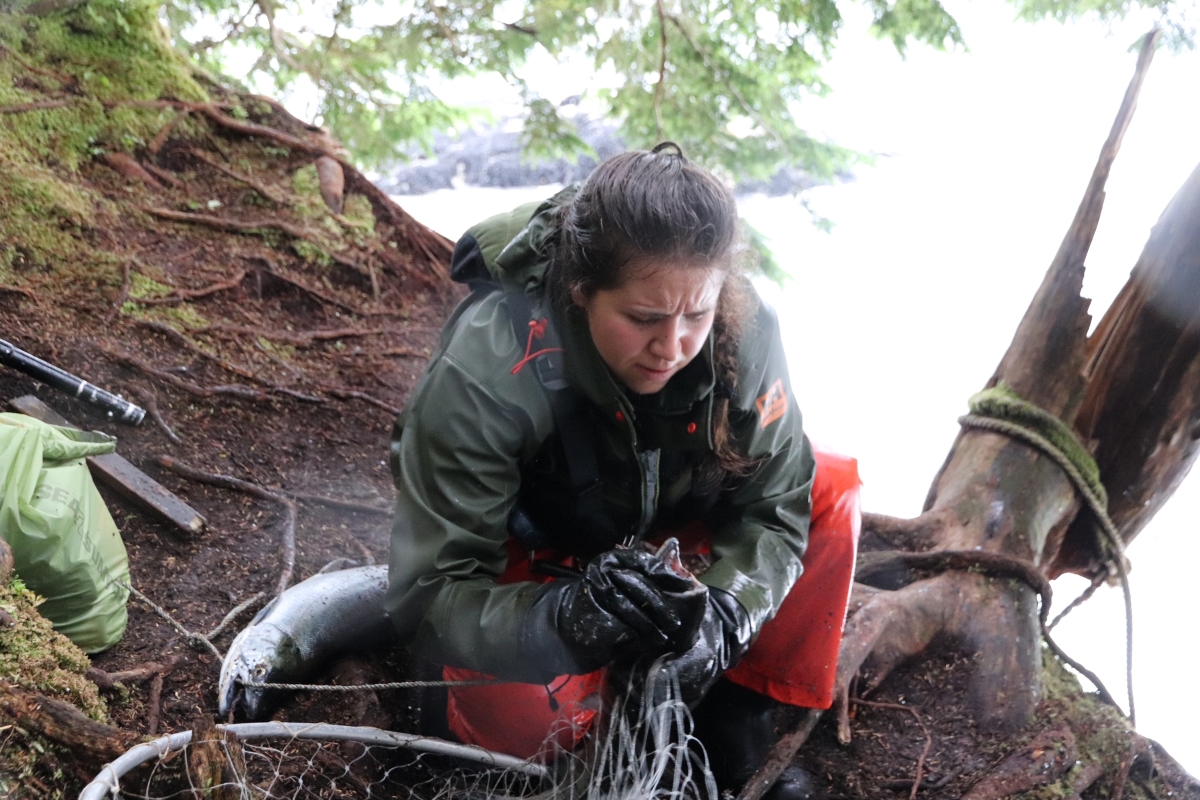
Techs from the Forest Service and Tribe still go out to Redoubt periodically to collect biological data from the sockeye, he said, like weight, age, length and sex.
“We are the first entity, as far as I know, in the state of Alaska that is using the AI video system,” Feldspausch said. “There’s several of them down in BC, but we’re the first ones in Alaska.”
Feldspausch describes the system as a white polyethylene plastic chute with a video camera on the side. As the fish swim through the chamber, the system is able to draw a rectangle around each fish to pick out identifying features and assign what species it is. A float in the lagoon has battery packs, solar panels, and a Starlink system, and the data is immediately uploaded online and accessible from the Tribe’s office in town.
AI is being used in other ways across the state. He said there are remote video shoots operated by the Forest Service at other weirs, but someone still needs to review the footage and count each individual fish, in contrast to the Redoubt weir that provides data in real time.
Researchers in Bristol Bay also started exploring new AI and drone technology this summer to improve escapement data in the Bristol Bay sockeye fishery. And there’s a pilot project at the Chignik River weir where the department is providing weir images to a company that is evaluating the utility of AI to count and ID salmon, according to ADF&G, but they are not using it to generate in-season counts.
The goal, Feldspausch said, is to keep the Redoubt weir counting fish so Sitkans can have full access to the increased returns coming back to the lake. He said he thinks the AI weir data triggered the increased harvest access this summer.
“The computer itself has actually learned how to count sockeye, and the data we have provided the program has gotten up to about a 95% confidence interval on counting sockeye through the system,” he said.
But, he added, the system has created several unintended challenges as well.
Under the old manual counting system, when techs weren’t working, the weir was closed. The closures would cause a pool just below the weir to fill up with salmon, allowing both harvesters and bears access to large quantities of the fish. But with the AI video shoot constantly at work, those fish aren’t building up behind the weir anymore.
“The bears don’t have the ability to fish in that weir pool away from where people are fishing down in the saltwater, so we’re starting to see some conflicts between human-bear interactions that may not have been in there in the past because there was a different pool of fish for them to fish out of,” Feldspausch said.
The Tribe and Forest Service issued a warning to Sitkans in late July, urging them to practice bear safety in the area after several brown bears, including two sows with cubs, were seen frequenting the lake’s weir.
Feldspausch said while the new AI system might take some getting used to, without a way to keep monitoring escapement at Redoubt, Sitkans would end up with a restricted harvest.
“I know there’s been some concern about AI taking away jobs, and the reality is, there’s no funding for the weir right now,” he said. “We have looked high and low for different grant sources, and all of them deal with systems that need some sort of remediation. They’re a damaged system. This system isn’t damaged. It is blowing the doors off of it. This is about maximizing access to a resource, and it would be a real shame to have it go underutilized and not have the commercial fishery or subsistence harvesters catching those fish.”