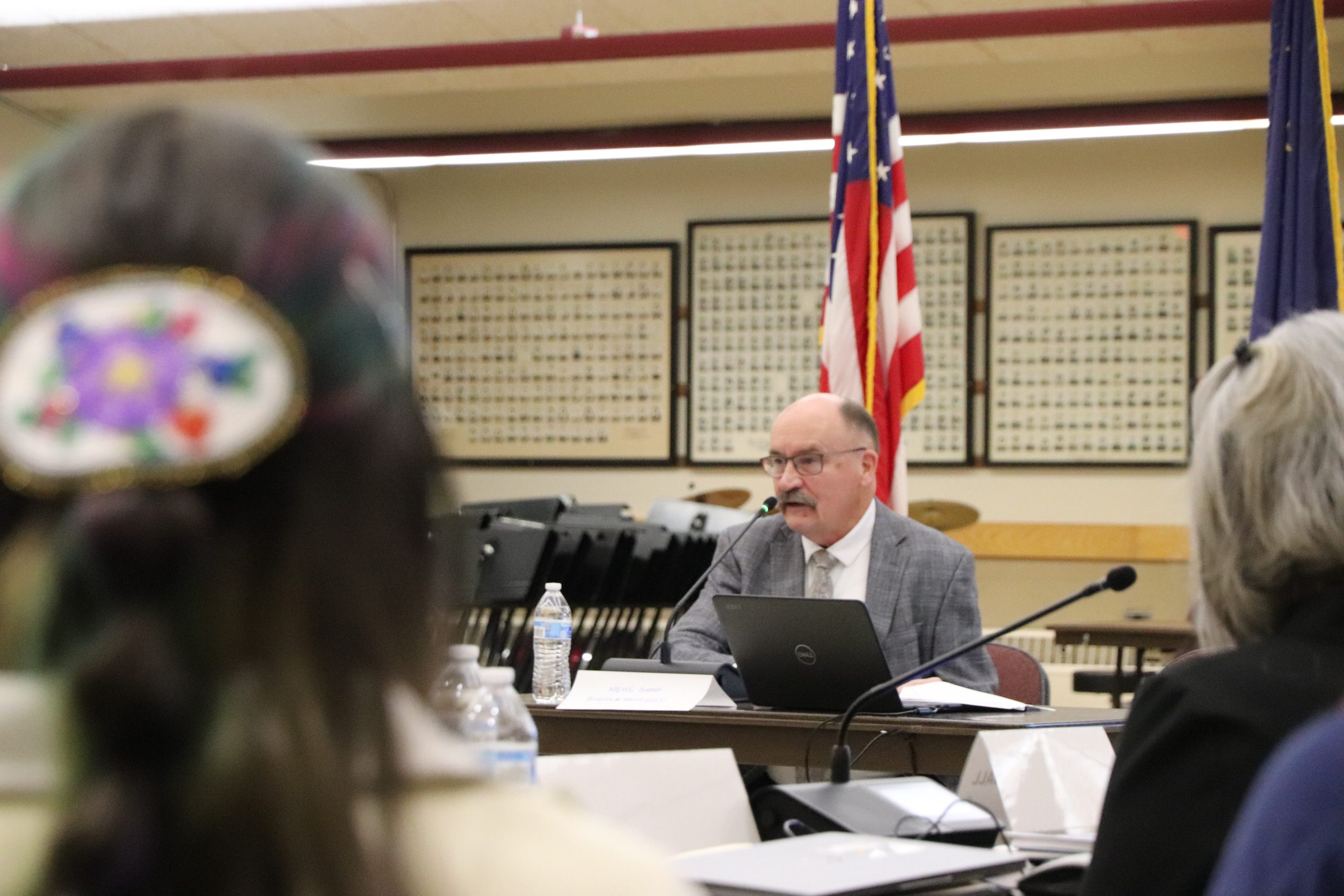
A committee directed with making recommendations for improvements at the state run boarding school in Sitka has delivered its findings to the Alaska Board of Education and Early Development.
It’s been nearly a year since a group of parents, educators and alumni sounded the alarm about conditions at Mt. Edgecumbe High School to the Alaska Board of Education and Early Development. With concerns about mental health, aging facilities, and a significant enrollment drop-off, the board tasked an ad hoc committee with investigating the issues over the past summer, and making recommendations for improvements.
At the board’s quarterly meeting in mid-October in Sitka, student Xander Swanson called last year “a hard one”, citing everything from leaks and worn out beds, to inconsistent rules and poor communication. But he and others said some conditions have gotten better – with infrastructure improvements, a re-written student handbook, and new administrators.
“One change that’s seen is the communication with students and staff is on another level. This matters more than you might think,” Swanson said. “When students feel heard, we show up differently. We take ownership of our school.”
Superintendent David Langford also told the board that things are looking up with millions of dollars to put toward facility improvements– 24 million over the next few years including around $10 million for dining hall renovation. Langford said the cafeteria food has improved already, and the school is offering more than quadruple the student activities available last year.
While enrollment was down to 350 students at the start of this year, Langford said the number of students leaving campus is substantially lower than this time last year.
“I’ve been emphasizing with all the principals and teachers, everybody on the campus, that really what we’re interested in is keeping the students we have long term, and, to-date, the students that are leaving Mount Edgecumbe up to this point is 65% lower than it was a year ago, so I think that speaks to everybody working together at a whole new level for students.”
But former school staff member and parent Blossom Teal-Olsen said some of those improvements don’t tell the full story. Cuts to mental health support and staff and teacher turnover need to be addressed.
“Our children need mental health support at a time when there’s no mental health support given, and there’s been cuts to those positions. And historically, if anyone, and I’ve been a former worker there, if you ever make a wave, you are out,” Teal-Olsen said. “So look at look at how many teachers have left. Look at the turnover within the dorms. Look at the how the nursing staff interacts with administration. That’s the true story. There. That’s where change needs to happen.”
Reviewing and strengthening mental health supports for students is on a list of 22 recommendations the school’s committee delivered to the state board later at the same meeting.
The committee developed the list after reviewing roughly 250 survey results from students, parents, and staff, and tou ch on everything from improving dorm room policies and communication with parents, to establishing a process for collecting information from students who withdraw from the school.
Paul Reid is a project coordinator with the Office of Education Advocacy, and he facilitated the ad hoc meetings. Board Chair Sally Stockhausen asked him whether they were ready to discuss the plans for addressing the recommendations.
“I kind of viewed that as ‘This is going to be handed off to the to the admin and to the staff and the students here’ to assure that some of that these recommendations are considered, as they continue to develop,” Reid said.
Stockhausen said she could hear a lot of the recommendations already reflected in both Langford’s report and at a recent school advisory board meeting. However, she wanted to keep tabs on future improvements with a regular report to the state board.
“I would like it to stay in the forefront of our minds and not become another thing that we put on the shelf [and say] ‘Well, that was nice that we did that,'” Stockhausen said. “So I would like to see in in a format that addresses these at our meetings, that we get a regular update on what has been done so far.”
And board member Kimberly Bergey said the update should be digestible so students and families have a roadmap for where the school is headed.
“The student voice in this process is going to be critical to the long-term success of the school,” she said. “And so, figuring out how we can make sure that that student voice is included in the the next steps in the process is going to be critical.”
The board did not take formal action on the recommendations at the quarterly meeting.