



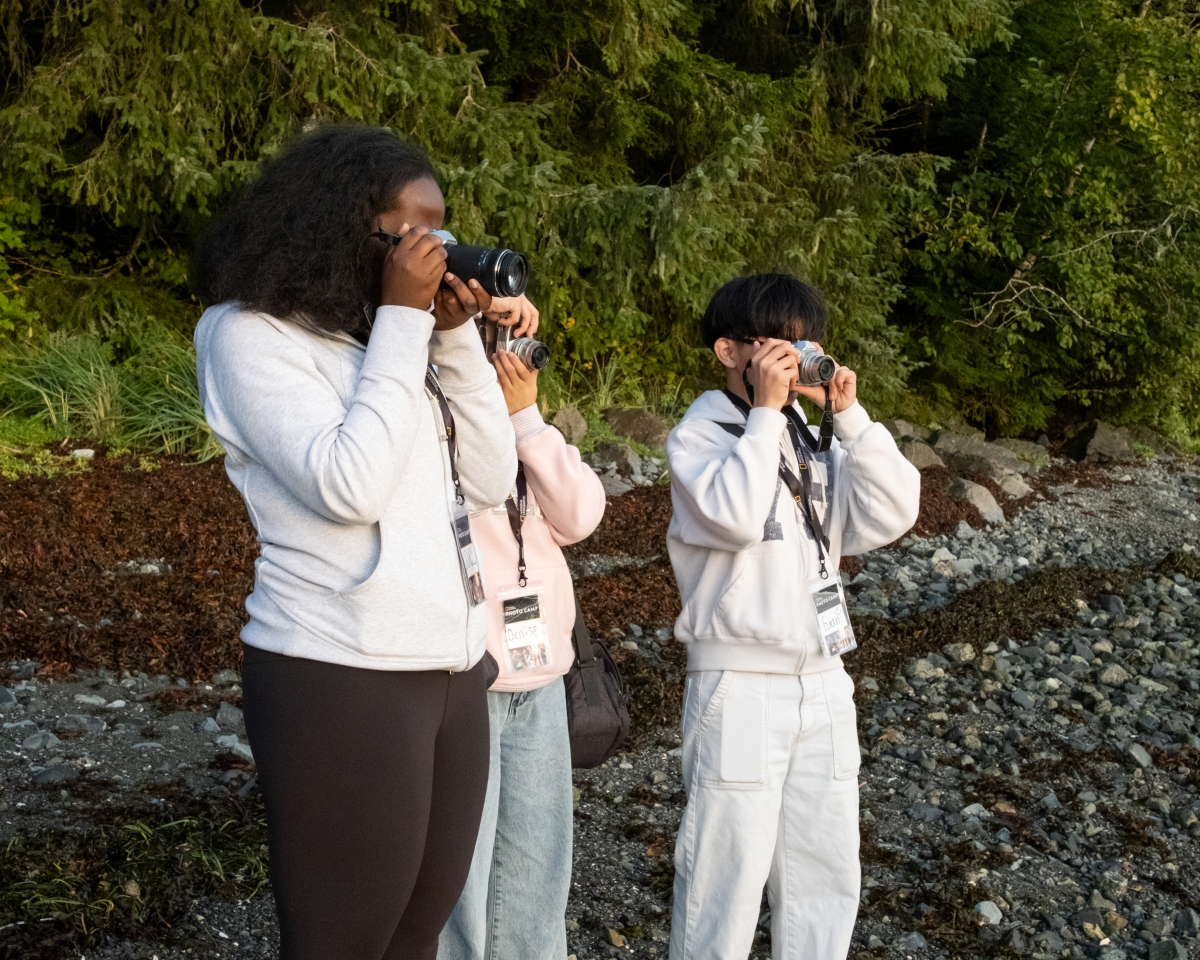
More than a dozen undergrad and high school students stand on the upper deck of an Allen Marine boat snapping photos of six humpback whales surrounding them, Mt. Edgecumbe volcano rising in the background.
They’re here as part of a National Geographic Photo Camp — a program that brings together local youth with National Geographic photographers and explorers to gain the skills and tools to tell stories from their home communities. The 16 students learned photography techniques — both technical and conceptual — over the course of five days, culminating in a public showcase.
“It’s so important to put the camera in the hands of people whose stories are being told because they’re the only ones that can tell that story,” said Kirsten Elstner, founder and director of the program, which launched more than two decades ago.
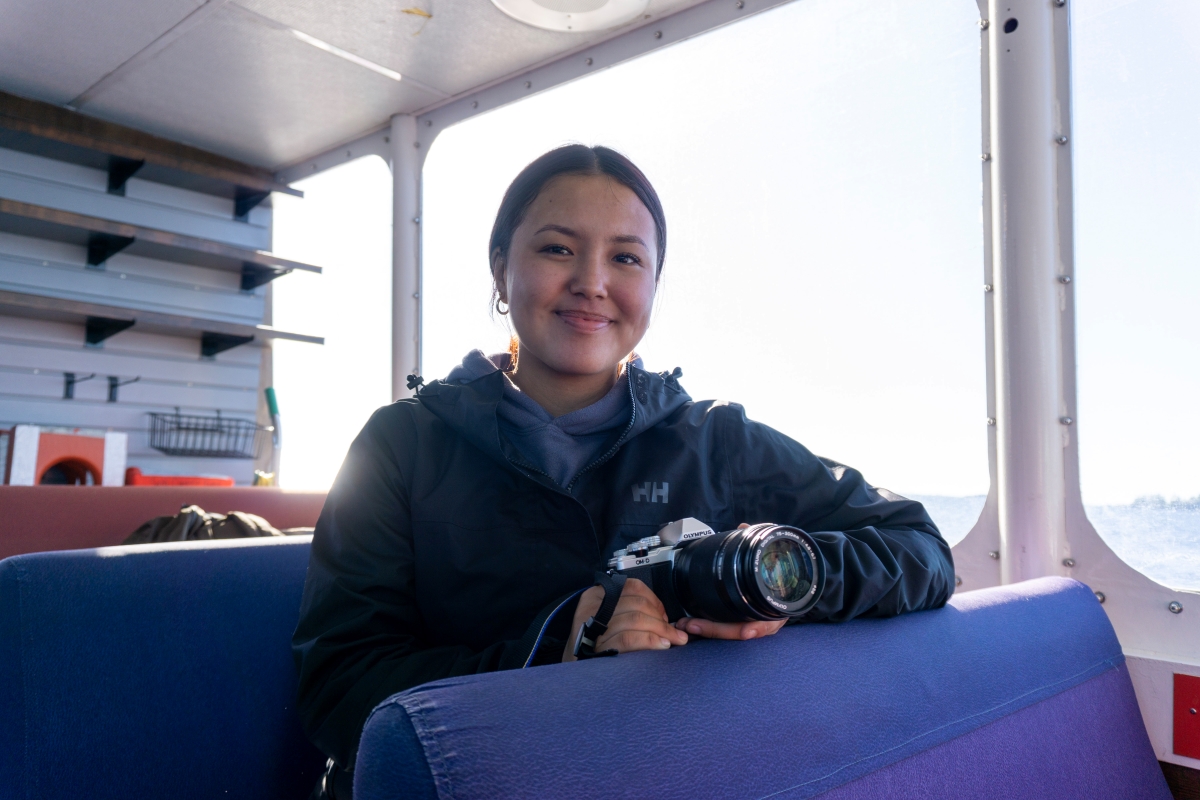
“There’s something super powerful about a person, especially a young person, talking about, ‘This is my community. This is the beauty of my community. These are the challenges that we face. These are the stories that happen here,’ because no one else knows that. They’re the ones that are living it and growing up through it,” she said.
This the 200th photo camp hosted by National Geographic in more than 50 countries: They’ve held camps from the Galapagos and the Peruvian Amazon to South Sudan and Pakistan.
For this camp, which was hosted in collaboration with the Alaska Whale Foundation, local students had to apply and explain why they wanted to participate before being selected. Each student gravitated towards the photo workshop for a different reason, but all were motivated by a desire to tell stories. Some said they wanted to underscore the importance of conserving the plants and animals around them. Some said they wanted to share stories of navigating identity in Alaska. And others said they wanted to use their lens to highlight the small details in life that often go unnoticed.
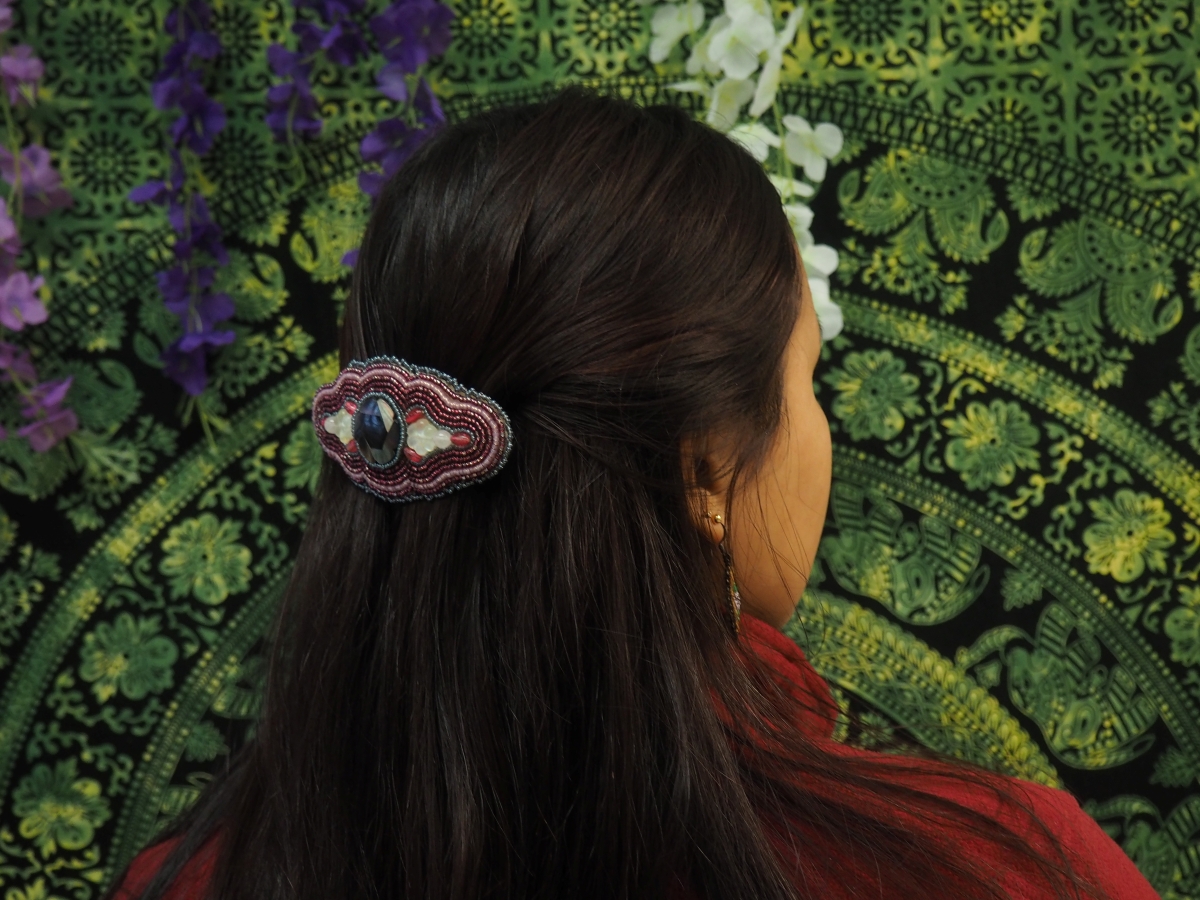
Troy Mila, a junior at Mt. Edgecumbe High School from Utqiaġvik, is pretty new to photography, but said on his first day here, he watched a video about Samoan photographers that inspired him. He said he felt a “cultural resonance” and it was eye opening watching photographers that look like him describe their process.
“Speaking their truth and talking on topics that I’ve been having some trouble with myself, like being trapped between two or three different cultures,” Mila said. “I’m kind of trapped between Western culture, Samoan culture, and Iñupiat culture, and that’s been kind of hard to deal with since I’ve been young.”
But photography, he said, is helping him grapple with that and express his own story.
“I can talk about my experiences with finding my own identity and trying to figure out who I am in the world,” he said.
14-year-old Malena Ollaol is from Yakutat and currently a freshman at Mt. Edgecumbe. Unlike Mila, she’s not new to the camera. She said photography has been helping her explain and process her emotions since she was 11.
“I like taking photos of the things that most people wouldn’t stop to look at,” she said. “The small things, like raindrops on windows, or leaves, morning dew on the ground.”
According to Ollaol, camp is helping her refine her skills and allowing her to grow beyond what she’s learned from studying Youtube tutorials. And she said, it’s helped reinforce the importance of photography as a storytelling medium.
“It’s faster to process an image rather than read a bunch of words,” Ollaol said. “Sometimes words just can’t explain what you see. Like a sunset: you could never perfectly capture the perfect shade of red in words that the sunset is. So images just describe things a lot better because they’re actually showing it rather than words just describing it.”
“I think there is like a gut, visceral, instinctual level of looking at an image and being really moved by something,” said National Geographic photographer Pat Kane, who covers Indigenous communities in northern Canada and the Arctic.
He said a great photo will bring the audience into the place it was taken in the moment it was taken, and, with luck, elicit a reaction.
“Hopefully that inspires conversations, and maybe that conversation leads to change, or maybe it leads to leaning into something that you’re really inspired by,” Kane said. “It’s a bit naive to say that photography can change the world, but I think in some small ways, if you do it enough, it can build momentum to possibly change some things in our world.”
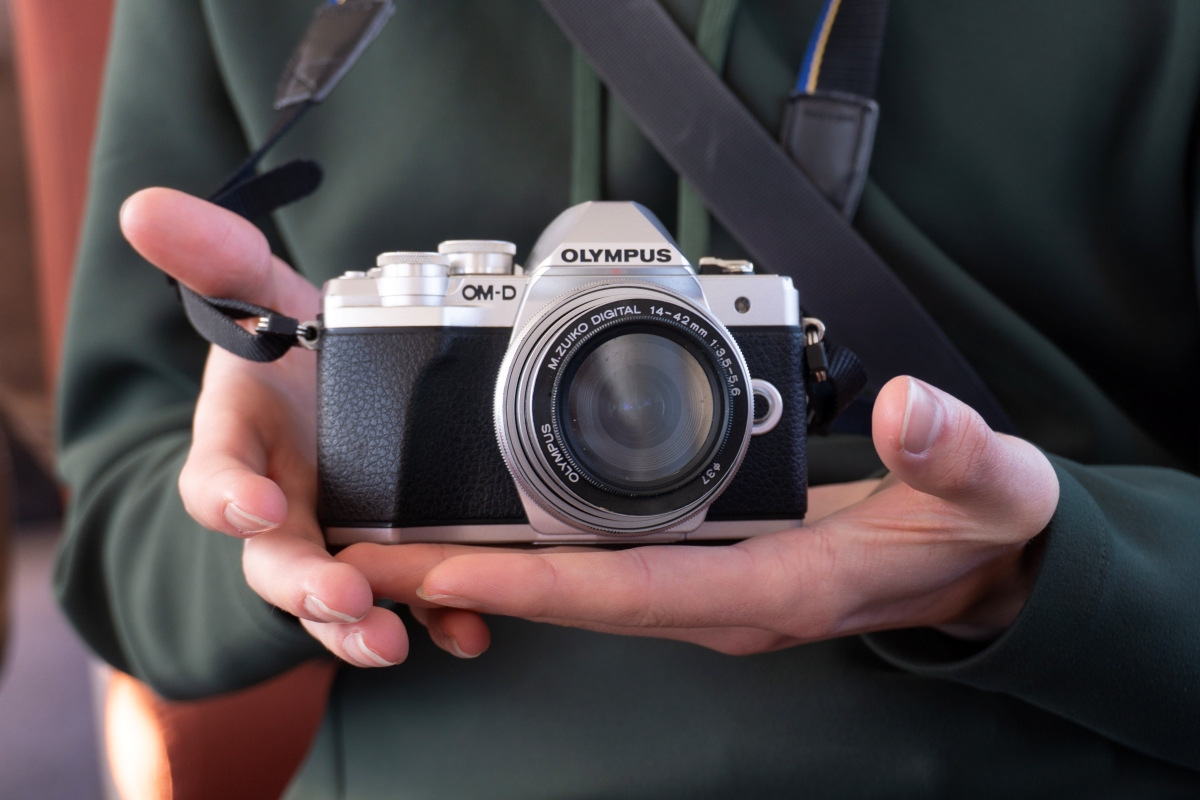
David Schilp is National Geographic’s technical director for photo camp. Essentially he makes sure students have their cameras, SD cards, and other gear at the start of the day, and collects it all again at the end.
He agrees with Kane that photography is a powerful tool for change, but also recognizes it isn’t the only one. He said he grew up with dyslexia and anxiety and took a long winding path to photojournalism. If these students take away just one thing from this photo camp, he hopes it’s the confidence to pursue what they love, whether that’s photography, carpentry, plumbing, or politics.
“And even if people tell you no, or even if you don’t think you have the confidence to do it, if you work hard enough and if you have the confidence in yourself, that’s what matters the most,” Schilp said. “And it doesn’t have to be a straight line. Most times, people don’t have a straight line. I still don’t know what I want to do with my life, and I’ve had 10 different careers. So to let them know that they’re worthy and that they can do it.”
But just in case students do want to pursue photography, they’ll get to keep their cameras at the end of the program to continue telling their own stories in their communities.


