



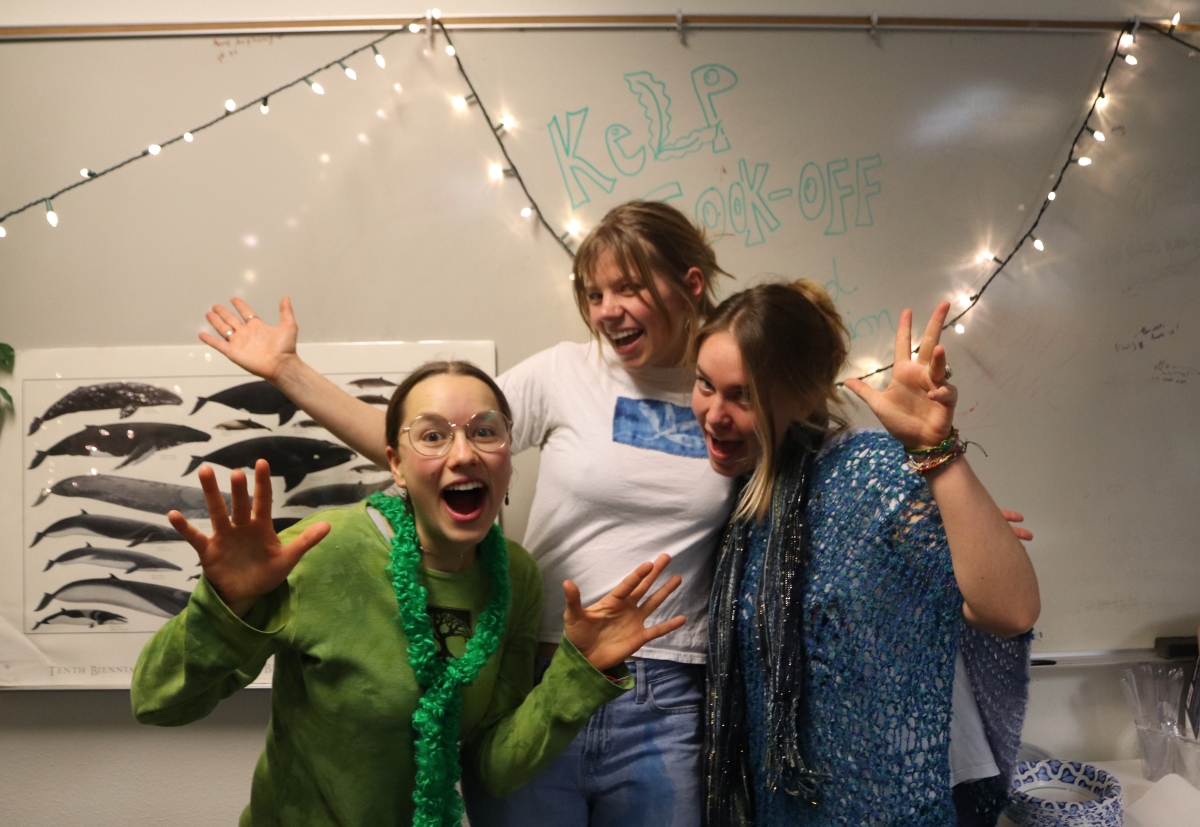
After giving out seaweed from a local mariculture farm, students at the University of Alaska Southeast in Sitka invited the community to a potluck last week (11-13-26). The gathering had one requirement: every dish must contain kelp.
A room full of Sitkans seated around long tables turned to face Maggie Grenier as she gave a toast.
“We just wanted to take a moment for us all to be together around the food and just say thank you for all the life that are here in this meal, for all the humans and hands that went into it, and the power that happens when we’re gathering,” said Grenier, a student in the aquaculture program at the University of Alaska Southeast in Sitka.
Grenier and her classmates hosted a kelp cook-off.
“We were discussing in class how to get kelp on the plate because we think that seaweed has such a power and an impact that it can make, but we need to start eating it and incorporating it into our meals,” Grenier said.
Dozens of dishes all featuring some sort of seaweed covered a long table at one end of the room. People perused the table, paper plates in hand, while “Octopus’s Garden” by the Beatles played from a speaker nearby.
There were empanadas stuffed with spinach, ricotta, and bull kelp, and deviled eggs sprinkled with caviar. There was kelp quiche and mac and cheese, seaweed crackers and salad. And for dessert, there was orange sesame chocolate kelp cookies.
Most of the dishes were made at contestants’ homes before the cook-off. But Jason Young wanted his food to be fresh. While other took their seats to begin their taste tests, Young stood over a small fryer cooking dumplings stuffed with salmon and halibut-filled bull kelp poppers.
“The tube wall is pretty thick, and so you want a lot of fry time just so you can the heat can penetrate and cook the inside filling,” Young explained.
If you ask people to describe the flavor of seaweed, they might say salty or earthy. But Skye Jones, a UAS student and cook-off co-host, described the flavor more like a feeling.
“It’s like you’re in the sea and you taste the coast,” Jones said.
The foods on people’s plates represented cuisines from around the world, but they were all tied together with the same local ingredients.
“Ribbon kelp, bull kelp, sugar kelp, all these different kinds of seaweed, these are here in Sitka,” said Denise Shaffer, a contestant who brought bull kelp salsa. She said seaweed is packed with nutrients and good for our bodies and the environment.
“The farming of seaweed requires much, much, much less resources than it does to farm other greens that we might eat in salads or in some of these dishes,” Shaffer said. “All [seaweeds] require is seawater and sunlight.”
The UAS students say the cook-off looked to celebrate seaweed and help the community feel more comfortable cooking and eating it. Grenier said she was thrilled to see people asking questions and sharing recipes.
After about an hour, every plate was practically empty, meaning it was time to announce the winners. In no particular order, Grenier announced five standout dishes.
The contestants who made the deviled eggs, seaweed artichoke dip, and black seaweed popcorn also claim a prize. And Young, who was still frying up food at the back of the room, got a shoutout for both of his dishes.
The winners each walked away with a bottle of kelp hot sauce. But Jones said the goal was never to be competitive.
“It’s really more just about celebrating seaweed,” Jones said.
And the organizers hoped this seaweed celebration will become a tradition where Sitkans can bring a little bit of an “octopus’s garden” to their plates.


