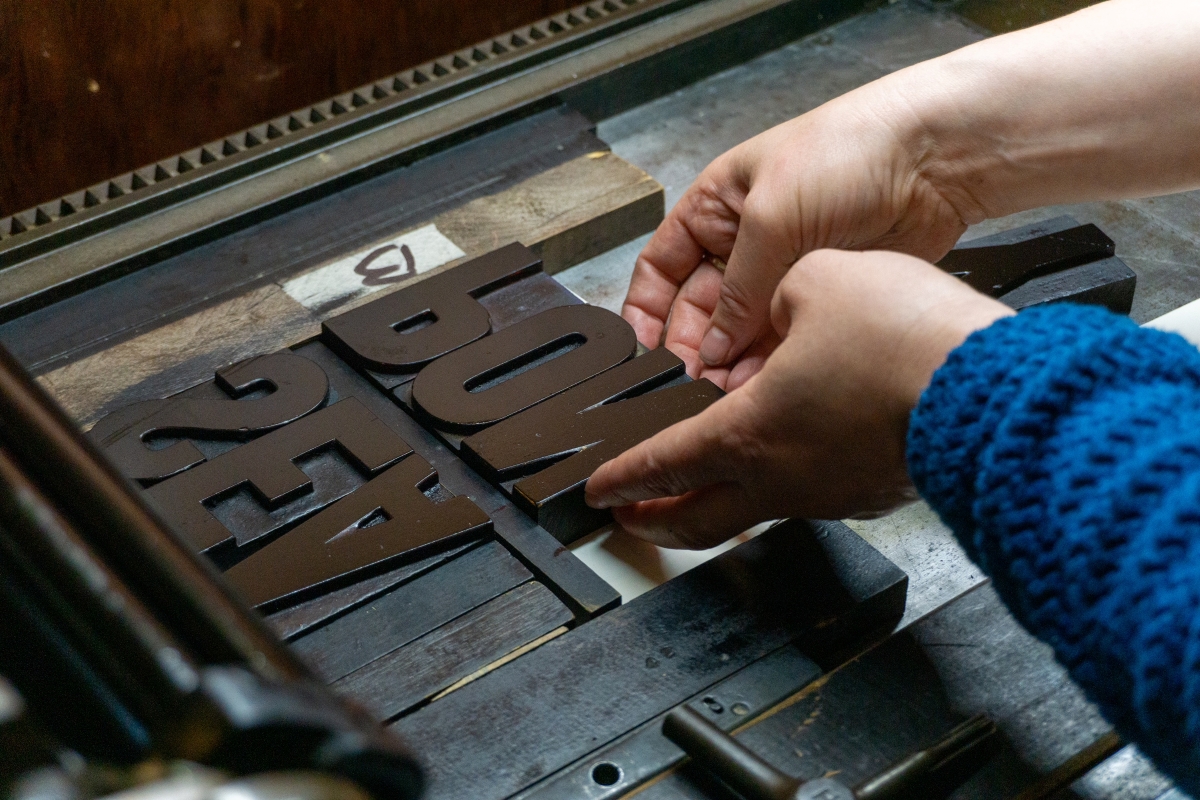
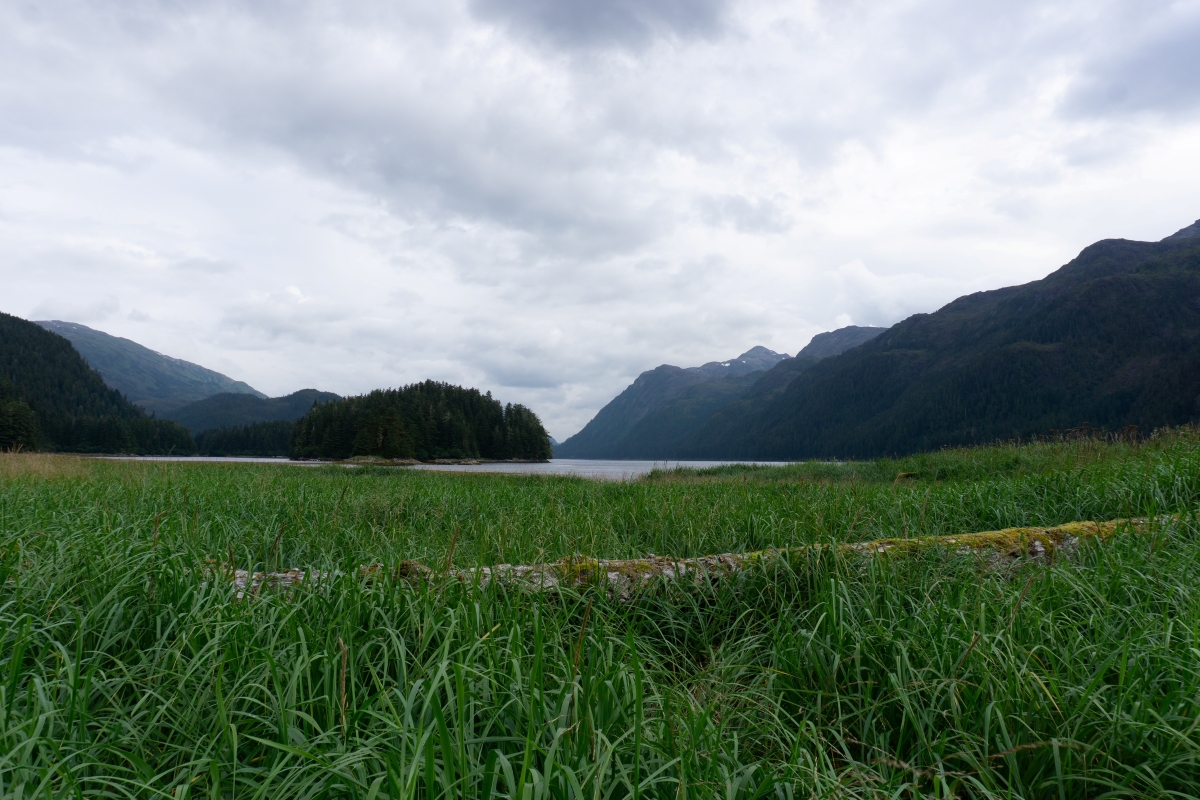
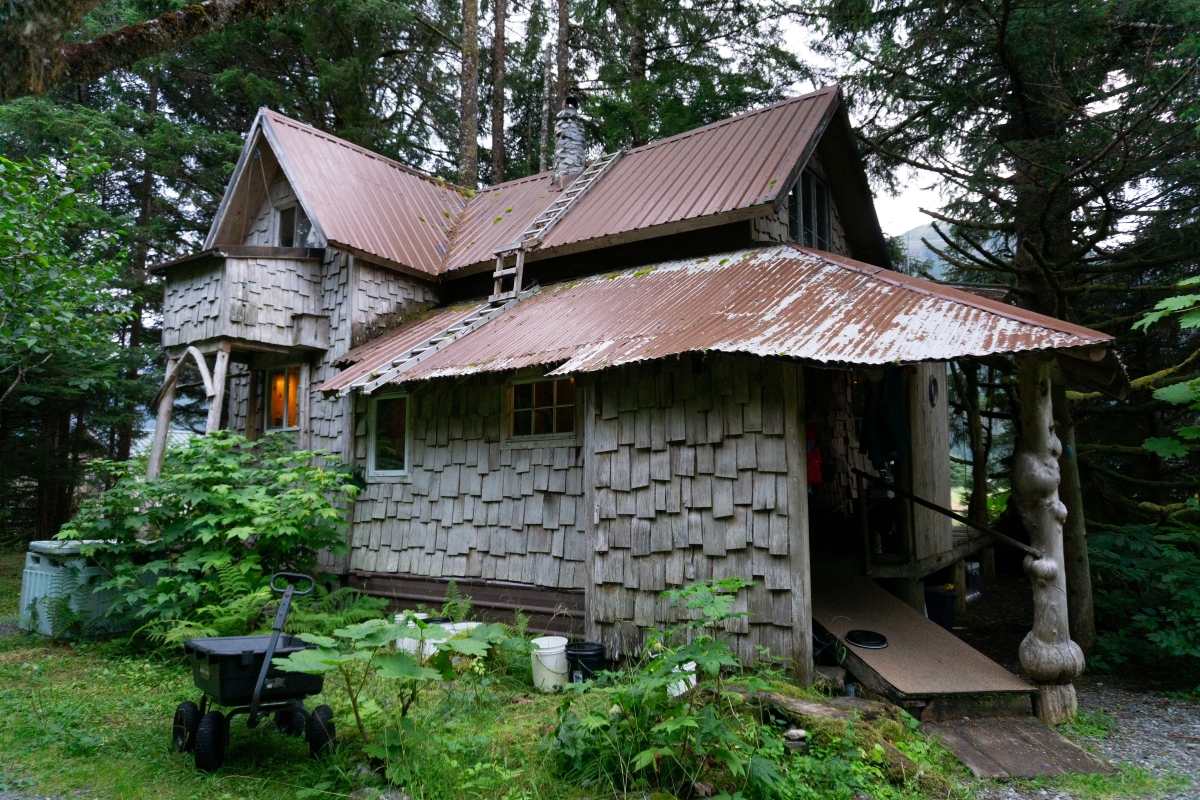
Deep in Lisianski Inlet, gnome-like buildings sit where the long tidal grass meets the trees. Inside one, you can hear the roller of an old printing press move white paper across inked-up antique typeset.
“I am a printmaker, an artist, a community organizer, a mom, a friend, and someone residing in Alaska and on the lands of the Áak’w Kwáan in Juneau normally, and now a little bit south of there,” says Meghan Chambers, as she adjusts the wood type in the press.
Chambers, who grew up in Sitka, is in the middle of an art residency at Sea Pony Farm, where this rare Vandercook printing press was revived after seven years of lying dormant. The press belonged to late wood engraver Eric Bealer and his wife Pam, who left their remote property on the edge of the West Chichagof-Yakobi Wilderness, and nearly all they owned, to the Sitka Conservation Society nearly a decade ago.
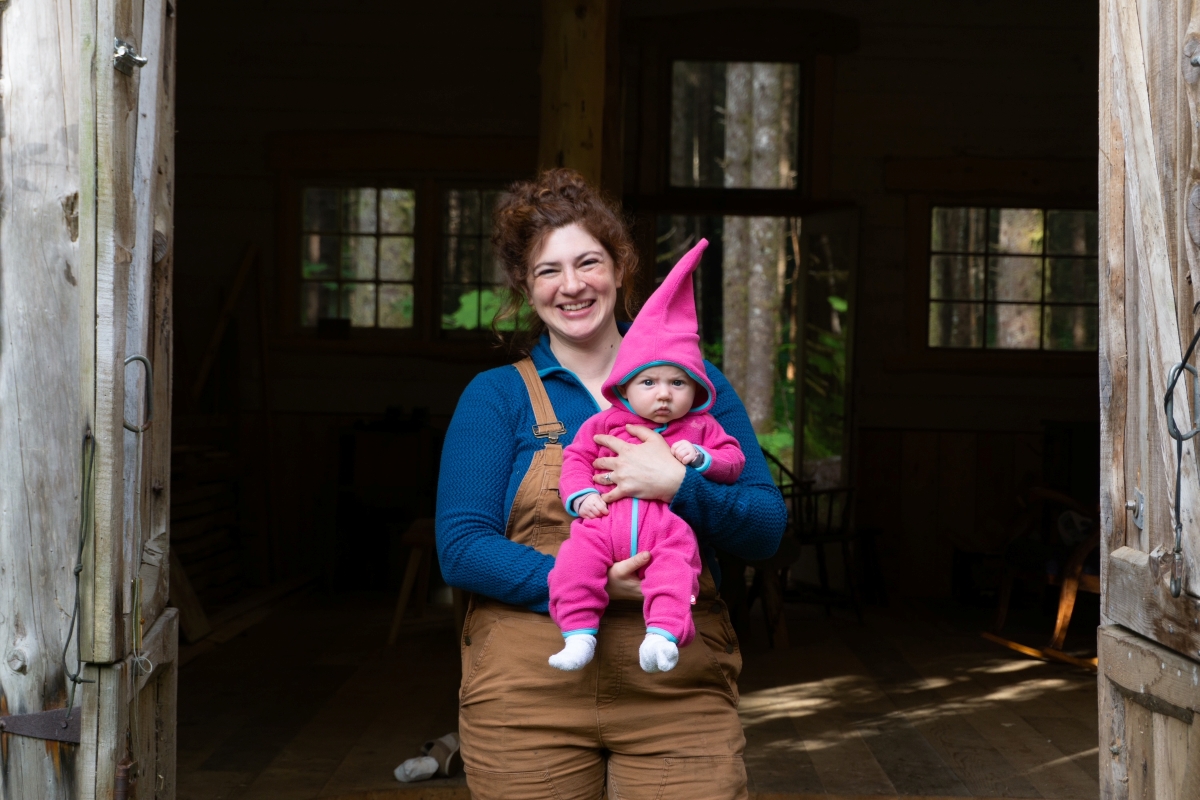
Chambers’ three-month-old daughter Molly, two dogs, four adults, and one toddler mill about the cozy space, as she pulls a proof off the thousand-pound, century-old Vandercook press known as “Bertha.” Bertha is a behemoth, about the size of a large deep freezer, who was transported from the Lower 48 to this corner of the house by barge, repurposed mining cart, and pony.
For decades, the Bealers lived off-grid on this property, crafting buildings from reclaimed wood, making art, and caring for their sheep, chickens, and ponies. Pam had multiple sclerosis, and in 2018, the couple walked into the woods together, leaving a note behind saying not to look for them. They left their estate to the Conservation Society’s Living Wilderness Fund to continue their legacy.
“We made a decision really early on that this wasn’t going to be a museum,” says Bethany Goodrich, storytelling program director with the Conservation Society. “It wasn’t about maintaining their fingerprints on everything and keeping things exactly how it was. It was, ‘How do we use this space to honor their legacy?’ But also their goal in leaving it to the Conservation Society was to protect the lands and waters that they loved fiercely. So we knew we wanted to use the space and see it come alive, and be loved and in the hands and experiences and memories of many different creatives and advocates and locals and people who had never been to the Tongass.”
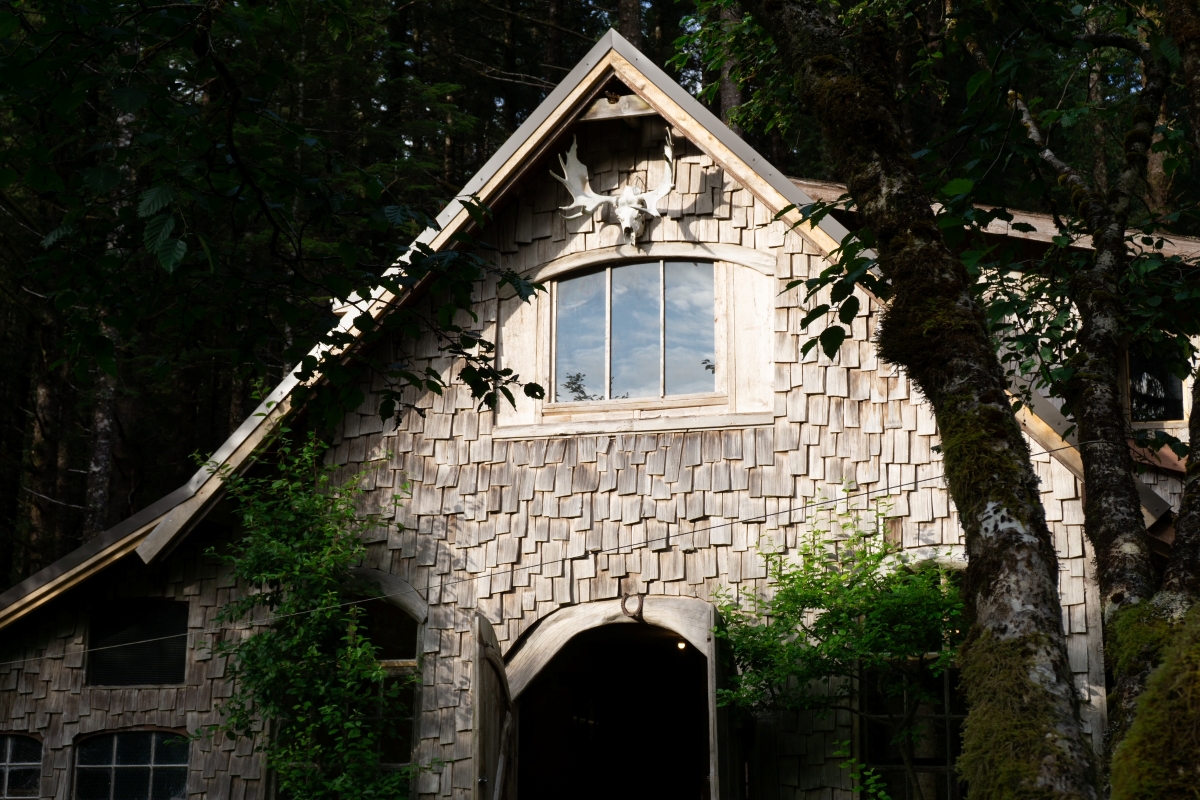
Since 2020, the Conservation Society has been restoring Sea Pony Farm, and using the property as a creative retreat to host artists, activists, policy makers, carpenters, and writers. Last summer, the nonprofit revived the rare Vandercook press and invited their first printmaker to the farm.
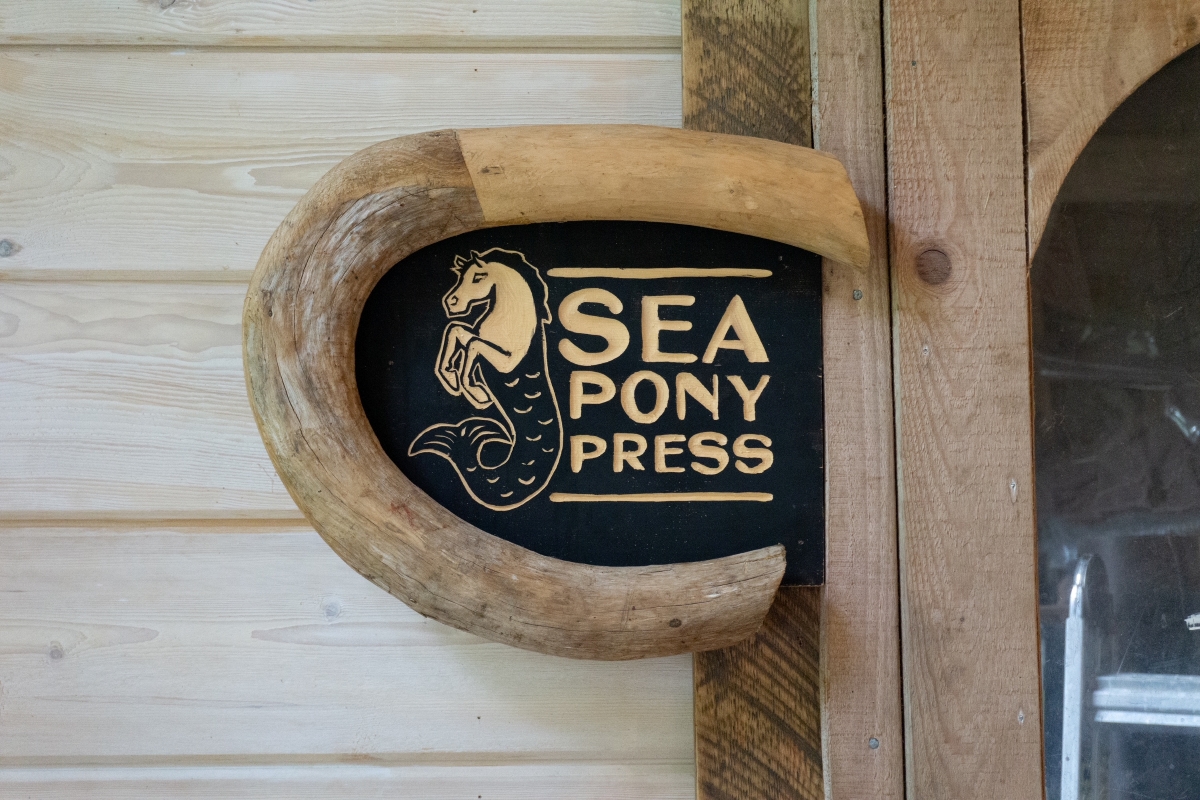
“That was the first time that the presses were rolling again,” Goodrich says. “Since they were such a heart to Eric’s work, it was an exciting moment, and we knew we couldn’t just roll them and that would be that. We wanted to do it in a way that would honor his legacy and Pam’s legacy as well, and the way they lived here and their creativity and commitment to community.”
Goodrich says the first thing they pulled off the press was a manifesto outlining the Conservation Society’s vision, values, and aspirations for what the press would do: to illustrate and amplify their love for the Tongass.
The nonprofit’s founding members believed deeply that to care for a place, and advocate for it, you need to spend time there, Goodrich says. And connecting with printmakers and other creatives helps propel that forward.
“Art carries culture, and it shapes our norms and our societies,” Goodrich says. “And it’s part of what makes Southeast Alaska or any community special. It’s our identity. It’s the music we listen to. It’s the art we hang on our walls. All of those things create the identity, and I think that in Southeast Alaska, having a strong identity is what makes these communities so special.”
A lot of that identity, she says, comes from connection to the lands and waters here, “but also to each other. And a lot of that is consecrated, I think, through the creative arts, whether that’s dancing or music or poetry or printmaking. It can take a lot of shapes, and there’s a long, over 10,000-year history of people being inspired by this place and creating artwork in tandem to that.”
Chambers agrees. She says printmaking, in particular, has been used as a tool for social, political, and cultural movements, and she believes there’s a “deep-rooted” connection between conservation work and how artists can help connect people with a mission.
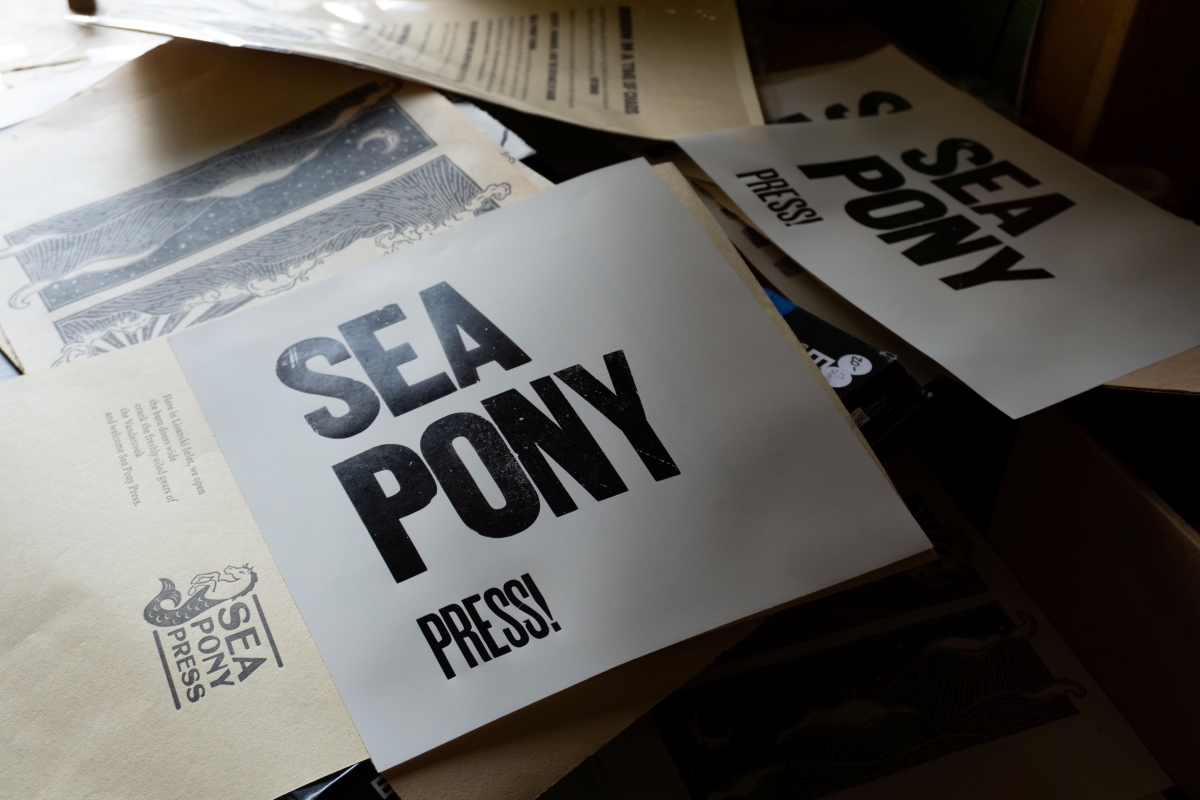
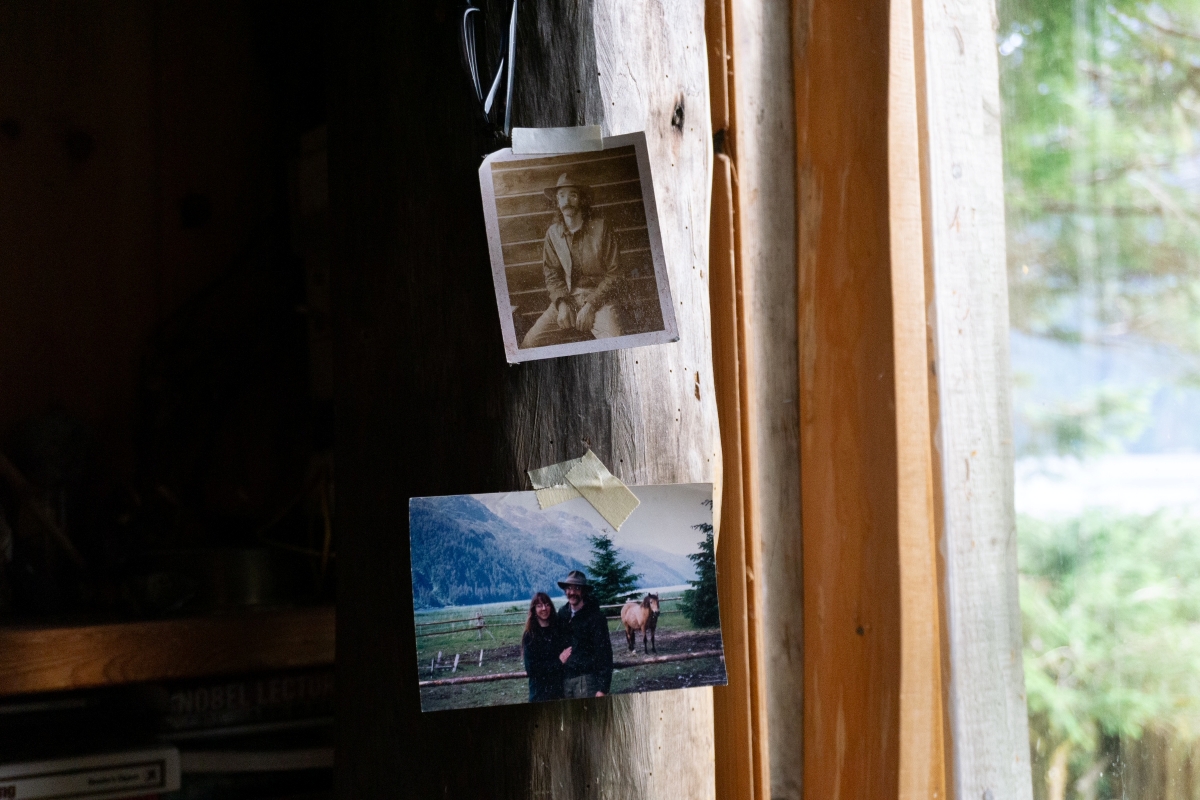
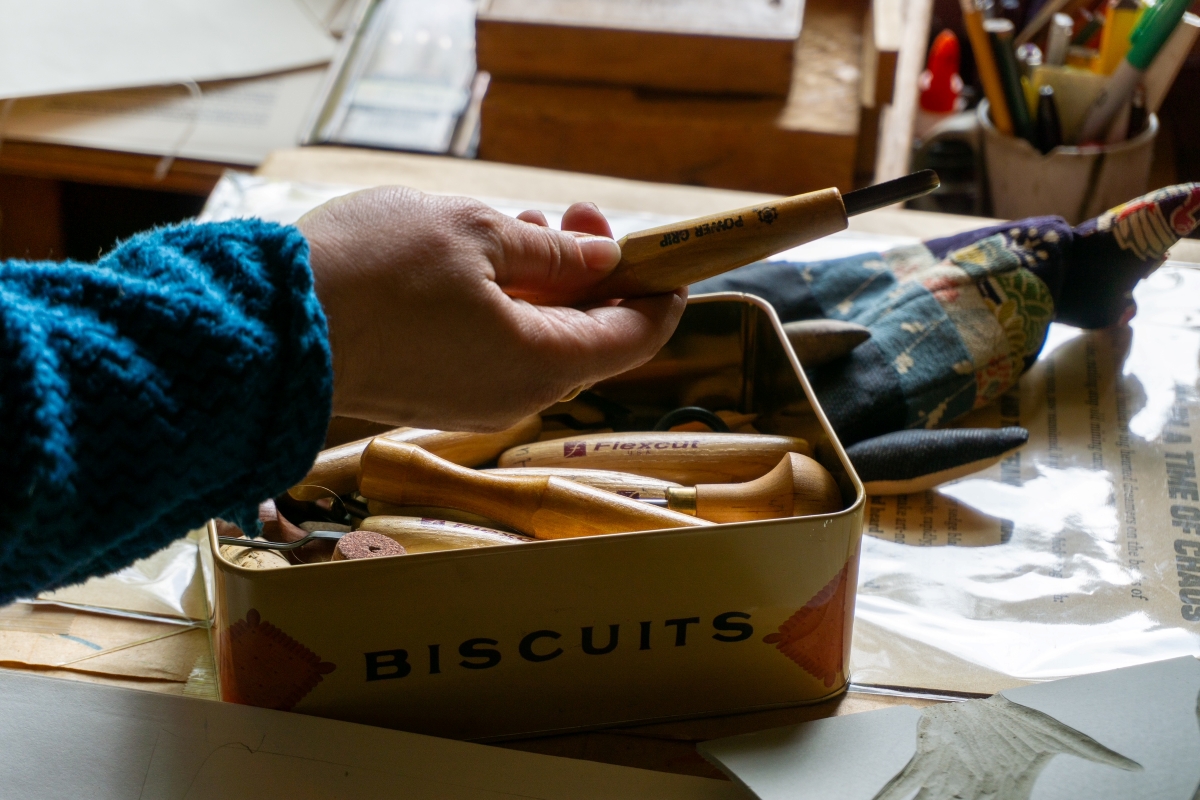
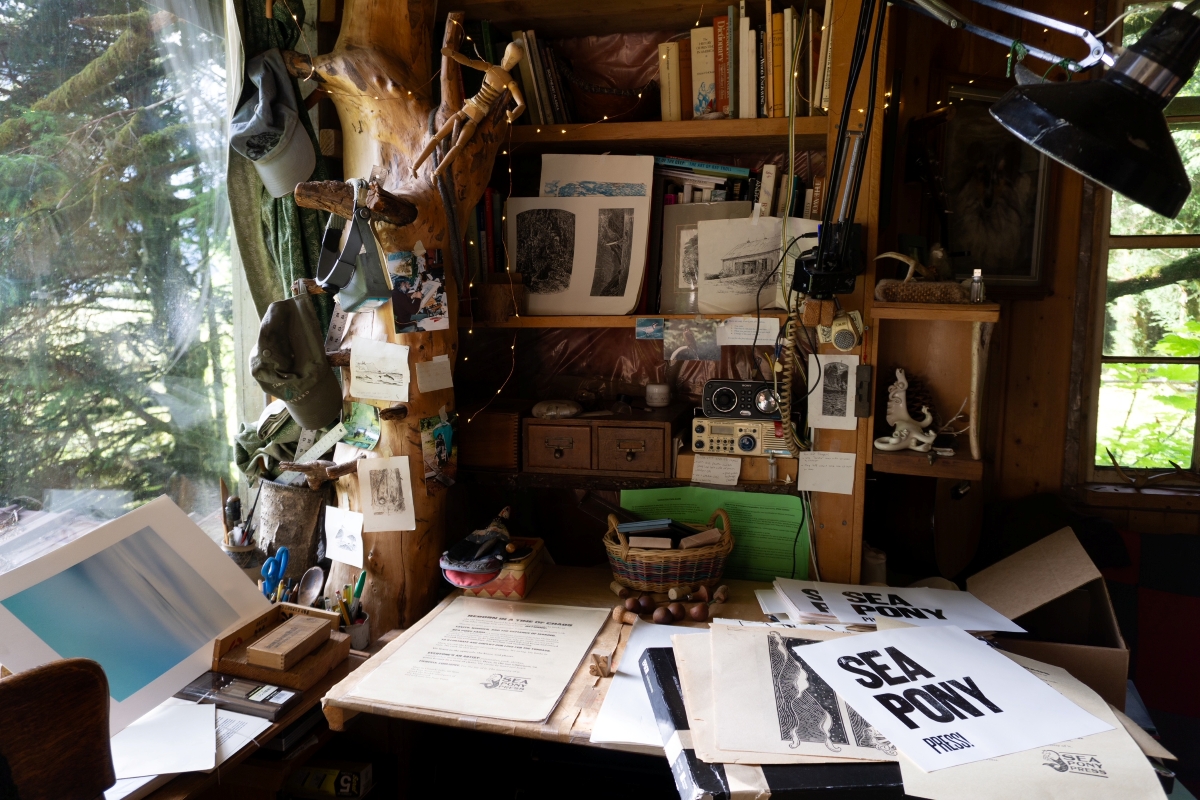
“Artists have long been a herald for political progress, social justice, conservation — you name it — an artist somewhere has yelled about it,” Chambers says as she pulls her polished print off the Vandercook and places it on top of the scattered prints and carving tools on Eric Bealer’s desk. Tiny scraps of art proofs, photographs, and notes to himself are still taped to the wall. Bealer’s books, radio, and trinkets still line the shelves.
“Eric and Pam’s story is beautiful and unique and independent,” she says. “And in both their life and in their deaths, I think every one of their actions and consequent art pieces or ways of interacting with the world was really purposeful, and I have a lot of admiration for that.”
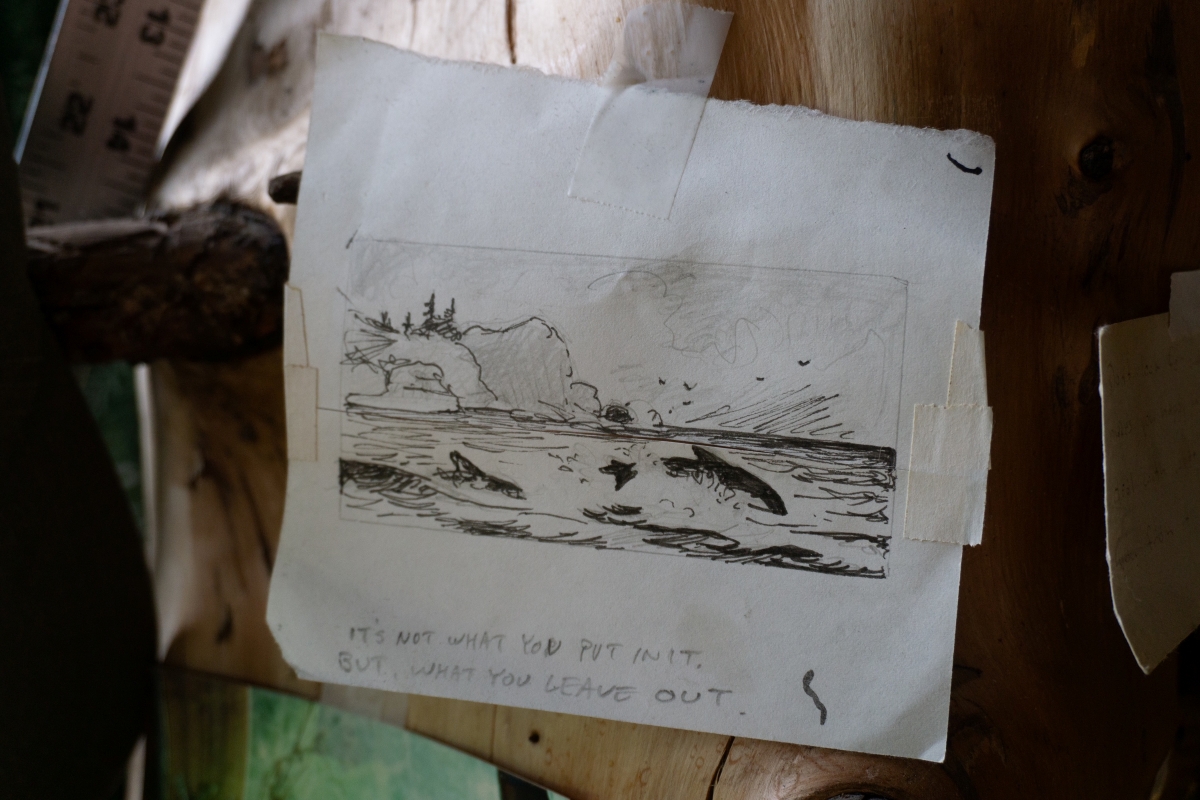
This place not only feels like the mission of the Conservation Society’s founders is alive: to bring people together to create and fall in love with the Tongass, and preserve it for generations to come. But also the spirit of the Bealers, who lived life slowly and intentionally, infusing beauty into everything they touched.
“They lived and they died on their own terms, and they did that in a way that was deeply connected to this place where they built this unique and wild, vibrant life,” Goodrich says. “And this is kind of the manifestation of a lot of that love for this place, love for each other, and that’s part of what makes this property so special.”
Goodrich says Sea Pony Press is meant to be an accessible initiative that anyone can be part of, whether they’re a cook, a woodworker, a musician, or a printmaker — any level, any age — as long as they care about the Tongass and can see how creativity connects us to it.
Editor’s Note: If you or someone you know is struggling with thoughts of suicide, you can dial or text 988 and be connected to help.