A group of birders stood still, their eyes fixed on the knotted roots of a spruce tree.
“Looks like a little brown fluffy golf ball,” said Chase Coleman, the research and education coordinator at the Sitka Sound Science Center. “It’s gonna be low to the ground.”
The group is looking for a Pacific Wren. Coleman, who’s been leading birding groups through Sitka National Historical Park, said the bird is small and difficult to spot.
“But they make themselves incredibly known by their sound,” Coleman said over the wren’s persistent chirps.
Since July, Coleman’s been guiding birdwalks once a month in partnership with Sitka National Historical Park. The early morning strolls are a chance for Sitkans to slow down and notice the world around them.
“When they sing, they really want that prospective mate to hear it, and then [say] ‘Hey, choose me, listen to my song. It’s better than everyone else’s,'” he said of the Pacific Wren’s song. He said the forest is home to so many small birds.
“This big spruce tree almost acts as a huge, high-density apartment complex,” Coleman said.
It was a misty morning. A thick cloak of fog hugged the coastline. But Coleman said the dreary weather might’ve been a good thing for the five birders who woke up early.
“The visibility gets lower, the weather gets a little dicey. They might have to fly down and make a little pit stop,” Coleman said.
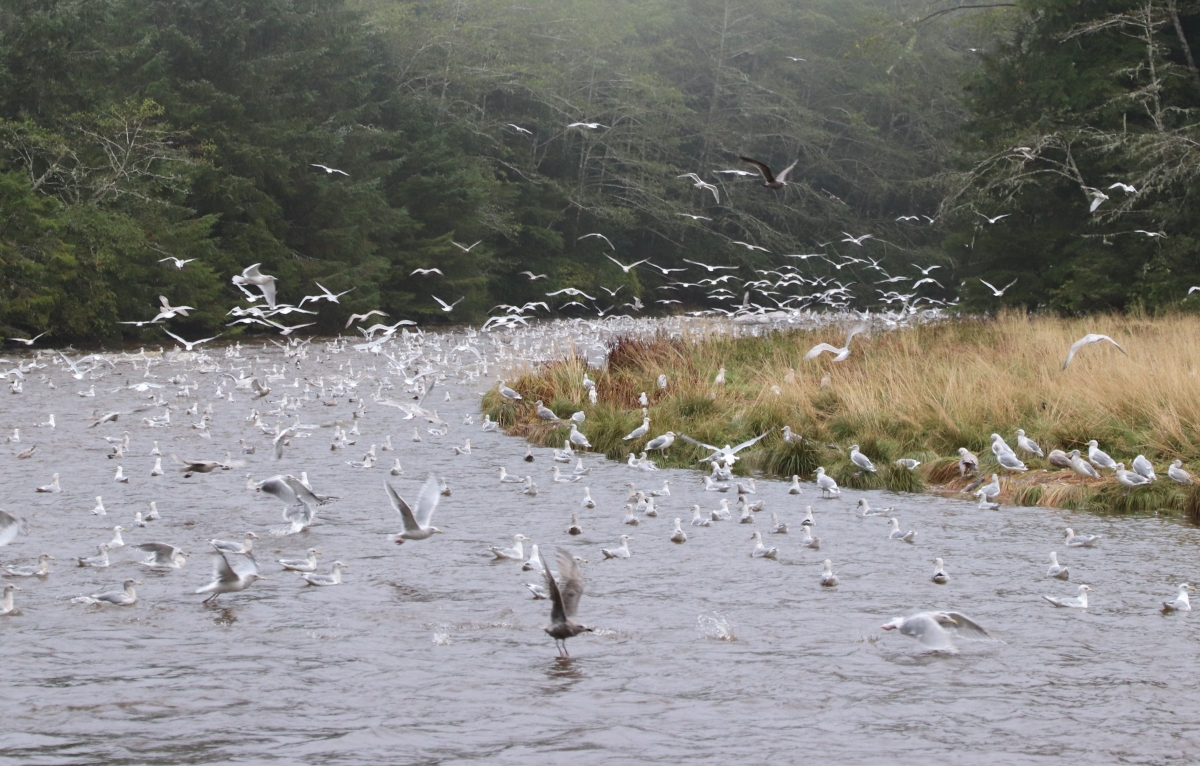
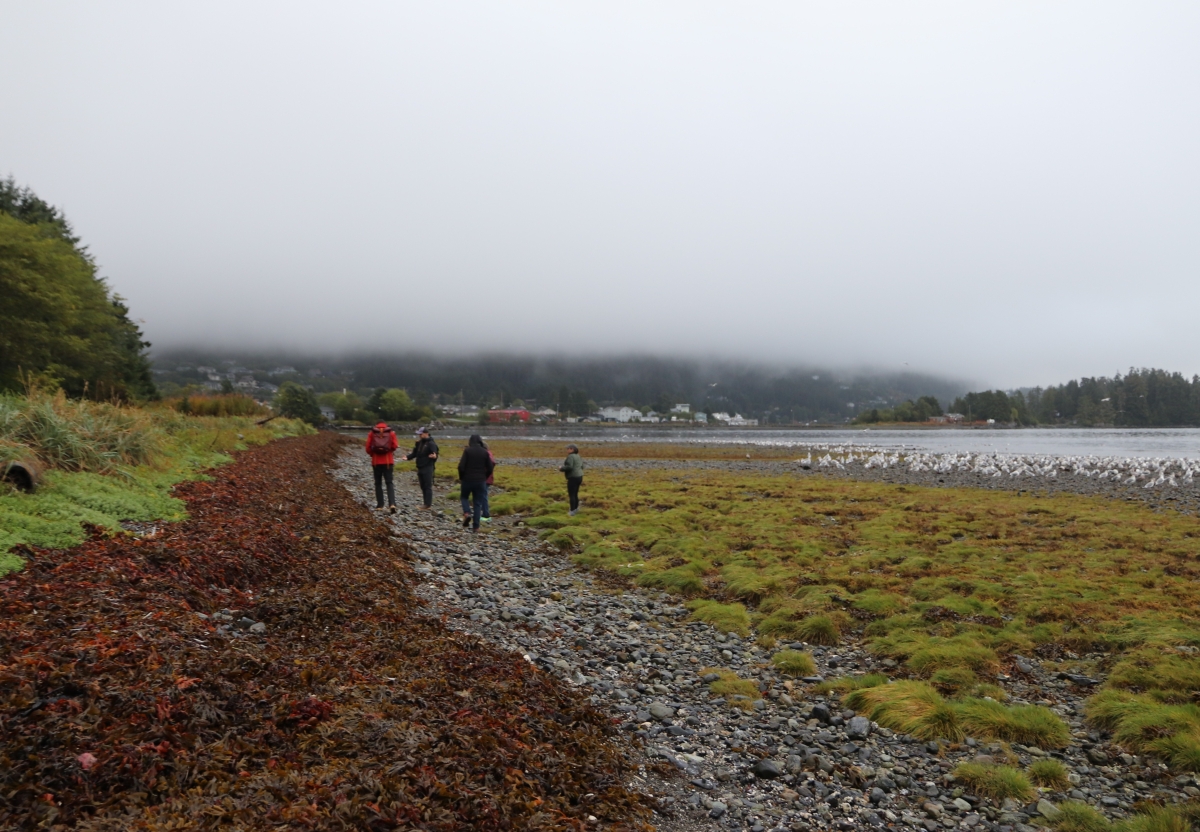
Gulls scattered across a spit jutting out into the ocean where the birders point their binoculars and cameras.
“They’re always looking for their next meal, a carcass that’ll wash up,” Coleman said.
He said gulls are often overlooked, thought of as a snack-centric species, always pecking around for crabs and shellfish. But, just like bears or bald eagles, they’re a necessary part of Southeast’s ecosystem.
“They’re dragging carcasses up to the forests. They’re eating it and then defecating. They’re doing all these things to help that nutrient cycle happen and occur, and help the Tongass be what it is,” Coleman explained.
He said gulls are opportunistic creatures, and bald eagles are no different.
“A lot of times bald eagles are seeing what the gulls are picking up, eating. They’re wondering, ‘Hmm, could that be a meal for me?’ And if it is, then you’ll see them kind of fly right into the flock that’ll flush all the gulls out because they’re like, ‘Ooh, I cannot compete with that big bald eagle,’” Coleman said.
The birders walked over barnacle-covered stones, thick clumps of seaweed, and salmon carcasses along the beach. In the brush above the tideline, a black tail deer munched on dried-out fireweed. Also hiding in the thicket was a song sparrow, a small bird just a few inches tall.
“It’s saying, ‘Hey, by the way, this is kind of where I live. This is where I get my food. Don’t come any closer to me because if you do, I’m gonna fly away,'” Coleman said.
Next, he led the crew up into the woods.
“I almost feel like we’re walking into a big football stadium,” Coleman said.
As they moved toward the river, the excitement (and volume) of the gulls feasting on the salmon run grew. Kaasda Héen was moving swiftly with all the recent rain. Birds flew upstream, plopped down on the water, and floated downriver with their fish before circling back again.
The birders soaked up the sights and sounds of the gulls before taking the trail back into the forest. But before they went home for the day, the group stopped to check out one more spruce tree next to the parking lot.
“So that was a wren, and then that little doot-doot, that was a chickadee,” Coleman explained. “This little kind of more aggressive, louder sound, that tut tut-tut, that’s the wren.”
Coleman said you don’t need a background in ornithology to identify birds. He said there’s a lot to learn from books or neighbors about the birds in Sitka’s skies and on the forest floors.
“It’s about us going out and finding pleasure in these kind of more mundane, maybe overlooked things. And if you have that mindset, it makes going outside a lot more fun,” he said.
With walks the first Sunday of every month, the group is excited to see what birds will flock to the Tongass as winter approaches.